What Is a Screen Printing Washout Booth? Complete Guide
What Is a Screen Printing Washout Booth? Complete Guide
A screen printing washout booth is a dedicated wet-work station used to rinse, develop, clean, and reclaim screen printing frames. It supports the screen at a practical working angle, contains water and overspray, and directs runoff toward a drain or connected collection system.
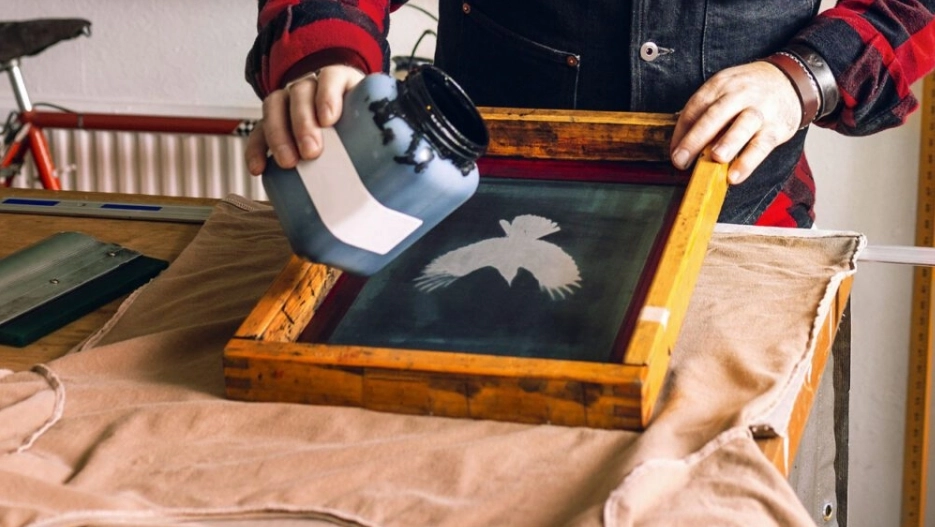
In a conventional screen-making workflow, the booth is used after a coated screen has been exposed. Water removes the unexposed emulsion from the image area and opens the stencil for printing. The same booth can later be used during screen reclamation, when ink residue and the old stencil are removed so the frame and mesh can be prepared for another job.
The terms screen washout booth, screen washout sink, and screen washout station are often used for similar equipment. Regardless of the name, the purpose is to create a controlled area for wet screen-processing work. A well-planned station keeps overspray away from the rest of the screen room, supports more consistent inspection, and makes routine cleaning easier.
However, a washout booth is only one part of the system. It does not expose screens, generate water pressure, remove ink automatically, dry finished screens, or make wastewater suitable for discharge on its own. Understanding those boundaries is essential when planning a new screen room or upgrading an existing reclaiming area.
Where Does a Washout Booth Fit in the Screen-Making Process?
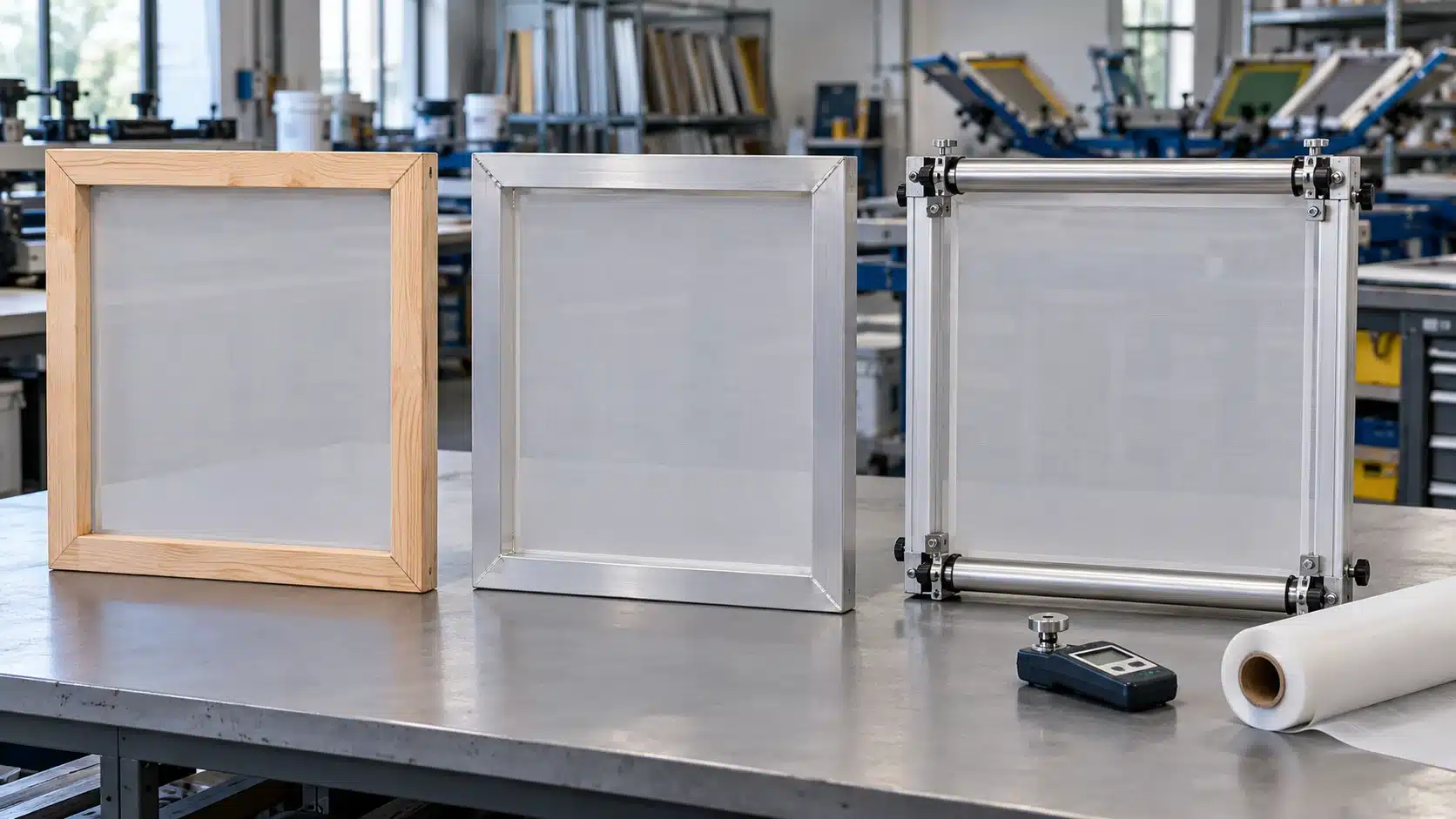
Screen making is a connected sequence. Mesh preparation affects coating quality; coating and drying affect exposure; exposure affects washout; and washout determines whether the finished stencil is open, clean, and ready for printing.
A conventional workflow normally follows this order:
| Process stage | Main objective | Typical equipment or material |
|---|---|---|
| Mesh preparation | Remove dust, grease, and contamination | Screen cleaner, degreaser, washout area |
| Emulsion coating | Apply a controlled stencil layer | Emulsion and scoop coater |
| Drying | Dry the coated screen in a clean, light-safe environment | Screen drying cabinet or rack |
| Film preparation | Create an opaque image positive | Screen printing inkjet film |
| Exposure | Harden the emulsion outside the image area | Screen printing exposure unit |
| Stencil development | Wash unexposed emulsion out of the image area | Screen printing washout booth |
| Inspection and drying | Check image openings, edges, and stencil condition | Backlight or inspection light, drying rack |
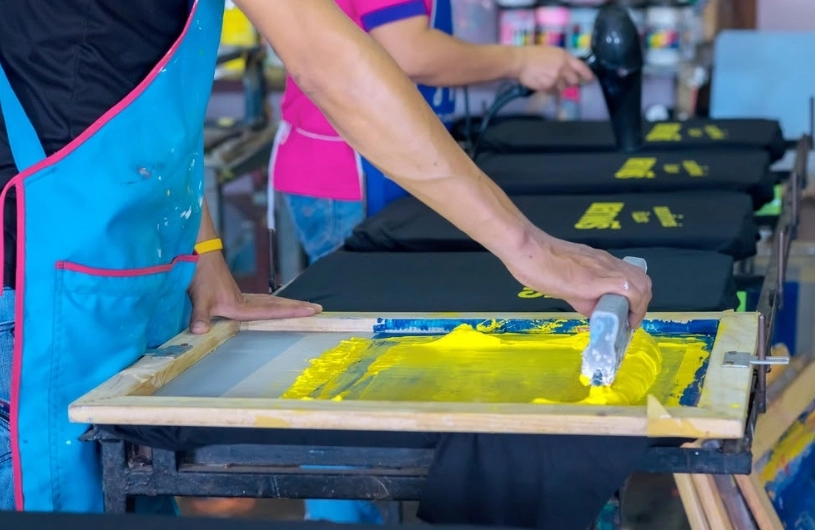
| Printing | Transfer ink through the open stencil | Screen printing press and squeegee |
| Reclamation | Remove ink and the old stencil for reuse | Washout booth, suitable chemicals, rinse equipment |
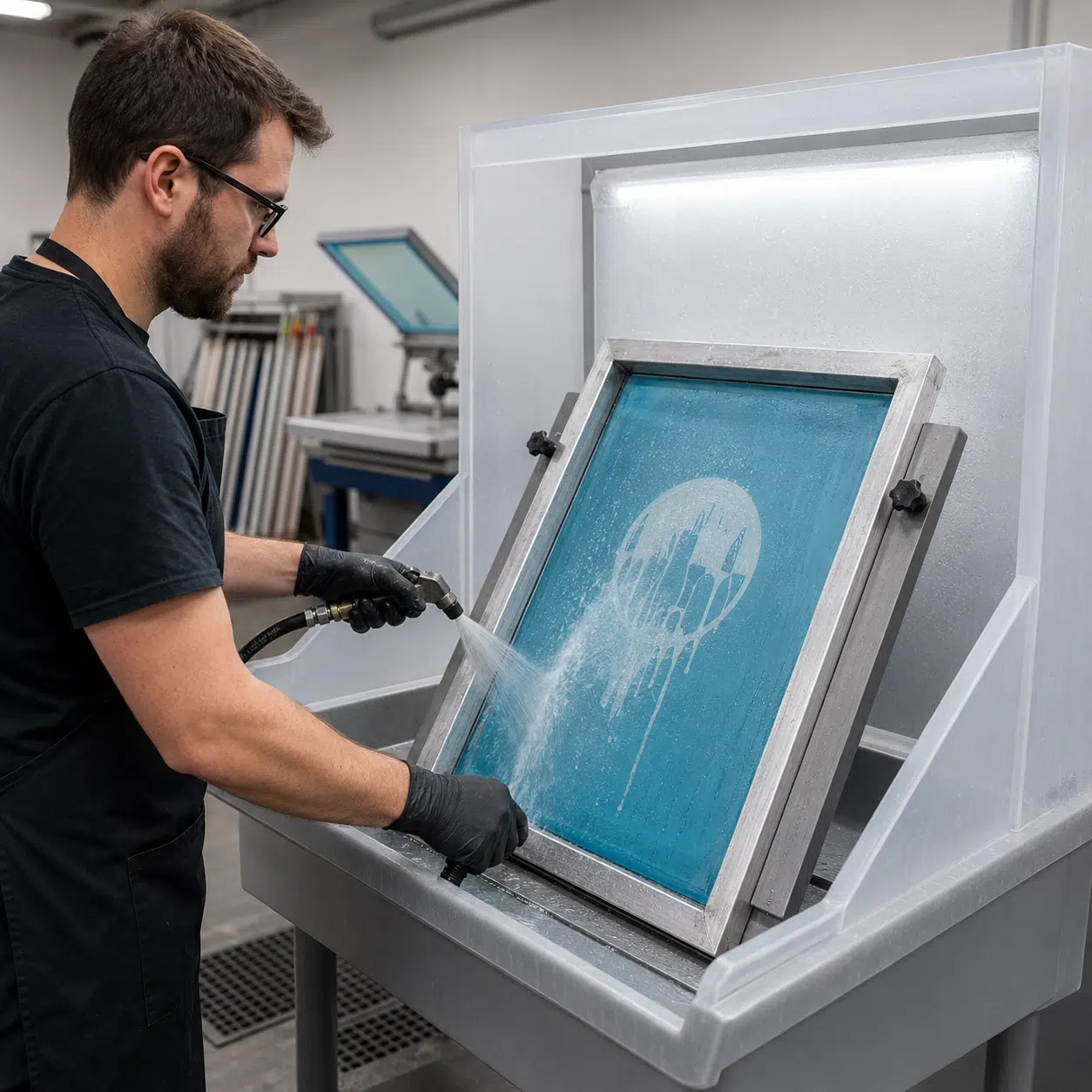
During exposure, ultraviolet energy hardens the emulsion that is not protected by the opaque artwork. The image areas receive much less UV energy and remain water-soluble. At the washout stage, those image areas are developed with water while the correctly exposed stencil stays attached to the mesh.
For a closer look at how all these stages affect one another, see the Complete Screen Making Process.
The Two Main Jobs of a Screen Printing Washout Booth
The same booth can support two different operations: developing a newly exposed screen and reclaiming a used screen. They both involve water, but their objectives, chemicals, and pressure requirements are different.
1. Developing a Screen After Exposure
The purpose of development is to open the intended image without damaging the stencil that needs to remain on the mesh.
An exposed screen is normally wetted on both sides so that the unexposed image areas can absorb water. The operator then uses a controlled spray to develop the image. Fine lines, small text, and halftones need especially careful handling because excessive pressure applied too early can damage weak or underexposed areas.
The washout booth provides a stable place to hold the frame and keeps the water within a defined wet area. A translucent rear panel or backlight can make it easier to see whether image openings are completely clear and whether any residual emulsion, blocked details, or pinholes remain.
The booth does not correct an exposure problem. If the stencil will not open, the cause may be excessive exposure, insufficient film density, premature exposure to stray UV light, or inadequate wetting. If large areas of emulsion wash away, the screen may be underexposed, incompletely dried, or coated unevenly.
2. Reclaiming a Used Screen
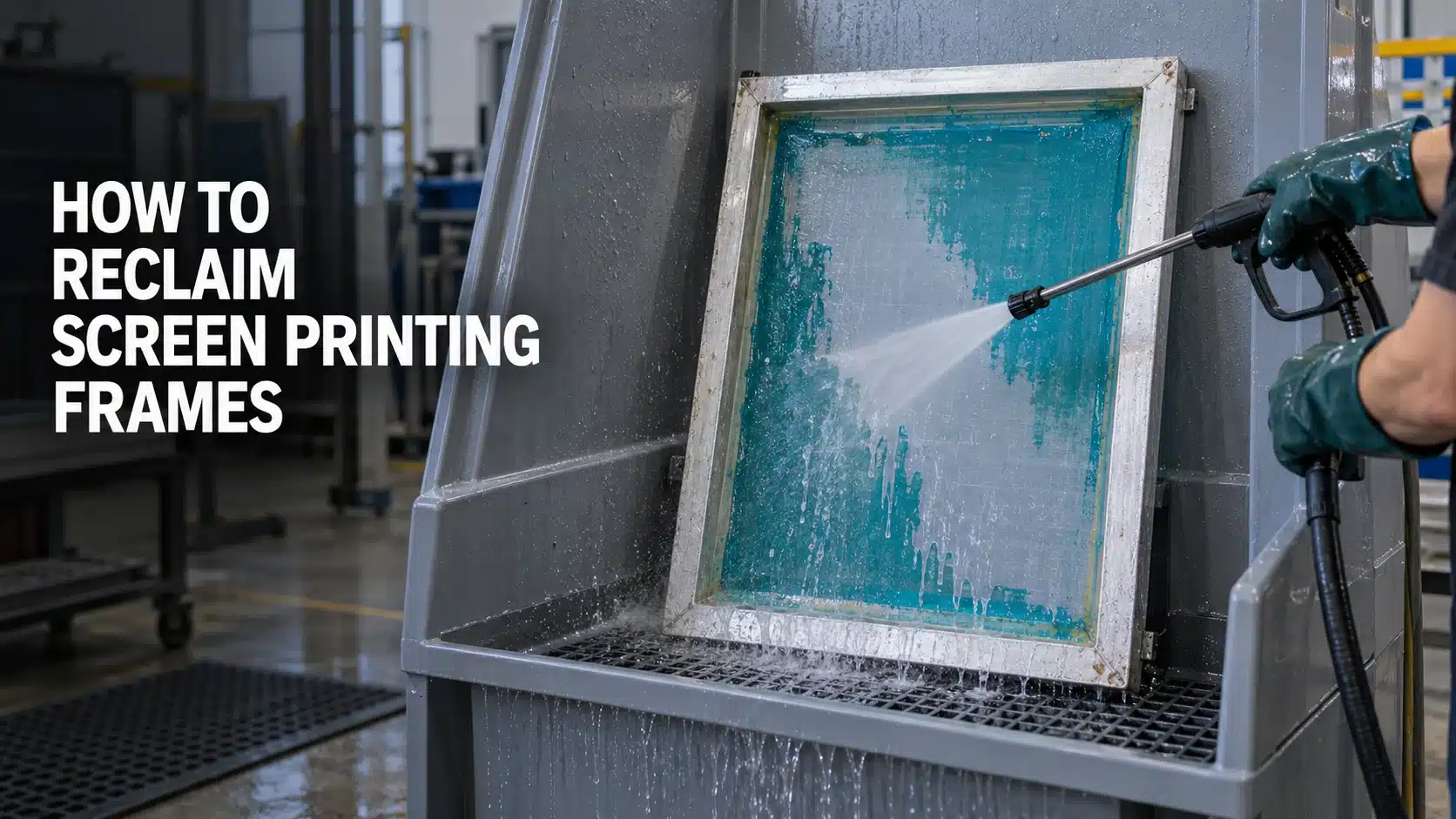
Reclaiming removes the previous print image so the frame and mesh can be used again. A complete reclaiming process may include removing tape, recovering excess ink, cleaning remaining ink, stripping the old emulsion, treating haze when necessary, degreasing, rinsing, and drying.
Unlike stencil development, reclamation often requires appropriate chemical products and higher water pressure to remove a stencil that has already been exposed and used in production. Chemical selection, dilution, dwell time, protective equipment, and disposal procedures should always follow the instructions and safety data supplied by the chemical manufacturer.
A washout booth contains the spray and gives the operator a practical surface for these steps. It does not replace the ink remover, emulsion remover, pressure washer, filtration equipment, or operator training required for a controlled reclaiming process.
Development and Reclamation Are Not the Same
| Point of comparison | Stencil development | Screen reclamation |
| When it happens | After exposure and before printing | After the print job is complete |
| Main objective | Open the new image area | Remove the old image and prepare the mesh for reuse |
| What is removed | Unexposed emulsion in the image area | Ink residue, exposed emulsion, and sometimes haze |
| Typical water pressure | Controlled pressure, beginning gently | Higher pressure may be needed after chemical treatment |
| Chemicals | Usually water for direct-emulsion development; follow the stencil system instructions | Ink remover, emulsion remover, haze remover, and degreaser as required |
| Main risk | Losing fine detail or damaging an underexposed stencil | Locking in residue, damaging mesh, or mishandling chemical waste |
Keeping these two operations conceptually separate helps a print shop diagnose problems correctly. A stencil that fails during initial washout is usually a screen-making or exposure issue. A used screen that is difficult to strip is a reclamation issue.
Main Parts of a Screen Printing Washout Booth
Designs vary by size and manufacturer, but most professional washout stations are built around the same functional elements.
Washout Pan or Basin
The lower pan receives water, loosened emulsion, and other process residue. Its shape should direct runoff toward the drain rather than leave standing water in corners. Smooth, accessible surfaces also make routine cleaning easier.
Splash-Containing Side and Back Panels
High side and rear panels help contain spray when the operator rinses a screen. They reduce the amount of water reaching nearby floors, walls, storage areas, or dry screen-making equipment.
The booth should still be positioned in a suitable wet area. Splash panels reduce overspray; they do not make the station completely enclosed.
Screen Supports or Standoffs
Built-in supports hold the frame above the bottom of the pan and at a usable working angle. Adequate support makes it easier to rinse both sides, inspect the mesh, and work without balancing the frame by hand.
The support area must be wide and tall enough for the largest screen used in production. Checking only the booth’s outside dimensions can lead to an incorrect purchase; maximum frame capacity is the more important measurement.
Drain Connection
The drain directs runoff from the booth to the shop’s approved collection, filtration, treatment, or discharge arrangement. Connection diameter, outlet position, hose routing, flow capacity, and access for cleaning should all be checked before installation.
A drain is not the same as a filtration system. Unless filtration is specifically included, the booth will only collect and direct the wastewater.
Translucent Back Panel or Backlight Provision
A translucent rear panel allows an external light source to illuminate the screen from behind. Some stations include lighting, some offer it as an option, and others are simply designed so that a suitable light can be added.
Backlighting improves visibility during stencil development and final inspection. It can help reveal partially blocked image areas, residual emulsion, pinholes, haze, and contamination that may be difficult to see under normal room lighting.
Any electrical component installed near the wet area must be suitable for that environment and installed in accordance with applicable electrical and workplace requirements.
Chemical-Resistant Construction
Polypropylene and stainless steel are common construction choices. Polypropylene is frequently selected for its corrosion resistance, relatively low weight, and suitability for wet processing areas. Stainless steel offers a rigid, durable work surface, although the exact grade and the chemicals used still matter.
No material should be assumed compatible with every screen-cleaning chemical. Review the equipment specification, chemical safety data, and supplier guidance before introducing a new ink remover, stencil stripper, or haze remover.
Washout Booth vs. Utility Sink vs. Dip Tank
These three pieces of equipment may appear in the same screen room, but they do different jobs.
| Equipment | Primary role | Main advantages | Important limitation |
| Screen printing washout booth | Controlled rinsing, stencil development, and screen reclamation | Splash containment, screen supports, drainage, optional backlighting | Requires a water source and may also require separate pressure and filtration equipment |
| Utility sink | General washing and water access | Low initial cost and widely available | Often lacks tall splash panels, screen supports, inspection lighting, and sufficient frame capacity |
| Dip tank | Soaks used screens in a compatible reclaiming solution | Can soften ink and emulsion on both sides and reduce manual chemical application | Does not rinse the loosened material from the mesh and does not replace a washout booth |
Why a Utility Sink Is Not Always Enough
A utility sink may be workable for occasional small screens, especially during the earliest stage of a workshop. Its limitations become more noticeable as frame size, screen volume, or reclaiming frequency increases.
Standard sinks are not normally designed around screen dimensions. The frame may be difficult to support, overspray can escape beyond the basin, and the operator may have poor visibility through the mesh. Repeated screen processing may also expose the sink and surrounding surfaces to chemicals for which they were not selected.
A purpose-built washout booth organizes the job around the screen rather than asking the operator to adapt a household or general-purpose fixture.
Why a Dip Tank Does Not Replace a Washout Booth
A dip tank is primarily a soaking or pretreatment tool used during reclamation. It allows a compatible solution to contact both sides of a used screen and soften ink or stencil residue. After soaking, the screen still needs to be removed, rinsed, pressure-washed when appropriate, inspected, and cleaned. Those follow-up steps are normally completed in a washout booth.
A dip tank is also not normally used to develop a newly exposed stencil. Development requires controlled access to both sides of the screen and clear visual inspection as the image opens.
Who Needs a Dedicated Screen Washout Station?
A dedicated booth becomes valuable whenever wet screen processing is a regular part of production. The decision depends less on company size than on how often screens are made and reclaimed, how large they are, and how controlled the workflow needs to be.
New and Small Screen Printing Shops
Small shops often have limited floor space but still need a defined place to develop screens. A tabletop washout booth can provide splash containment and screen support without requiring the footprint of a full-height unit.
The station should still have a practical drain route, adequate ventilation for the products in use, safe chemical storage, and enough separation from coating and drying areas.
Growing Commercial Print Shops
As production increases, improvised washing becomes a bottleneck. More screens mean more water, more residue, more operator time, and greater demand for repeatable inspection. A freestanding station gives the shop a permanent wet-processing area and can be integrated with pressure-washing and filtration equipment.
In-House Screen-Making Departments
Garment, graphic, packaging, and industrial screen printers that prepare their own stencils need a reliable connection between exposure and final inspection. A washout booth positioned near—but appropriately separated from—the dry screen-making area helps keep the workflow organized.
Shops That Reuse Screens Frequently
Frequent reclamation makes frame handling, overspray containment, drainage, and cleaning access increasingly important. A dedicated station helps standardize the process and makes it easier to train operators around one repeatable workflow.
Tabletop vs. Freestanding Washout Booth
The best format depends on available space, frame size, working height, and daily screen volume.
| Consideration | Tabletop washout booth | Freestanding washout booth |
| Typical use | Small shops, training rooms, sample departments, lower screen volume | Regular commercial production and dedicated screen rooms |
| Installation | Placed on a strong counter or suitable support | Installed as a complete floor-standing workstation |
| Floor space | Compact | Larger dedicated footprint |
| Frame capacity | Usually intended for small or standard frames | Often provides greater height and working area |
| Ergonomics | Depends on the height and strength of the supporting counter | Working height is established by the booth design |
| Expansion | Suitable when space is the main constraint | Easier to integrate into a permanent reclaiming area |
A tabletop model is not automatically the right choice for every startup. If the shop expects to move quickly into larger screens or frequent reclamation, choosing only for the smallest current job may create another equipment change later.
Similarly, a larger booth is not automatically more efficient. Oversized equipment consumes valuable screen-room space and may increase shipping and installation requirements without improving the actual workflow. Frame capacity and realistic production needs should drive the decision.
How to Choose the Right Screen Printing Washout Booth
Start with the Largest Frame, Not the Most Common Frame
Measure the outside width and height of the largest screen the shop expects to process. Allow enough clearance to place the screen on its supports, rotate or reposition it when necessary, and reach the image area without striking the side panels.
Buyers should distinguish among three different measurements:
• Maximum supported frame size
• Internal working area
• Overall equipment dimensions
They are not interchangeable. Overall width may include walls, flanges, fittings, or structural elements that do not add usable screen capacity.
Confirm the Available Installation Space
Measure the floor or countertop area, working clearance, doorway, drain location, water connection, and access needed for maintenance. For a tabletop booth, verify that the supporting surface can carry the equipment, screen, water, and normal operating loads.
For a freestanding station, check the assembled height as well as the shipping package. A unit that fits the final location may still be difficult to move through a narrow door or corridor.
Compare Construction Materials
Polypropylene is a practical choice for many screen rooms because it is lightweight, does not rust, and is commonly used around wet chemical processes. Welded construction can create a clean pan with fewer joints where residue may collect.
Stainless steel provides a strong, durable structure and is easy to wipe down. Buyers should confirm the steel grade, construction details, edge finishing, and compatibility with the chemicals used in their process.
Material selection should consider the entire working environment rather than one headline feature. Frequency of use, cleaning chemistry, shipping weight, maintenance method, and expected service conditions all matter.
Decide Whether Backlighting Is Necessary
Backlighting is especially helpful when the shop develops fine text, halftones, detailed graphics, or high-mesh-count screens. It also supports final inspection during reclamation by making residual stencil material easier to see.
A small shop working with simple, low-detail images may begin with a backlight-ready booth and add a suitable light later. Buyers should confirm whether the quoted equipment includes the light, only includes a translucent rear panel, or simply allows a light to be installed behind it.
Plan Drainage and Filtration Before Installation
Ask where the drain outlet is located, what fitting it uses, whether a hose is supplied, and how the line will be accessed for cleaning. The receiving system must be able to handle the expected flow without backing up into the booth.
Wastewater planning should happen before the equipment arrives. Screen-processing water can contain emulsion solids, ink residue, and chemicals from cleaning or reclaiming. A solids filter can help capture particulate matter and protect downstream plumbing, but filtration requirements and discharge rules vary by location and by the products used.
Contact the local sewer authority or appropriate environmental agency, and review the instructions and safety data for every chemical in the process. Never assume that wastewater is acceptable for discharge simply because it has passed through a basic filter.
Consider Screen Volume and Operator Workflow
A shop developing a few screens per week has different needs from a plant reclaiming screens throughout every shift. Higher volume places more importance on working height, frame handling, drain flow, cleaning access, nearby chemical organization, and the capacity of any connected filtration system.
The goal is not merely to fit a screen inside the booth. The station should allow an operator to repeat the process safely and efficiently without excessive lifting, bending, reaching, or moving wet screens across dry work areas.
How Is a Washout Booth Used After Screen Exposure?
Exact procedures vary with the emulsion and exposure system, but the following overview shows the role of the booth.
Step 1: Move the Exposed Screen to the Washout Area
Protect the screen from unnecessary UV exposure during transfer. Avoid leaving it under strong light before development, particularly when the image areas have not yet been washed open.
Step 2: Wet Both Sides of the Screen
Apply water evenly to the print side and squeegee side. The unexposed image areas need time to absorb water and soften. Follow the emulsion supplier’s instructions rather than using one fixed soak time for every stencil system.
Step 3: Begin with Controlled Water Pressure
Start gently and develop the image progressively. Excessive pressure at the beginning can damage fine detail or expose an underexposed stencil problem more severely.
Step 4: Inspect the Image as It Opens
Use the translucent back panel or suitable inspection light to check small text, line work, halftones, corners, and open areas. Continue only until the intended image is clear.
Step 5: Rinse Away Remaining Residue
Residual unexposed emulsion can dry inside an opening and partially block ink flow. Give the developed screen a thorough final rinse without unnecessarily extending high-pressure contact.
Step 6: Dry and Inspect the Stencil
Remove surface water and dry the screen completely in a clean location. Before sending it to the press, check for blocked openings, soft stencil areas, pinholes, damaged edges, or residue around the frame.
For the exposure stage that comes immediately before washout, read How to Expose a Screen for Screen Printing.
How Is a Washout Booth Used for Screen Reclamation?
Reclamation begins after the print job is finished and the screen is no longer needed in its current form.
Step 1: Recover Excess Ink
Remove as much usable ink as practical before introducing cleaning products. Sending unnecessary ink into the washout system increases waste and makes downstream cleaning more difficult.
Step 2: Remove Tape and Loose Material
Strip tape and labels from the frame. Remove loose adhesive and other material that could obstruct the drain or contaminate the next cleaning step.
Step 3: Clean Remaining Ink
Use a product compatible with the ink system and follow its instructions. Brushes, pads, and tools used for one chemical step should be managed carefully to prevent unintended mixing.
Step 4: Remove the Old Emulsion
Apply an appropriate emulsion remover to the screen as directed. Do not allow the product to dry on the mesh. Once the stencil has softened, rinse or pressure-wash it away using a method suitable for the mesh and stencil.
Step 5: Treat Haze Only When Necessary
If a ghost image or stain remains, use a compatible haze-removal process. Strong products can affect mesh, adhesives, frames, and operator safety, so concentration and dwell time should never be improvised.
Step 6: Degrease and Rinse
Degreasing removes residue that could interfere with the next emulsion coating. Rinse thoroughly so no cleaner remains in the mesh or along the frame edges.
Step 7: Dry and Inspect
Dry the reclaimed screen completely. Inspect the mesh for damage, blocked openings, remaining haze, loss of adhesion, and frame condition before returning it to screen-making inventory.
What a Washout Booth Cannot Replace
A washout booth makes wet processing more controlled, but it should not be treated as an all-in-one screen-making machine.
It Does Not Replace an Exposure Unit
The exposure unit hardens the stencil and transfers the film image to the coated screen. The washout booth only develops the already-exposed image. Poor exposure cannot be repaired by changing the booth.
It Does Not Create Water Pressure
The booth contains and drains water but does not necessarily include a pump, spray gun, or pressure washer. Low-pressure stencil development and higher-pressure reclamation may require different water-delivery tools.
It Does Not Automatically Remove Ink or Emulsion
Old ink and cured stencil material require the correct cleaning sequence. The booth provides a place to perform that work; it does not perform the chemistry or mechanical cleaning by itself.
It Does Not Replace Wastewater Filtration or Treatment
A drain connection only moves runoff out of the pan. Filtration, collection, treatment, and lawful disposal must be planned separately unless the equipment specification explicitly includes an integrated system.
It Does Not Dry Screens
Developed and reclaimed screens still need a clean drying area. Wet screens should not be carried through coating or film-storage areas if the screen room can be arranged to avoid it.
It Does Not Replace Safe Operating Procedures
Operators still need appropriate protective equipment, chemical labeling, ventilation, electrical protection, housekeeping, and training. Requirements depend on the chemicals, equipment, and local workplace rules involved.
How Should a Washout Area Be Arranged?
The washout booth belongs in the wet section of the screen room. Coating, coated-screen drying, film handling, and exposure are better kept in a clean, controlled area where humidity and contaminated spray are minimized.
A practical workflow moves in one direction:
Coating and drying → exposure → washout → final drying and inspection
Used screens can follow a separate return path:
Printing → ink recovery → reclamation → degreasing → drying → screen storage
Even when a facility has only one booth, the surrounding area can be organized so that clean stencil development and dirty reclamation tools do not become mixed. Clearly labeled brushes and spray bottles, accessible filters, adequate floor drainage, and dedicated storage reduce avoidable contamination.
If space allows, position the booth close enough to the exposure area to limit handling but far enough away—or sufficiently separated—to prevent overspray and humidity from affecting coated screens, film positives, and electrical equipment.
Wastewater and Filtration Considerations
Washout water is process wastewater, not simply clean tap water after it enters the booth. Depending on the operation, it may carry pieces of stencil, ink solids, cleaning products, emulsion remover, haze remover, degreaser, or other residues.
Screens should never be used as a reason to send excess ink directly down the drain. Recover usable ink first and manage unavoidable waste according to the ink and chemical suppliers’ instructions.
A staged solids-filtration arrangement may capture larger stencil pieces first and progressively smaller particles afterward. Filter capacity and maintenance frequency need to match screen volume. A blocked or overloaded filter can slow drainage and cause the booth to back up.
Mechanical filtration does not necessarily remove dissolved substances, change wastewater chemistry, or satisfy local discharge limits. Print shops should identify their waste streams, review local sewer requirements, and determine whether collection, pretreatment, professional disposal, or additional controls are required.
Washout Booth Maintenance
Routine maintenance keeps the working area clean and reduces the chance of blocked drains, poor inspection, or hardened residue.
After each working session, rinse loose material from the pan and screen supports before it dries. Empty or service collection screens and filters as required. Check that the drain is flowing freely and that hoses are not kinked or leaking.
At scheduled intervals, inspect panel joints, supports, fittings, fasteners, hoses, and lighting components. Clean the translucent back panel so that staining does not reduce visibility. Use cleaning tools and products that are compatible with the booth material; aggressive scraping can damage polymer surfaces, while unsuitable chemicals may attack seals, adhesives, or metal components.
Maintenance frequency should reflect workload. A station used continuously may need daily filter checks and frequent deep cleaning, while a low-volume workshop may work to a weekly or monthly schedule. Waiting until runoff slows or residue becomes difficult to remove usually creates more work.
Common Washout Booth Mistakes
Choosing by Overall Width Alone
Outside dimensions do not confirm usable frame capacity. Always check the maximum frame size and internal clearance.
Assuming the Backlight Is Included
A translucent rear panel, a backlight-ready design, and an installed lighting system are three different configurations. Confirm what is included in the quotation.
Using High Pressure for Every Operation
Pressure that helps strip a reclaimed screen may damage a newly exposed stencil. Match the spray method to the process.
Treating the Drain as a Wastewater Solution
The drain only transfers runoff. Solids capture, chemical management, treatment, and discharge requirements must be addressed separately.
Installing the Booth Next to Coating or Drying Equipment
Overspray, humidity, and contamination can undermine the controlled conditions needed for coated screens. Plan wet and dry zones before fixing the equipment in place.
Waiting Too Long to Clean the Booth
Ink, emulsion, and chemical residue become harder to remove after drying. Frequent light cleaning is usually more effective than occasional aggressive cleaning.
HANZE Polypropylene Washout Booth Options
HANZE supplies compact and full-height polypropylene washout booths for different screen-room layouts. Both models use 5/16-inch natural polypropylene construction, a welded main pan, locking side and back panels, built-in screen supports, and a design that can be backlit.
| Model | Equipment dimensions | Maximum frame size | Material | Suitable setup |
| HZI-CBT-MINI2227 Tabletop Washout Booth | 26 × 18 × 34 in | 22 × 27 in | 5/16-in polypropylene | Compact workshops, training rooms, and countertop installation |
| HZI-CBT-STD2331 PP Washout Booth | 32 × 24 × 64 in | 23 × 31 in | 5/16-in polypropylene | Dedicated screen rooms and freestanding installation |
Before selecting a model, confirm the outside dimensions of every frame that will be processed, the required working clearance, the drain arrangement, and whether backlighting or external filtration will be added. For shipping, assembly, or configuration information, contact HANZE with your frame sizes and expected screen volume.
Frequently Asked Questions
What is a screen printing washout booth used for?
A screen printing washout booth provides a controlled place to develop exposed stencils, rinse screens, and reclaim used frames. It supports the screen, contains overspray, and directs runoff toward a drain or collection system.
Is a washout booth the same as a washout sink?
The terms are often used interchangeably. Washout booth generally emphasizes the tall splash-containing enclosure, while washout sink may describe either a purpose-built screen station or a simpler basin. Buyers should compare the actual structure, frame capacity, material, drain, supports, and lighting rather than relying on the name.
Can I use a utility sink instead of a washout booth?
A utility sink can handle occasional small-screen work, but it may lack adequate frame support, splash containment, internal space, chemical-resistant construction, and backlighting. Regular screen production is usually easier to control in a purpose-built booth.
Do I need a pressure washer with a screen printing washout booth?
Not for every operation. Developing a newly exposed stencil normally begins with controlled water pressure. Reclaiming cured emulsion from a used screen often benefits from a pressure washer after the correct remover has softened the stencil. Follow the mesh, emulsion, equipment, and chemical suppliers’ guidance.
Does a washout booth need a backlight?
A backlight is not mandatory, but it can improve inspection. Light shining through the screen makes it easier to see blocked image areas, residual emulsion, pinholes, haze, and incomplete cleaning. Confirm whether the light is installed, optional, or supplied separately.
What material is best for a washout booth?
Polypropylene and stainless steel are both widely used. Polypropylene is corrosion-resistant, relatively lightweight, and well suited to many wet-processing areas. Stainless steel provides a rigid and durable work surface. The better choice depends on chemical compatibility, workload, shipping, maintenance, and budget.
What size washout booth do I need?
Choose according to the outside dimensions of the largest frame, not just the image size or the booth’s overall width. Leave enough internal clearance to support, reposition, rinse, and inspect the screen comfortably.
Is a dip tank the same as a washout booth?
No. A dip tank soaks used screens in a compatible reclaiming solution. A washout booth is where the screen is rinsed, pressure-washed when appropriate, and inspected. A dip tank can speed reclamation but does not replace the booth.
Does a washout booth filter wastewater?
Only if an integrated filtration system is specifically included. A standard booth normally collects runoff and directs it through a drain. Filters, settling tanks, pumps, treatment equipment, or collection containers are separate parts of the wastewater plan.
Can one booth be used for both stencil development and reclamation?
Yes, many shops use one booth for both processes. Good housekeeping is important because ink, haze remover, or reclaiming chemicals should not contaminate a newly exposed screen. Separate and clearly label tools, clean the station between operations, and consider separate clean and reclaim areas when production volume justifies them.
Where should a washout booth be installed?
Install it in a designated wet area with suitable water access, drainage or collection, ventilation, lighting, electrical protection, and maintenance clearance. Keep overspray and humidity away from emulsion coating, coated-screen drying, film storage, and other clean prepress work.
Related Reading
• Complete Screen Making Process: Step-by-Step Guide
• How to Expose a Screen for Screen Printing
• Screen Printing Exposure Time: Complete Guide
• How to Choose a Screen Printing Exposure Unit
Final Thoughts
A screen printing washout booth is more than a large sink. It is the central wet-processing station that connects exposure, stencil development, inspection, screen cleaning, and reclamation.
The right booth should fit the largest frame, contain spray, support the screen securely, drain efficiently, and suit the shop’s daily workload. Backlighting can improve inspection, while appropriate pressure equipment and chemical processes support reclamation. Filtration and wastewater management must still be planned as separate parts of the system.
For a new screen room, start with frame size, production volume, installation space, drain arrangement, and local wastewater requirements. These practical factors will determine whether a compact tabletop unit or a freestanding washout booth is the better long-term choice.
HANZE supplies polypropylene screen printing washout booths for compact and standard screen-room layouts. View the available washout booth models or contact our sales team with your screen dimensions to discuss a suitable configuration, shipping details, and quotation.