Top 10 Tagging Gun Brands — 2026 Buyer’s Guide
Top 10 Tagging Gun Brands — 2026 Buyer’s Guide
If you’re sourcing tagging guns for apparel, footwear, or retail packaging, “best brand” usually comes down to one thing: matching the tool (needle type + fasteners) to your fabric risk and tagging speed requirement. Some brands lean toward everyday standard tagging for cotton/poly/denim, while others specialize in fine-fabric tagging to reduce snags and holes on delicate knits and tightly woven materials. This guide lists 10 widely used tagging gun brands and shows how to choose the right one for your production line—plus a comparison table, troubleshooting tips, and FAQs.
Top 10 tagging gun brands (2026 shortlist)
1. Arrow Tagging Gun (e.g., Arrow 9S for standard tagging)
2. RED-ARROW Tagging Gun (regular needles for standard fabrics)
3. QIANYE Tagging Gun (common in garment/retail channels; broad use cases)
4. KOBE Tagging Gun (standard and thin-needle options in some channels)
5. Avery Dennison Swiftach (Mark III Fine Fabric)
6. Bano’k / TOSKA Banok 503 Series
7. Sinfoo Tag Guns (9SL/9FL long-needle options)
8. Tach-It (TI2F Fine Fabric tool)
9. APLI (thin tagging gun, compatible needles/fasteners)
10. PAG (XMS S13 kits often include extra needles + fasteners)
How tagging guns work
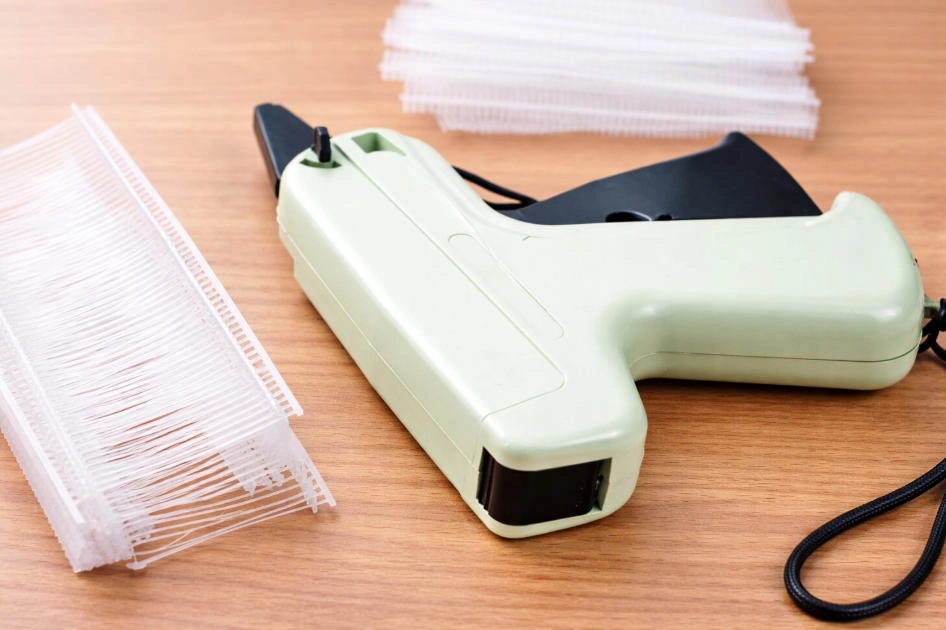
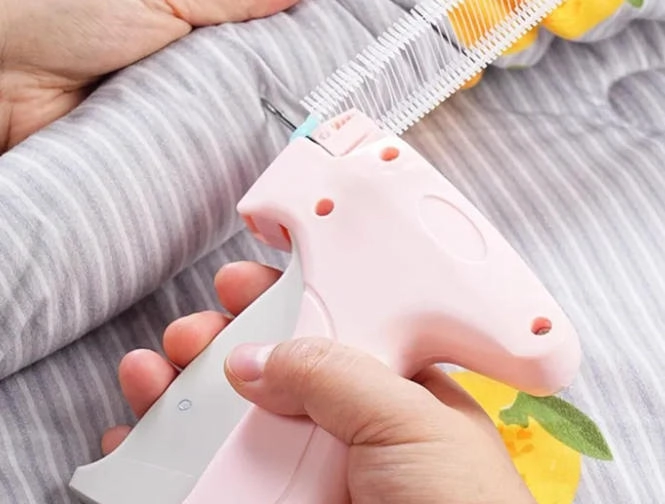
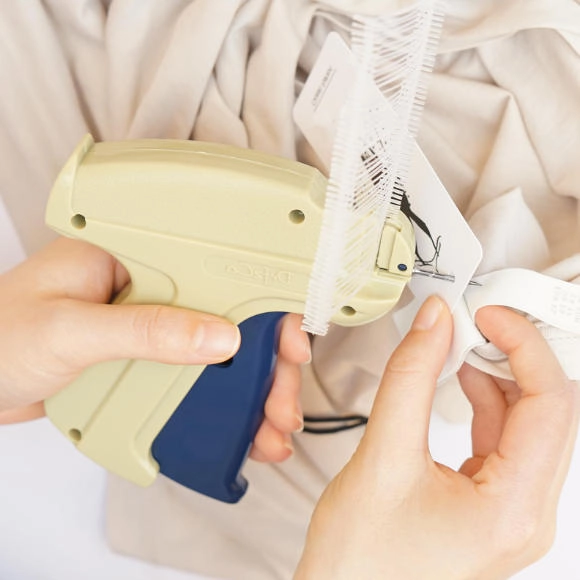
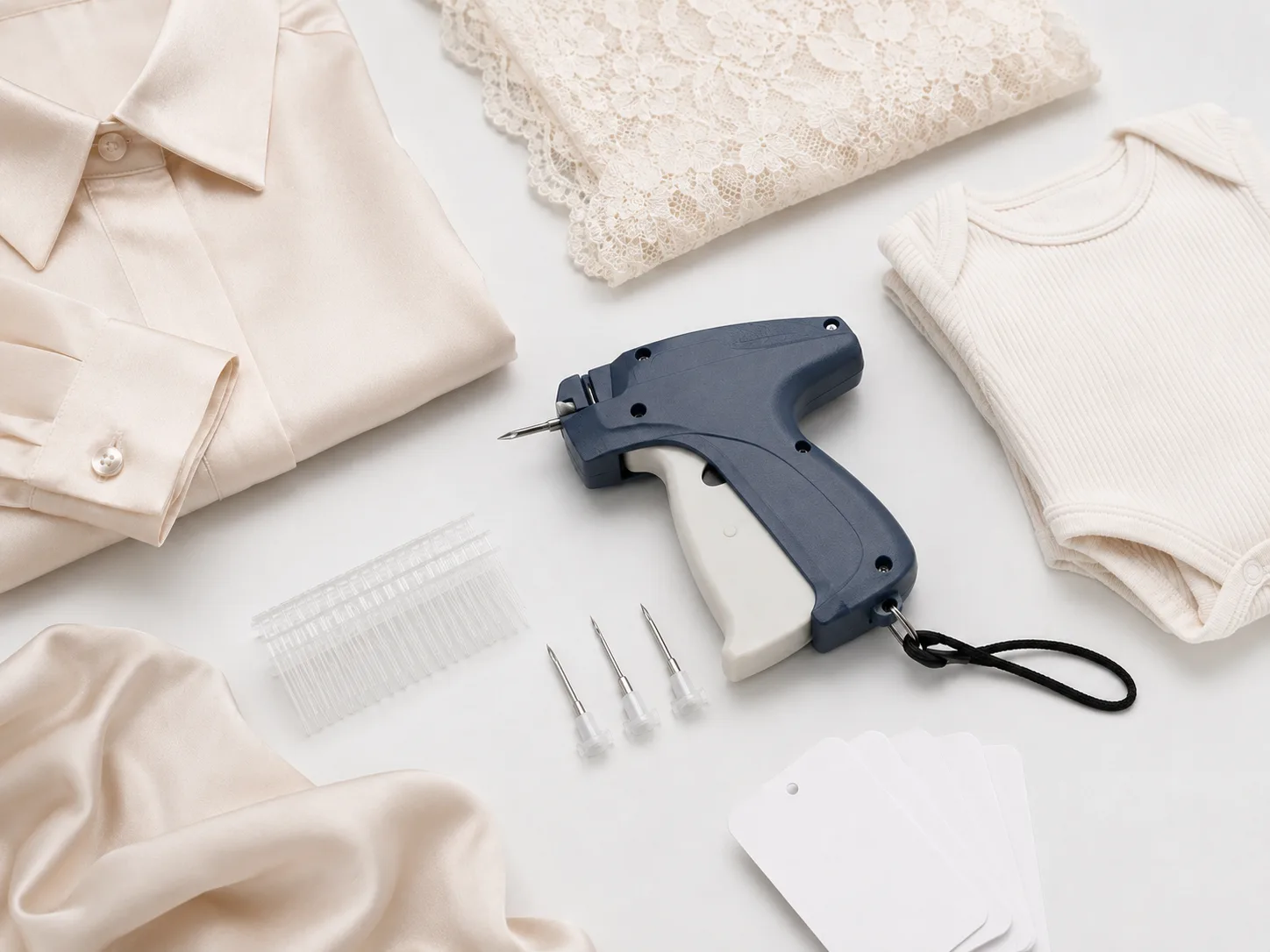
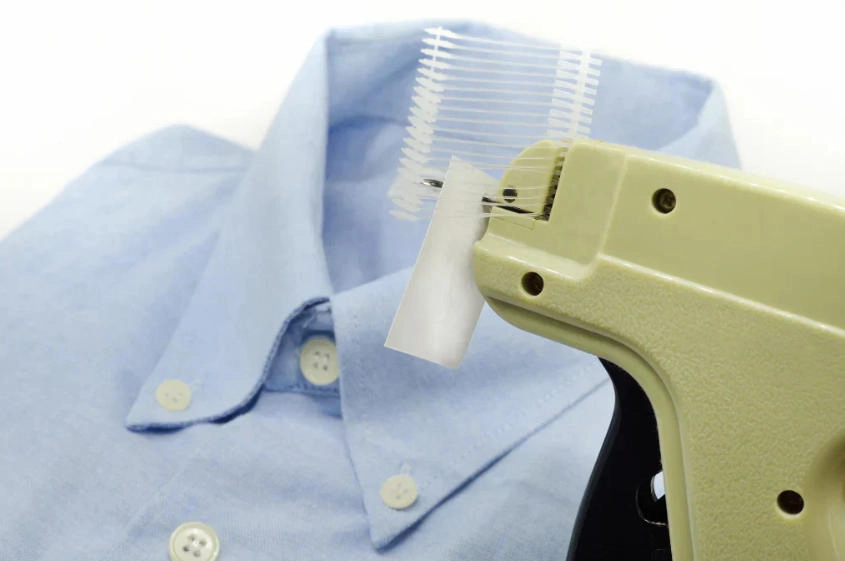
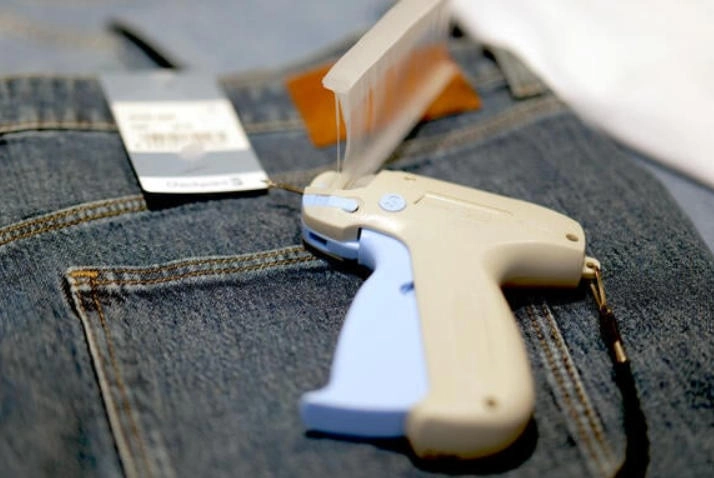
A tagging gun is basically a controlled fastener applicator: you load a strip of tag fasteners (barbs/pins) into the gun, pass the needle through the hang tag and the fabric (or seam/label area), then the trigger pushes the fastener through and releases it. Where brands differ is usually not “magic performance,” but precision and compatibility:
•Needle class: standard needles for everyday fabrics; fine-fabric needles for delicate and tightly knit materials (lower snag risk); and long needles for thicker items or deeper reach. Fine-fabric tools are explicitly designed to reduce snags/holes during delicate tagging.
•Fastener compatibility: some systems accept both 50 and 100 fastener clips (important for sourcing and line efficiency).
•Ergonomics + jam behavior: lighter trigger feel, smoother ejection path, and easier needle changes matter more than people expect when you’re tagging hundreds or thousands of pieces per day.
Brand-by-brand review (Top 10)
1) Arrow Tagging Gun (Arrow 9S and standard tagging)
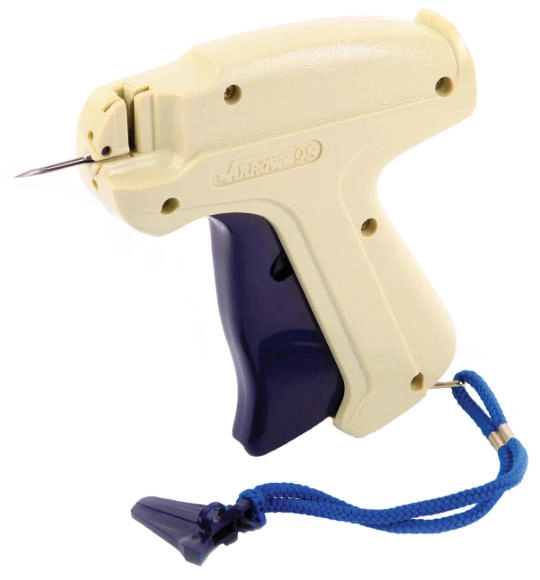
Arrow is one of the most commonly referenced names for standard tagging—especially the Arrow 9S style tool used with standard fasteners for everyday garment labeling. Many retailers describe it as a go-to for standard textile labeling applications and high-demand environments, which matches why it appears frequently in “starter kits” and production floors.
Best for: cotton, polyester, denim, medium/heavy fabrics; general apparel and retail tagging
Buying note: if your line tags a broad range of “normal” fabrics and you want easy sourcing of standard fasteners, Arrow-style standard tools are a practical baseline.
2) Red-arrow Tagging Gun (regular needles for standard fabrics)
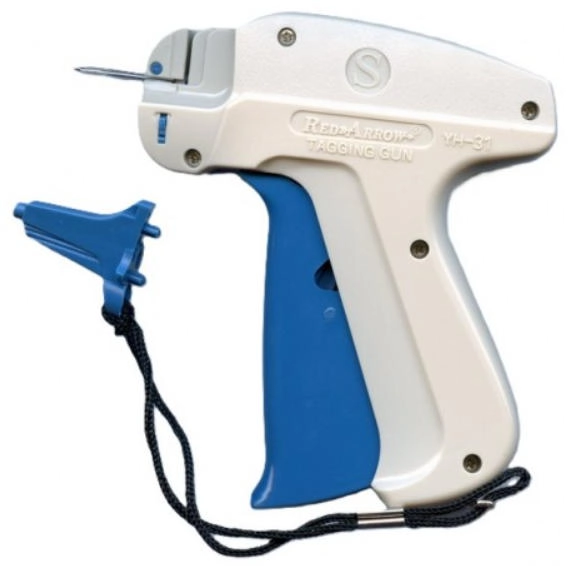
RED-ARROW is typically positioned as a regular/standard fabric tagging gun, commonly sold with a regular-size needle and replacement needle options. If your product mix is mostly standard apparel fabrics and you want a straightforward tagging tool, this category is often sufficient without moving into specialty fine-fabric systems.
Best for: standard fabrics, daily retail tagging, general garment factories
Practical tip: keep replacement needles on hand—needle downtime is one of the most common “hidden costs” in high-volume tagging.
3) Qianye Tagging Gun (broad use across garment/retail)
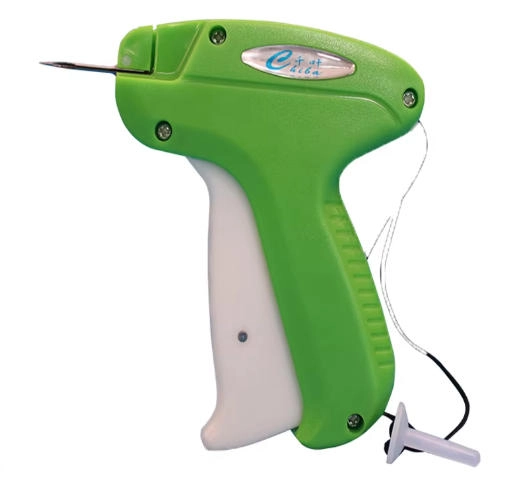
QIANYE tagging guns are widely listed in garment/retail supply channels and are often described for multi-category use (garments, bags, shoes, toys, etc.). That’s useful if your buyer persona includes importers/distributors who want “one tool family” for mixed inventory.
Best for: mixed retail inventories; distributors serving garments + accessories
Buying note: confirm needle type (standard/fine/long) and fastener clip compatibility with your supplier so you don’t mix incompatible consumables.
4) KOBE Tagging Gun (standard + thin-needle availability in some markets)
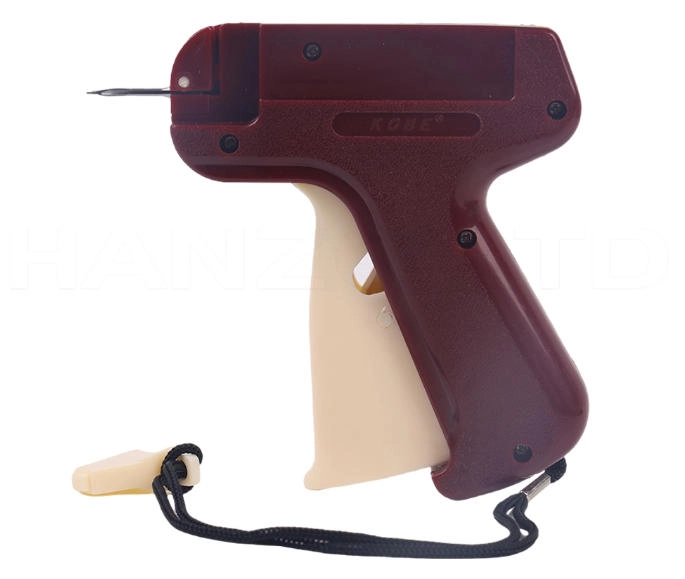
KOBE tagging guns are frequently described for regular fabrics (including common apparel textiles) and may also appear as “thin needle” variants in certain shops—useful if you want a gentler puncture profile without stepping fully into premium fine-fabric systems.
Best for: standard fabrics; buyers who want optional thin-needle configurations
Practical tip: if you tag knits, test on a “worst-case” fabric first (tight knit, thin yarn) and adjust puncture location (seam allowance/label edge) before tagging entire lots.
5) Avery Dennison Swiftach Mark III (Fine Fabric)
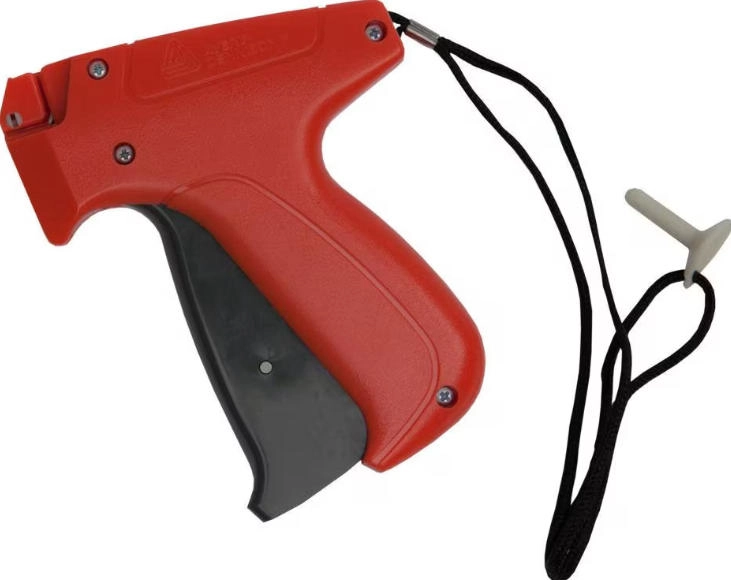
If you tag delicate items (tightly knit fabrics, fine knits, or higher-risk textiles), Swiftach Mark III Fine Fabric is one of the clearest “purpose-built” systems: it uses a fine needle and design choices meant to reduce snags/holes, and it can accept both 50 and 100 fastener clips.
Best for: delicate and tightly knit fabrics; premium retail presentation; quality-control sensitive lines
Buying note: in delicate categories, your “cost” is often fabric damage + returns, not the tool price—fine-fabric systems can pay back fast.
6) Bano’k / TOSKA Banok 503 Series (multiple needle families)
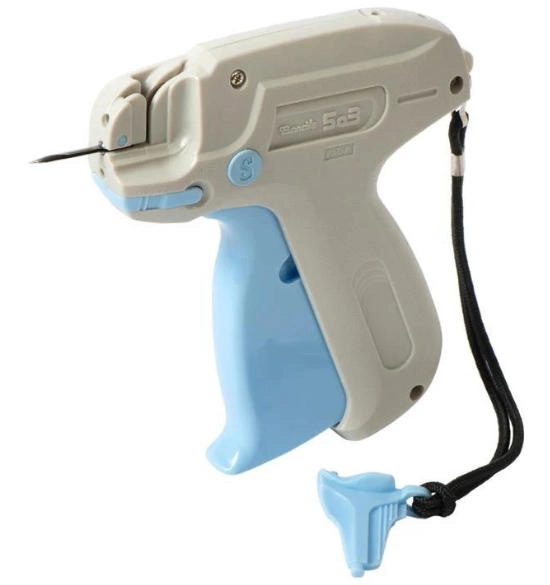
Banok’s 503 series is widely organized as a family: standard, long-needle, fine, fine long-needle, and superfine (303Z). That makes it easy to build a single-brand toolkit across different fabrics and tag positions.
Best for: operations that want a structured lineup (standard → fine → long needle)
Buying note: if you frequently switch from cotton tees to thicker garments (hoodies, outerwear), having both standard and long-needle options reduces “workarounds.”
7) Sinfoo Tag Guns (9SL long needle / 9FL fine long needle)
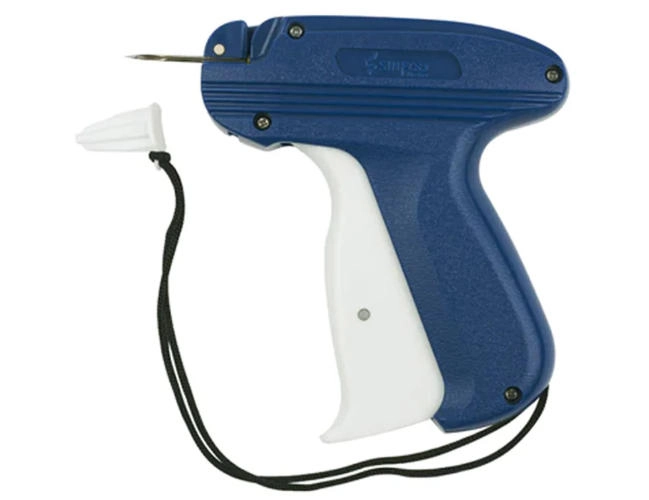
Sinfoo is often associated with long needle configurations. For example, 9SL is commonly described with a 5.2 cm long needle and compatibility with 50/100 fastener clips, positioned for tagging clothes and even items like carpets.
Best for: thicker items, deeper reach needs, or where standard needles are inconvenient
Buying note: long needles can raise puncture risk if operators push too aggressively—train for angle and depth control.
8) Tach-It TI2F (fine fabric needle + micro-spaced fasteners)
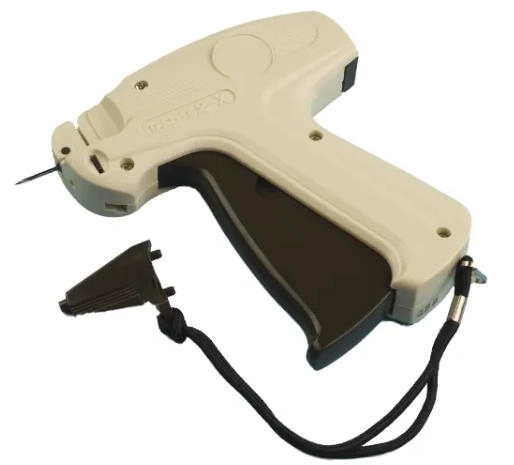
Tach-It’s TI2F is explicitly positioned as a premium fine-fabric tagging tool: it uses a fine fabric needle and supports regular spaced or micro-spaced fine fabric fasteners, with specified replacement needle models.
Best for: hosiery, undergarments, lingerie, sweaters/knits, delicate products
Buying note: if you’re doing delicate tagging at speed, micro-spaced fasteners plus fine needles can reduce snag rates (when applied correctly).
9) APLI (thin tagging gun + defined compatible consumables)
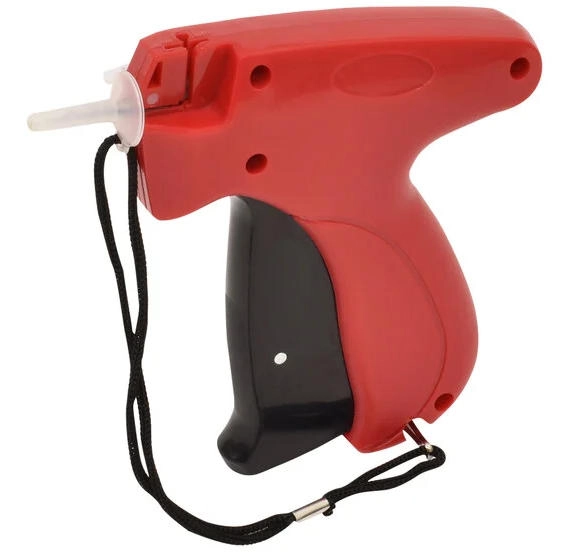
APLI’s “thin tagging gun” is described as ideal for fabrics “without using adhesive or damaging them,” and it clearly lists compatible needle and fastener models—helpful for procurement teams who want compatibility clarity.
Best for: fine/delicate fabrics; buyers who value clear consumable matching
Buying note: when a brand publishes compatible ref numbers, it reduces accidental mismatch (and wasted fasteners).
10) PAG (kits: extra needles + fasteners, common in e-commerce)
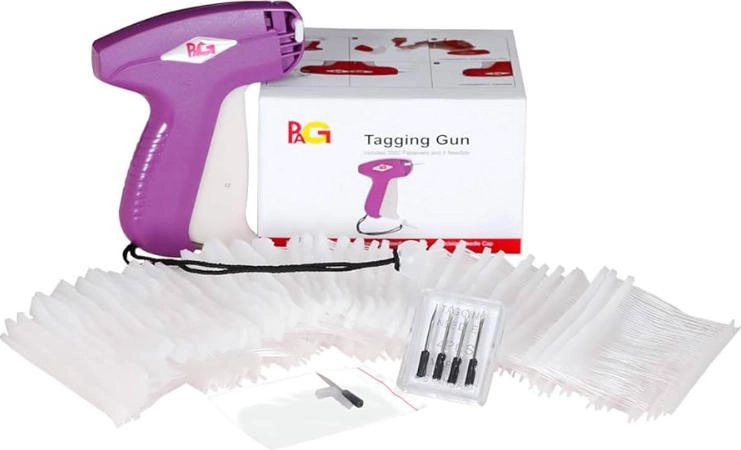
PAG tagging gun kits often bundle a standard tagging gun with multiple replacement needles and a set of barbs/fasteners—useful for small operations or backup inventory planning.
Best for: starter kits, small shops, backup tools, multi-needle stocking
Buying note: even if you buy “industrial” tools, keeping a kit as a fallback prevents production stops during needle breaks.
Tagging gun comparison table
| Brand | Best for | Needle focus | Fastener compatibility | Fabric risk control |
|---|---|---|---|---|
| Arrow | Everyday apparel tagging | Standard | Standard fasteners (varies by model) | Medium |
| RED-ARROW | Standard fabric tagging | Regular/standard needles | Standard fasteners | Medium |
| QIANYE | Mixed retail inventory | Common standard configs | Verify per model | Medium |
| KOBE | Regular fabrics (+ thin needle options in some channels) | Standard / thin | Verify per model | Medium–Lower (thin needle) |
| Swiftach Mark III Fine Fabric | Delicate/tightly knit | Fine-fabric | Accepts 50 & 100 clips | Lower |
| Banok 503 Series | Structured lineup | Standard / fine / long | Varies by tool type | Medium–Lower (by needle choice) |
| Sinfoo 9SL/9FL | Reach + long needle | Long (standard/fine) | Suitable for 50 & 100 clips (9SL) | Medium |
| Tach-It TI2F | Delicate products | Fine-fabric | Regular + micro-spaced fine fasteners | Lower |
| APLI thin | Delicate fabrics | Thin/fine | Published compatible models | Lower |
| PAG kit | Starter/backups | Standard | Kit-based (varies) | Medium |
How to choose the right tagging gun
1) Start with fabric risk
•Delicate + tightly knit (knits, fine jerseys, soft synthetics): prioritize fine-fabric tools/needles designed to reduce snags/holes.
•Everyday cotton/poly/denim: standard needles are usually efficient and cost-effective.
•Thick or hard-to-reach tagging points: consider long needles (but train operators for controlled depth).
2) Confirm fastener clip format
Some tools accept both 50 and 100 fastener clips, while others are pickier. If your supply chain buys fasteners from multiple sources, this matters.
3) Build a spare-needle policy
High-volume lines should stock replacement needles for each needle class (standard/fine/long). Some brands explicitly list compatible needle references, which helps reduce ordering errors.
4) Operator technique is part of “brand performance”
Even the best tool can cause snags if operators puncture at the wrong angle or tag directly through fragile knit zones. Add a 5-minute training SOP: puncture location, angle, trigger pressure, and jam clearing.
Common problems and fixes
Problem: Fastener jams
•Cause: misloaded fastener clip, bent needle, or wrong fastener spacing
•Fix: unload clip, inspect needle tip, reload carefully; keep spare needles ready.
Problem: Needle bends/breaks
•Cause: tagging too close to hard seams, pulling the gun sideways during puncture
•Fix: tag at label/seam allowance when possible; puncture straight; replace needle promptly.
Problem: Snags/holes on fabric
•Cause: using standard needle on delicate tight knits, or too much trigger force
•Fix: switch to a fine-fabric system designed to reduce snags/holes; adjust tagging location and technique.
FAQ
1) What’s the difference between a standard tagging gun and a fine fabric tagging gun?
Fine fabric tools use a fine needle and design choices meant to reduce snags and holes on delicate/tightly knit fabrics.
2) When should I use a long needle tagging gun?
Use long needles when you need deeper reach or you’re tagging thicker items—some long-needle tools are described around ~5.2 cm needle length.
3) Do all tagging guns accept both 50 and 100 fastener clips?
No. Some tools explicitly accept both (e.g., Mark III Fine Fabric), while others vary by model.
4) Which tagging gun is best for delicate knitwear?
Choose a fine-fabric tool designed for delicate/tightly knit fabrics, and pair it with compatible fine/micro-spaced fasteners.
5) How often should I replace tagging gun needles?
Replace immediately if you see bending, burrs, or snagging. In high-volume operations, keep spares on-site to avoid downtime.
6) Can a tagging gun damage garments?
Yes—especially on delicate fabrics or if operators tag in high-risk areas. Use fine-fabric systems and train puncture location/angle to reduce damage risk.
7) What should B2B buyers check before ordering in bulk?
Needle class, fastener clip compatibility, spare needle availability, consumable consistency, carton packing, and lead time.