A Beginner’s Guide to Tagging Guns: Types, Pins & Needles
A Beginner’s Guide to Tagging Guns: Types, Pins & Needles
You need to attach swing tags to clothing, shoes, or handbags. It sounds easy—until you start sourcing the right tagging gun, matching fasteners (tagging pins), and ordering the correct tagging gun needles. The good news is that tagging equipment follows clear compatibility rules once you understand the main categories. This guide explains the most common tagging gun types, how fastener codes work, how to choose needle length, and when to use loop locks for products that can’t be pierced.
What is Tagging Gun?
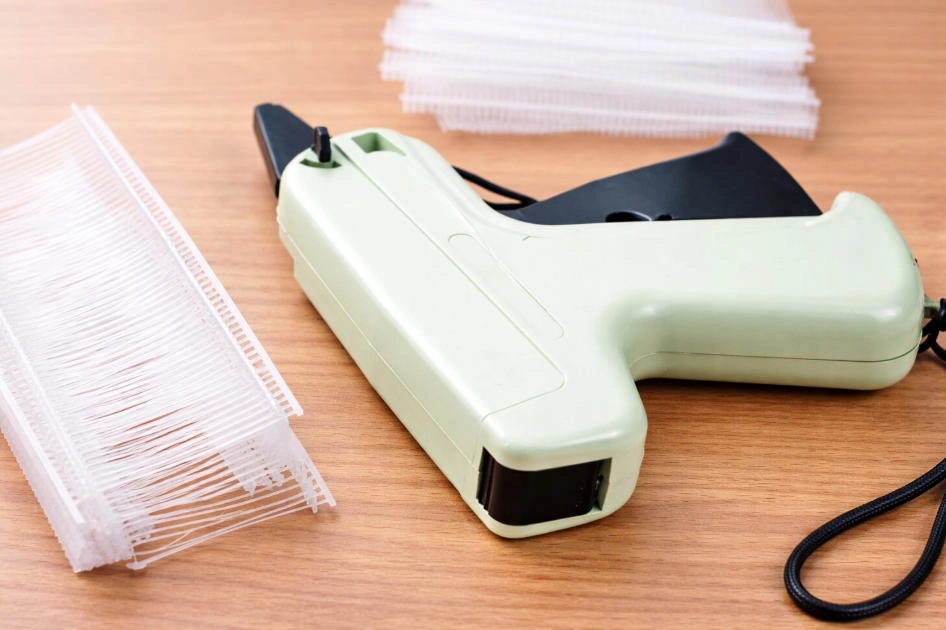
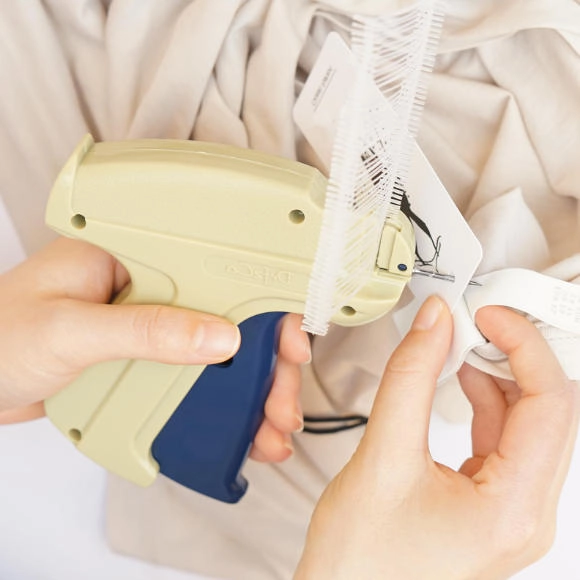
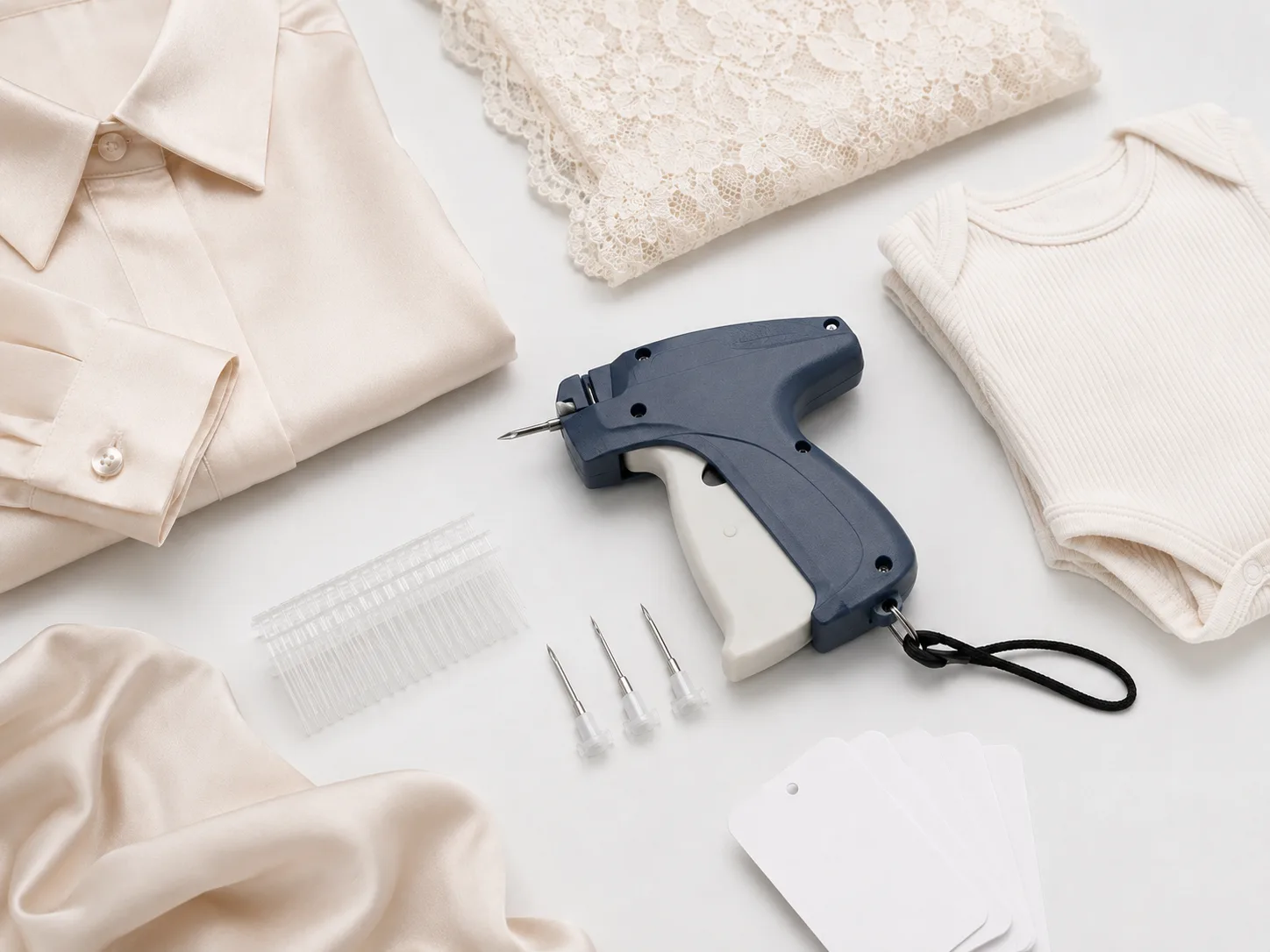
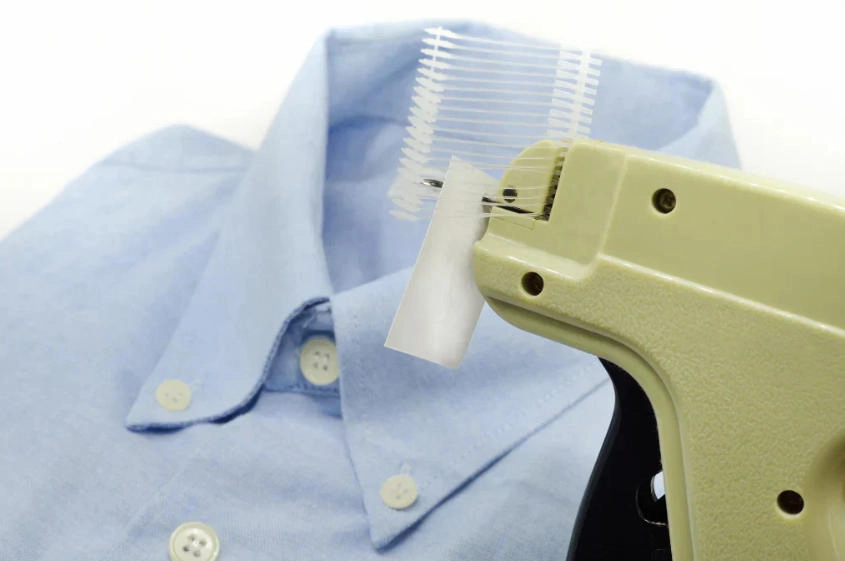
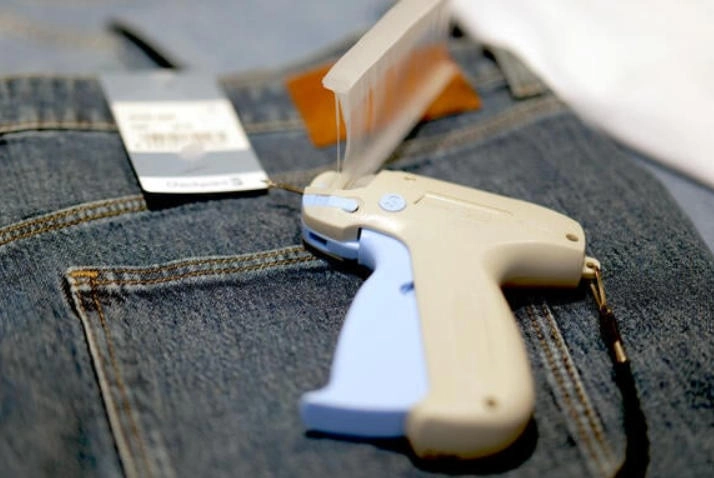
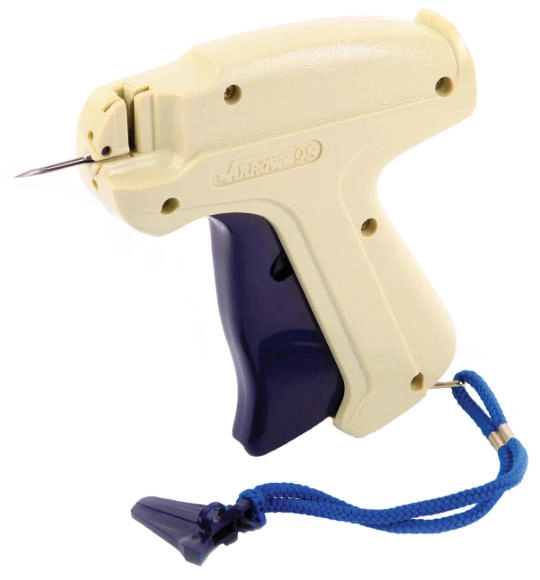
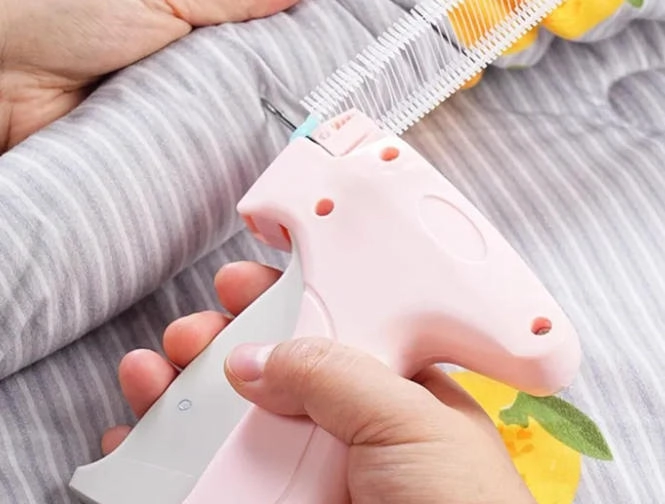
A tagging gun is a handheld, trigger-operated tool used in garment and product labeling workflows to quickly attach price tags, labels, or promotional swing tags to clothing and other items. It works by driving a plastic T-shaped fastener (also called a tagging pin or barb) through a hollow needle, passing the fastener through the tag and the product (or a designated loop) so the tag is secured in place with a single squeeze. Most tagging guns and related supplies fall into four systems, from heaviest to lightest. These “systems” are not just marketing names—they reflect real differences in needle size and fastener thickness, which is why compatibility matters.
1) Extra Heavy Duty (EHD)
Extra Heavy Duty (EHD) systems are built for industrial fastening tasks where materials are thick and tough, and a stronger hold is required. This category is typically used for heavy layered applications rather than everyday hang tagging. In many apparel and accessories workflows, you may never need EHD unless your product or material stack-up is unusually dense.
2) Standard (S / REG / PP)
Standard tagging guns are the most widely used option for attaching tags to garments, soft goods, and general merchandise. Most procurement lists and factory lines default to standard because it supports a broad range of common tagging fasteners.
3) Fine (FF / FFPP / X)
A fine tagging gun is designed for situations where you need to insert a fastener into fabric but want a smaller puncture. Fine systems use a smaller needle and thinner fasteners compared with standard. They’re commonly chosen for lighter textiles, more delicate garments, or when appearance matters and you want to minimize visible holes.
4) Micro (TG)
Micro tag guns are for the smallest fasteners. Micro systems are used when you need a very discreet fastener—often in costume, stage, wardrobe, or specialty textile work where the attachment point must be easy to hide. Micro fasteners are typically very short (often in the 4–5 mm range, depending on supplier and product line).
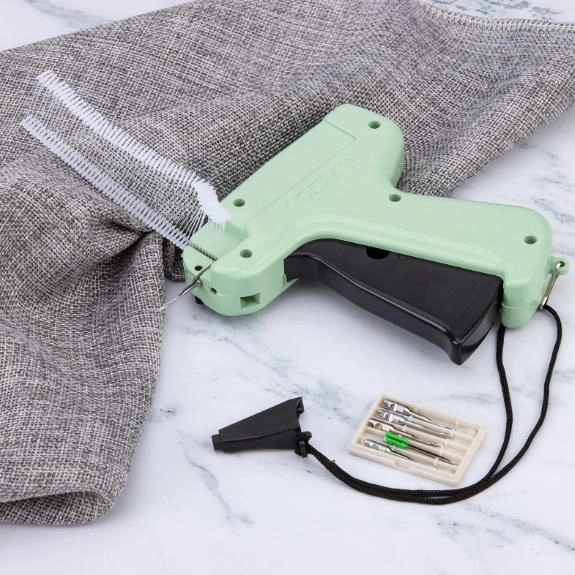
You may also see (L), which stands for Long and refers to the needle length on the gun. Long-needle versions exist for both standard and fine systems. The benefit is simple: the longer needle can reach further into thicker stacks or bundled items—useful for things like sock bundles or layered packaging situations.
Important rule: Needle length does not change system compatibility.
• Long Standard is still only compatible with standard fasteners
• Long Fine (often shown as XL in some catalogs) is still only compatible with fine fasteners
Some products can’t be tagged with a needle. Hard goods, coated surfaces, rigid plastics, and certain accessories can be damaged by piercing. For these cases, loop locks (also called self-locking loop fasteners or security loop fasteners) are a practical alternative.
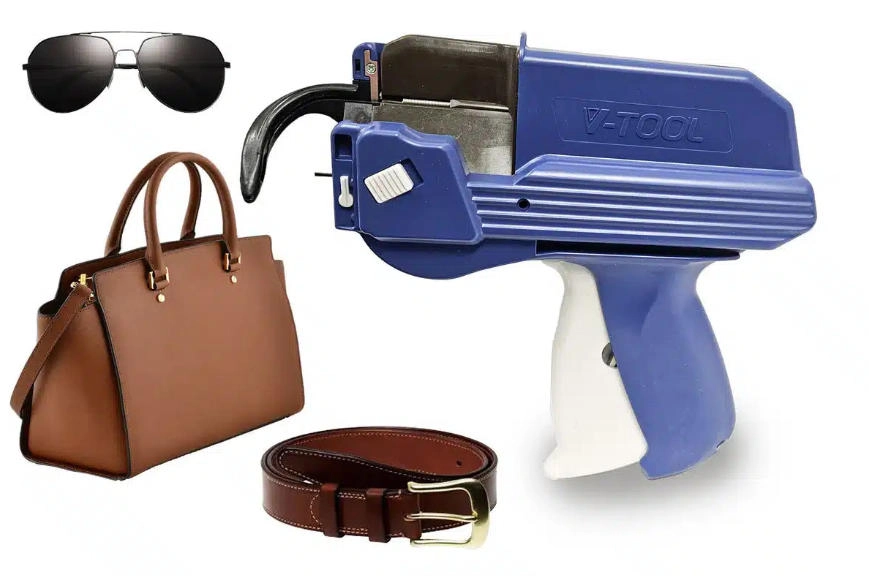
A loop tag gun (often called a V-tool) is a specialized handheld tagging tool used to attach tags to products—such as shoes, handbags, jewelry, and sporting goods—without piercing the item. Instead of a hollow needle, it uses a needle-free, hooked mechanism to apply plastic loop fasteners, helping keep tags secure while reducing the risk of scratches, holes, or other damage on delicate or hard-surface goods.
Loop locks are manually applied fasteners that form a closed loop around a product feature such as a handle, strap, or frame. Typical use cases:
• Sunglasses and eyewear
• Shoes (through lace holes or hang loops)
• Handbags (handle, strap rings)
• Cookware or hard goods with hang holes
• Items that must hang from fixed positions on a display
Matching Rules
All products within the same category are designed to work together. That means:
• Standard fasteners → Standard tagging guns
• Fine fasteners → Fine tagging guns
• Micro fasteners → Micro tagging guns
But cross-matching usually causes trouble:
• Fine fasteners typically won’t feed correctly through a standard gun
• Standard fasteners are too thick for fine systems
• Micro systems are not interchangeable with standard or fine
If you want a simple procurement checklist, use this chain:
Gun system → Matching needles → Matching fasteners → Correct length
What is Tagging Pin?
A tagging pin (also called a tag pin or fastener) is a small, durable fastener—typically plastic, and sometimes metal—used with a tagging gun to quickly attach price tags, labels, or brand swing tags to garments, textiles, shoes, and soft goods such as toys. In commercial tagging workflows, it provides a consistent, secure way to apply tags at scale, helping reduce tag loss, deter tag swapping, and minimize handling-related product damage. Once you know your gun type, buying fasteners becomes straightforward: match the same category as the gun, then select the best length and material for your product.
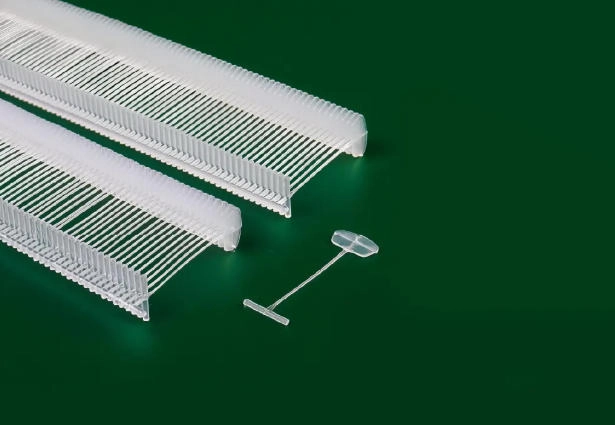
Match the Category First
• Standard gun = any standard fastener length
• Fine gun = any fine fastener length
• Micro gun = micro fasteners only
Choose the Best Length for the Product
Fastener length affects how your tag sits and how much space you have between the tag and the product. In production, the “best” length depends on the thickness of the item, the hang tag design, and whether the tag should sit close or have clearance.
Common selection logic:
• Thin garments / minimal clearance needed → shorter fasteners
• Thick seams / bundles / accessories → longer fasteners
• If tags snag in packing → consider a shorter length or different tag placement
Consider Material and Use Conditions
Fasteners are typically offered in common plastics such as polypropylene-type materials and nylon-type materials (exact naming varies by supplier). For B2B buyers, it’s helpful to specify:
• Expected storage conditions (heat, cold, sunlight)
• Handling conditions (high friction during packing, heavy pulling on tags)
• Whether you need higher toughness or standard general-use performance
If you’re standardizing across many SKUs, keep one “default” fastener and add only a small number of exceptions for special products.
What is Tagging Needle?
A tagging needle is a sharp, hollow (typically stainless-steel) needle installed in a tagging gun to pierce fabric and guide plastic fasteners through the material. As the trigger is squeezed, the needle channels the tagging pin / barb through the swing tag and the product, enabling fast, consistent tag attachment for garments and other soft goods in labeling and inventory workflows.
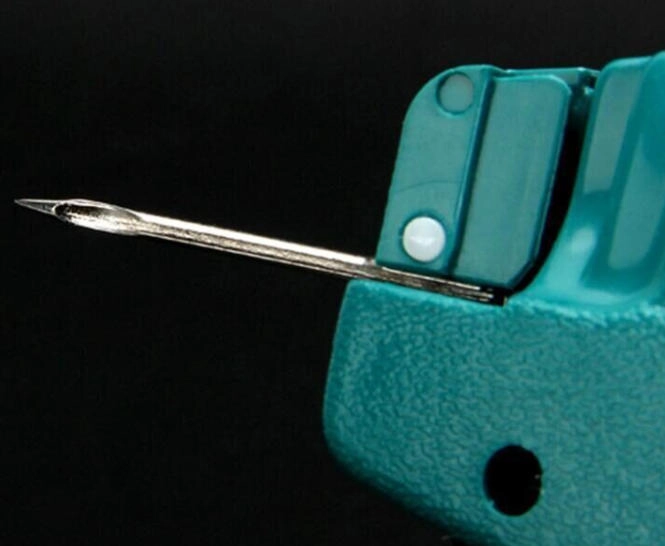
Tagging gun needles are not always universal across different systems and models. For reliable operation and safety, replacement needles should match:
• The system category (Standard vs Fine vs Micro)
• The needle length (Regular vs Long)
• The gun model family (as listed by the supplier)
Practical tips for production teams:
• Store spare needles with the corresponding gun and fastener stock
• Label bins clearly by system and length
• Train operators not to force a needle that feels wrong—most breaks happen during forcing or twisting under load
Common Tagging Gun Problems and How to Avoid Them
Most issues come from a few predictable causes:
• Jams / mis-feeds: fastener category doesn’t match the gun (standard vs fine vs micro)
• Broken needles: forcing through thick stacks, twisting while inserted, dropping the gun, or using without a needle cap
• Fabric damage: needle too large for the textile, wrong system choice, or incorrect insertion technique
• Inconsistent tagging speed: mixed fastener lengths or inconsistent operator technique
A simple improvement that helps immediately:
• Standardize the system per product group and keep the correct needles/fasteners physically together.
Facing more real-world challenges? Our tagging gun troubleshooting guide helps you get the job done smoothly!
Conclusion
Tagging becomes simple once you treat it as a compatibility system. Choose the correct tagging gun category (Standard, Fine, Micro, or EHD), then match the correct fasteners (tagging pins) and tagging gun needles—including the right needle length if you use long versions. For products that shouldn’t be pierced, use loop locks or other loop-fastener solutions.
If you’re sourcing tagging guns and consumables for ongoing production, HANZE can support stable bulk supply with multiple gun systems (Standard/Fine/Micro), compatible tagging pins and replacement needles, and loop fasteners for non-pierce applications. We offer OEM/branding options, consistent QC, and flexible bulk packaging to fit warehouse and factory workflows. For a quick recommendation, share your product type (fabric/thickness) and preferred fastener length, and our team can suggest a compatible setup and provide a quotation. Contact us now!
FAQ
1) Are standard tagging guns compatible with fine fasteners?
No. Standard tagging guns are designed for standard fasteners. Fine fasteners typically won’t feed or seat correctly in standard guns, and forcing compatibility can cause jams or needle damage.
2) Does “Long (L)” mean I can use different fasteners?
No. Long needle only changes reach. A long standard gun still uses standard fasteners, and a long fine gun still uses fine fasteners.
3) Can I use any replacement needle in any tagging gun?
In most cases, you should match the needle to the gun’s system and model family. Ordering the wrong needle type is a common cause of poor fit and breakage.
4) What tagging option is best for sunglasses or shoes?
Use loop locks (self-locking loop fasteners) or other non-piercing solutions. These are designed for products that cannot or should not be pierced.
5) How do I choose the right fastener length?
Start with the product thickness and tag design. Use shorter fasteners for thin items and tighter presentation; use longer fasteners for thicker items, bundles, or when extra clearance is needed to prevent tearing or snagging.
6) What’s the fastest way to reduce tagging errors on a production line?
Standardize your system per product group, label bins clearly (Standard/Fine/Micro + lengths), and store matching needles and fasteners with each gun to prevent mix-ups during busy shifts.