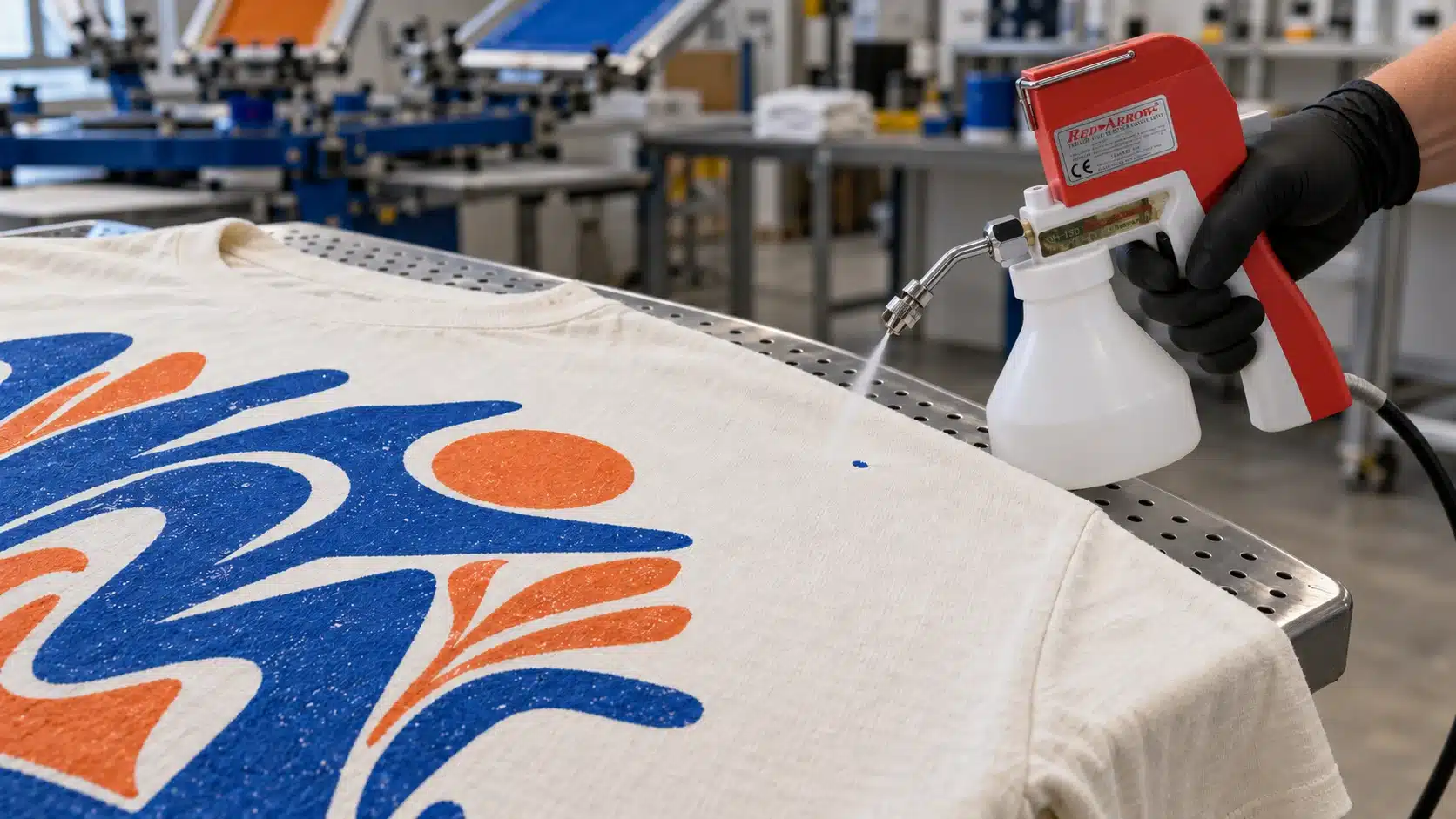
Spot Cleaning Gun Not Spraying? Troubleshooting No Flow and Weak Spray
Spot Cleaning Gun Not Spraying? Troubleshooting No Flow and Weak Spray
You pull the trigger, hear the gun running, and nothing comes out. Or the gun sprays, but the stream is weak, uneven, or split into two directions.
A spot cleaning gun that stops working does not automatically need a new pump. An empty reservoir, loose pickup tube, incorrect control setting, or obstructed nozzle can interrupt fluid delivery. Other symptoms, including persistent humming without normal vibration, may indicate an internal fault.
Start with the fluid supply, accessible connections, operating settings, and nozzle condition. If those checks do not restore normal flow, stop repeated testing and arrange model-specific service.
The sequence below applies primarily to handheld electric textile spot cleaning guns used in garment production and screen printing. Pneumatic spotting tools and complete cleaning stations may require different procedures.
Quick Diagnosis: Match the Symptom Before Adjusting Anything
First, identify what happens when you press the trigger. “Not working” can describe several different faults.
| Symptom | First checks | When to escalate |
|---|---|---|
| No sound, vibration, or spray | Correct power supply, plug connection, visible cord condition | External checks pass but the gun remains inactive |
| Normal operating sound but no fluid | Reservoir level, pickup tube, approved fluid, control setting | No flow after the permitted priming procedure |
| Humming without normal vibration or spray | Stop testing; note storage and maintenance history | Internal inspection is needed |
| Weak but continuous stream | Fluid supply, operating position, control setting, nozzle condition | Weak output persists after approved checks |
| Intermittent or sputtering spray | Fluid level, pickup connection, contamination | Flow remains unstable with a confirmed fluid supply |
| Split or sideways stream | Nozzle obstruction or damage | Pattern remains distorted after approved cleaning |
| Fluid leakage | Location of leak, reservoir fit, accessible seals | Leak involves the body, pressure components, or electrical area |
A symptom narrows the investigation; it does not confirm a failed component. Change one thing at a time and record whether the result improves.
Before Troubleshooting: Disconnect and Identify the Model
Switch off and unplug the gun before removing the reservoir, checking connections, making adjustments, or carrying out maintenance. Follow the manufacturer’s pressure-release procedure before opening any fluid connection.
Keep the nozzle pointed away from people throughout inspection and testing. Never use a finger to check whether fluid is coming out or to locate a suspected leak.
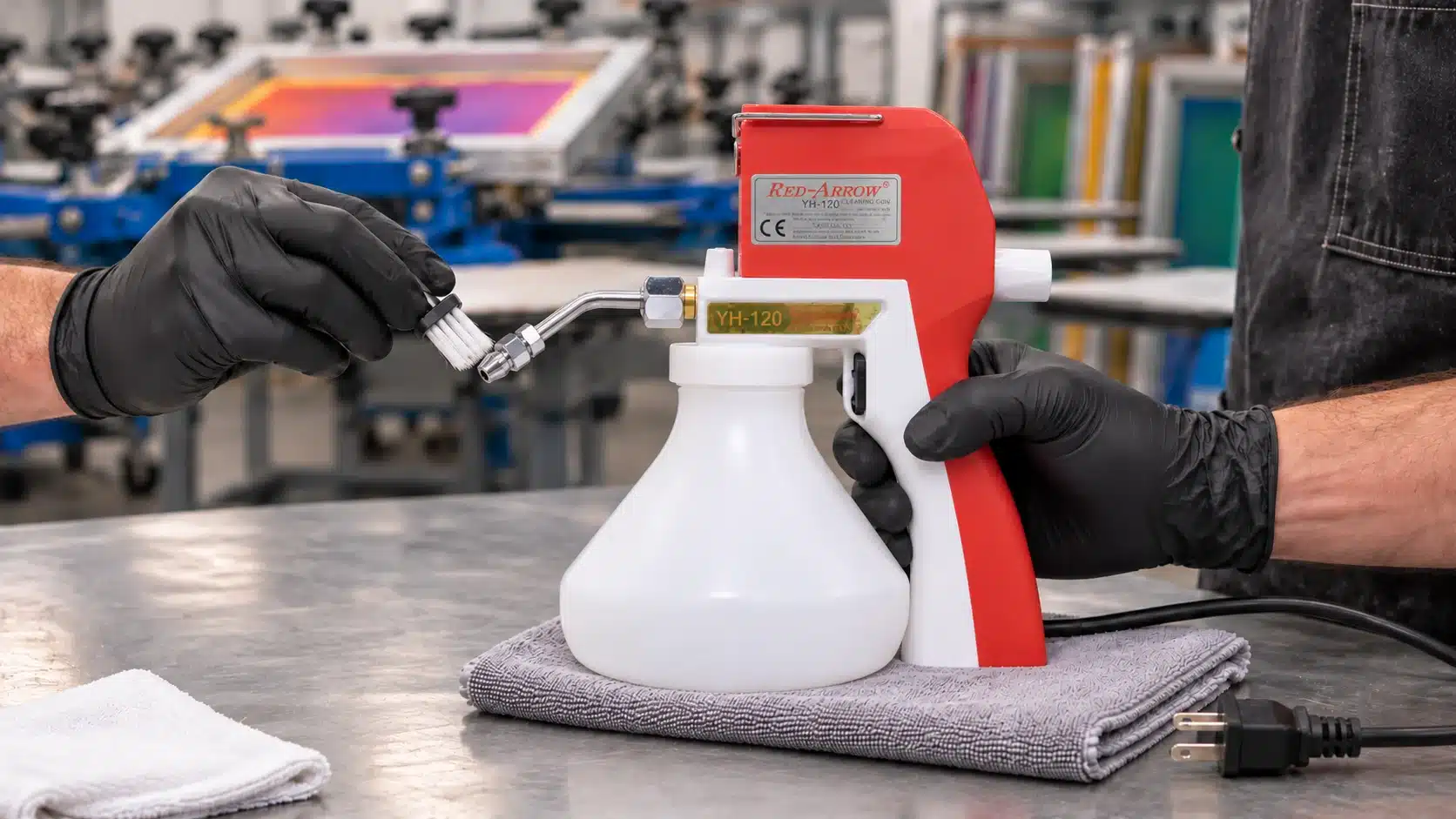
Record the model, voltage, frequency, and cleaning fluid before proceeding. A similar-looking gun may have different electrical requirements, internal parts, and maintenance instructions.
Also check the manual for the type of fluid permitted. For example, the CCI SG-5500 instructions specify non-flammable, non-aqueous products. A fluid that works in another textile gun is not automatically suitable for that model.
Perform spray tests at an appropriate ventilated collection or extraction area using approved fluid. Keep customer garments away until the gun operates consistently.
1. The Spot Cleaning Gun Makes No Sound and Does Not Spray
An inactive gun calls for a power-supply check before a fluid-system investigation.
Check the Rating Plate and Connection
Confirm that the available voltage and frequency match the gun’s rating plate. Check that the plug is fully seated and that the intended supply is switched on.
Inspect the accessible cord and plug for damage while the gun is disconnected. Stop if you find exposed conductors, heat damage, a loose plug body, or a damaged cable entry.
Do not test a gun known or suspected to have been connected to the wrong voltage.
Leave Internal Electrical Checks to Qualified Service
Some models have replaceable fuses, but fuse access and specifications vary. Do not install a larger fuse, bypass a protective device, or repeatedly reset a circuit that trips when the gun is connected.
If the external supply is confirmed and the gun remains inactive, arrange service for the switch, wiring, protective components, or drive assembly.
A replacement plug adapter changes the connection shape; it does not necessarily change voltage or frequency.
2. The Gun Runs but No Cleaning Fluid Comes Out
When the gun sounds and vibrates normally but does not spray, begin with the fluid path.
Check the Reservoir Level and Operating Position
Confirm that the reservoir contains enough approved fluid for the pickup inlet to remain submerged in the normal operating position.
A bottle can contain fluid while the pickup tube draws air, particularly when the gun is tilted. Return the gun to the position specified in its instructions before retesting.
Do not continue operating with an empty reservoir. ARROW’s usage instructions specifically warn against dry running, so holding the trigger down without a confirmed fluid supply is not a suitable general troubleshooting method.
Inspect the Accessible Pickup Tube and Filter
With the gun disconnected and made safe, check the accessible pickup components.
• Is the tube fitted in the correct position?
• Has it loosened, cracked, kinked, or become detached?
• Is the inlet or filter visibly contaminated?
• Was the correct tube installed after the last cleaning?
Clean or replace accessible components only as the manual permits. Avoid overtightening fittings or improvising seals with tape, glue, or an unidentified sealant.
Confirm the Control Setting
Check whether the fluid or output control has been moved to a closed or unsuitable position.
Do not assume that every knob works in the same direction. Use the starting position given for your exact model, and make adjustments with the unit disconnected where instructed.
Avoid turning controls beyond their normal range. Removing a knob too far may disturb a spring or another component on some designs.
Follow the Specified Priming Procedure
A gun may require a short period to establish flow after filling or approved servicing. TENLUXE’s Type A instructions, for example, describe a brief startup interval before spraying begins. That interval should not be treated as a universal priming time for other models.
If the allowed priming procedure produces no flow, stop. Repeated extended trigger operation can obscure the original fault and may damage the equipment.
3. The Gun Hums but Does Not Vibrate or Spray Normally
A humming sound is different from normal operation with a blocked fluid supply.
Record whether the usual vibration is absent, whether the sound changed suddenly, and whether the problem appeared after storage.
ARROW’s troubleshooting guidance identifies a seized piston as one possible explanation for humming without vibration. Its guidance also directs users to service support for unresolved problems. That diagnosis is specific to the relevant equipment and should not be applied automatically to every brand.
Do not try to free the mechanism by:
• Striking the gun against a bench.
• Inserting a tool into the nozzle while connected.
• Running it repeatedly until it heats up.
• Adding an unapproved solvent or lubricant.
• Applying a repair video for a different model.
After checking the correct supply and the external setup, persistent humming without normal movement is a service issue. Internal piston, cylinder, spring, valve, or drive inspection requires the correct manual, parts, and competence.
4. The Spray Is Weak but Continuous
A weak stream can result from an output setting, restricted fluid supply, nozzle condition, or internal wear. It does not necessarily mean the gun needs a more powerful motor.
Compare Like-for-Like Conditions
Before diagnosing a loss of output, ask what changed.
Was a different cleaning fluid added? Was the nozzle replaced? Is the reservoir almost empty? Did the problem start after maintenance?
Compare performance using the same approved fluid, nozzle, normal operating position, and documented control setting.
If the model has an adjustable spray pattern, a broad mist may feel less forceful than a narrow jet. Compare the same pattern rather than judging strength by appearance alone.
Inspect the Fluid and Accessible Inlet
Look for visible particles, cloudiness, or contamination that differs from the product’s normal condition.
If contamination is suspected, handle the remaining fluid according to the chemical instructions. Clean the reservoir using the approved procedure and refill with fresh, compatible fluid.
Do not dilute the cleaner to improve flow unless the supplier and equipment instructions explicitly permit it.
Check for Nozzle Restriction
A partial obstruction can reduce or distort output. Follow the model-specific nozzle inspection procedure rather than increasing the setting to compensate.
TENLUXE’s Type A instructions note that fluid-volume adjustment affects spray performance and that excessive volume can reduce effective spray strength. Turning the control to its maximum is therefore not a dependable fix.
If output remains weak after the external checks and approved nozzle care, arrange inspection for wear or internal fluid-delivery faults.
5. The Gun Sputters or Loses Flow Intermittently
Intermittent output is best investigated by observing when it occurs.
| When the problem appears | Check first |
|---|---|
| Only when the gun is tilted | Pickup inlet position and permitted operating angle |
| As the reservoir becomes low | Fluid level and inlet coverage |
| Immediately after refilling | Fluid compatibility, contamination, reservoir and pickup assembly |
| Immediately after maintenance | Correct parts, assembly order, and accessible connections |
| After extended operation | Duty limits, temperature, and whether the fault recurs after an approved rest |
Electric textile guns can produce a characteristic operating sound and vibration. The concern is a change from the unit’s established normal behavior, such as interrupted flow, large droplets, or unstable direction.
If visible bubbles appear in a transparent supply line, report that observation to the supplier. It may help identify a fluid-supply issue, but bubbles alone do not prove which component has failed.
Do not loosen the reservoir or connections while the gun is running to “let air in.” Any venting arrangement must be checked according to the model’s design.
6. The Nozzle Produces a Split or Sideways Spray
A forked stream or sideways jet makes precise garment cleaning difficult. Stop using the gun on production pieces until the pattern is restored.
ARROW associates inconsistent spray with nozzle contamination and warns that damaging the orifice can make the nozzle unusable. Its troubleshooting guidance calls for nozzle replacement when the pattern remains inconsistent without contamination.
Clean the Nozzle Without Altering the Opening
Use only the cleaning method and tool specified for the exact nozzle.
Different manufacturers give different instructions. TENLUXE Type A guidance, for instance, warns against using a hard metal needle. A tool recommended for another brand should not be assumed suitable.
Do not drill, enlarge, file, or force a needle through the opening. Avoid scraping sealing surfaces or soaking the complete gun in solvent.
Where nozzle removal is permitted, disconnect the equipment, follow pressure-release instructions, and preserve the correct order and orientation of components.
Replace Damaged Parts with a Confirmed Match
If the clean nozzle still produces a distorted pattern, confirm the required replacement with the supplier.
Match the model, nozzle type, part number, and any associated valve components. Similar threads or a familiar appearance do not establish compatibility.
After reassembly, test into the approved collection area and inspect for leaks before using the gun on fabric.
7. The Gun Leaks, Becomes Abnormally Hot, or Trips the Supply
These symptoms take priority over restoring spray output.
Fluid Leakage
Disconnect the gun and identify where the fluid appears to originate.
A reservoir fit issue may be accessible for inspection. Leakage from the main body, an electrical area, a cracked component, or a pressure connection requires service.
Never search for a high-pressure leak with a hand. Do not continue spraying while trying to tighten a leaking fitting.
Abnormal Heat or Electrical Symptoms
Stop operating if you notice unusual heat, a burning smell, smoke, sparking, or repeated protective-device trips.
Do not assume that every model has thermal protection or that cooling down makes it safe to restart. Have the cause assessed before returning the gun to use.
For frequent operation, follow the manufacturer’s duty guidance. Avoid inventing a universal work-and-rest schedule for all textile cleaning guns.
When Should You Stop Troubleshooting and Arrange Repair?
Operator-level checks are appropriate when they involve accessible components and procedures explicitly covered by the manual.
Professional service is appropriate when the work requires internal electrical access, calibrated adjustments, or removal of parts beyond the permitted maintenance procedure.
| Operator checks, where permitted | Service or supplier assessment |
|---|---|
| Confirm model, voltage, and frequency | Investigate wrong-voltage operation |
| Inspect disconnected cord and plug externally | Repair cord, switch, wiring, or drive components |
| Check approved fluid and reservoir level | Assess damage from incompatible fluid |
| Inspect accessible pickup tube and filter | Diagnose internal valve, piston, cylinder, or spring faults |
| Restore documented operating settings | Correct internal calibration |
| Perform approved nozzle care | Investigate recurring blockage or persistent pattern failure |
| Record symptoms and recent changes | Assess leakage, abnormal heat, or repeated electrical trips |
Stop when the same fault returns after the permitted checks. Repeating the sequence without new evidence rarely improves the diagnosis.
What to Send Your Supplier Before Ordering Parts
A short, accurate fault report can prevent the wrong replacement from being ordered.
Include:
• Clear photographs of the gun and rating plate.
• Model and serial number, where available.
• Supply voltage and frequency.
• Cleaning fluid name and current safety data sheet.
• A precise description of the sound, vibration, and spray behavior.
• When the problem started and what changed beforehand.
• Maintenance performed and parts already replaced.
• Whether the gun was stored, dropped, or operated with a low reservoir.
• A short video recorded safely, if the supplier requests one.
Do not repeat an unsafe test simply to capture a video.
HANZE’s textile spot cleaning gun range includes several product families. When requesting help with selection or replacement parts, identify the exact unit first rather than relying on the general name “Spot Cleaning Gun.”
For replacement equipment, our screen printing spot cleaning gun buying guide explains the selection questions to consider.
Prevent Repeat No-Flow and Weak-Spray Problems
Build a brief equipment check into the cleaning workstation routine.
Before use, check the cord, approved fluid, reservoir level, and spray pattern. Keep dirt and lint out of the reservoir during refilling.
After use, follow the exact cleaning, lubrication, and storage procedure for the model. Do not copy an oil quantity or flushing mixture from another brand.
Maintain a simple service record with the date, symptom, corrective action, and part number. If the same issue returns, that history is more useful than another round of undocumented adjustments.
Once normal flow is restored, test the cleaning process on a suitable sample before returning to customer goods. Our guide to using a screen printing spot cleaning gun covers garment setup and controlled application.
Frequently Asked Questions
My gun sprays normally, but the ink does not come off. Is the gun faulty?
Not necessarily. If the output is consistent, investigate the cleaning fluid, ink type, cure condition, fabric, and application method. Poor stain removal alone does not establish a pump fault.
Does a louder sound mean the gun has more pressure?
No. Sound is not a reliable pressure measurement. A change in noise can be useful diagnostic information, but output should be assessed using the manufacturer’s procedure.
Can I fit a nozzle from another brand if the thread matches?
Only if compatibility is confirmed. Thread fit does not establish the correct orifice, sealing arrangement, valve relationship, or spray behavior.
Why does the fault return after the nozzle has been cleaned?
Recurring contamination may originate elsewhere in the fluid path, or the nozzle may be damaged rather than simply blocked. Record how quickly the fault returns and ask the supplier to assess the wider system.
Should I replace the gun or repair it?
Compare the confirmed repair cost, parts availability, warranty position, condition of the unit, and cost of downtime. A serviceable nozzle is a different decision from repeated internal failures or electrical damage. Obtain a diagnosis before purchasing a replacement.