Screen Printing Spot Cleaning Gun Buying Guide
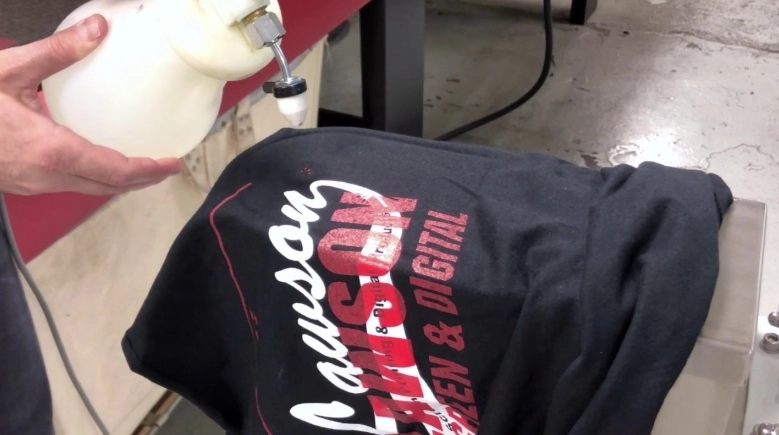
When you run a screen printing shop, nothing hurts more than finding a tiny ink smear on an otherwise perfect garment. One wrong squeegee lift or a pinhole in the stencil can turn a whole stack of prints into rejects – unless you have a way to rescue them. That is exactly where a screen printing spot cleaning gun comes in. Instead of throwing away garments with small defects, you use a powerful jet of solvent to remove the mistake and keep the order on track.
The problem is that buying your first textile spot cleaning gun isn’t as simple as “more power is better”. You have to balance pressure, fabric sensitivity, ink types, solvent safety and whether you need a full spot cleaning station or just the gun. Pick the wrong combination and you can create ring marks, damage delicate fabrics, or fill your shop with harsh fumes.
This guide walks through the key questions to ask before you spend money: when a spot gun really makes sense, how much pressure you need, which nozzle designs are safer, how to match the gun to your inks and stains, and how to think about cleaning fluids and ventilation.
Do You Really Need a Spot Cleaning Gun?
When a Spot Cleaning Gun Makes Sense in a Screen Printing Shop
Not every printer needs a spot cleaning gun on day one, but once you start handling more complex jobs, it quickly becomes one of the most valuable tools in the shop. If you print plastisol or water-based inks on light-colored garments, you will eventually see small smears, pinholes, fingerprints or ghost ink where it should not be. Without a spot cleaning gun, these pieces either go in the trash or into a “maybe we can sell them cheap” pile. With a gun, you can remove localized defects and still ship first-quality goods.
A spot gun is especially helpful if:
• You run contract printing or fashion work where reject rates must stay extremely low.
• You work with small details and fine halftones that easily show tiny flaws.
• You print mixed techniques (plastisol, water-based, discharge, transfers, DTG) and can’t afford to remake every mistake.
In these scenarios, even a mid-range screen printing spot cleaning gun usually pays for itself quickly just by saving shirts that would otherwise be lost.
When Other Methods May Be Better
At the same time, a spot cleaning gun is not a magic wand for every situation. If your business focuses on very low-priced, high-volume work where garments cost almost nothing and margins are razor-thin, it can genuinely be cheaper to accept a certain defect rate and discard misprints rather than pay for a gun, solvent and operator time. For some shops, especially those doing promotional giveaways, setup and throughput matter more than saving every single piece.
You also need to consider the fabric. Ultra-delicate materials like silk, some performance fabrics with special coatings or very open knits may not tolerate high-pressure solvent jets at all. On these substrates, even a carefully used textile spot cleaning gun can cause color loss, fuzzing or distortion. In those cases, process control (better screens, tighter QC at press, improved handling) and pre-press discipline often offer more value than trying to fix problems after printing.
So before ordering equipment, look honestly at your order mix, fabric types and reject costs. If your reject pile hurts every month, a spot gun is worth serious attention. If it doesn’t, you may be better off improving upstream quality first.
More read: Spot Cleaning Gun Guide – Screen Printing & Mineral Cleaning Tool
Matching Pressure and Power to Your Workload
How Much Pressure (PSI) Do You Actually Need?
The first specification most people see is “PSI” – the pressure rating. Entry-level spot cleaning guns often run around 1,000–1,500 psi, while more industrial guns reach 2,000–3,000+ psi. More pressure means a stronger, narrower jet that can break down stubborn ink and adhesive quickly, but it also increases the risk of damaging fibers or blasting holes in thin fabrics.
If you mainly clean light water-based ink smudges on cotton T-shirts, a lower-pressure gun is often enough and more forgiving for new operators. For fully cured plastisol, transfer adhesive and dried stains near seams, cuffs or heavy prints, you will appreciate the extra force of a higher-pressure model, as long as you apply it carefully and from the right distance.
The key is to match pressure to reality, not wishful thinking. Buying the most powerful gun on the market and handing it to inexperienced staff is a recipe for ring marks and damaged garments. Choose a sensible range based on your common ink systems and train operators to start with gentler settings before moving closer or increasing pressure.
Power Options: 110V vs 220V, Built-in Pump vs External Air Source
Next comes the power question. Most screen printing spot cleaning guns for garment shops are self-contained electric units that plug into 110V or 220V outlets and use an internal pump to create pressure. These are compact, easy to move between presses, and ideal for small to mid-size shops that don’t have large compressed-air systems. Just check your local voltage (and plug style) and make sure the gun matches it.
In more industrial environments, you might consider guns that rely on an external air source. These can offer very stable pressure and long service life, but they tie you to a compressor and air hoses, add noise, and sometimes need extra filtration and drying in the airline. Unless your shop already runs a robust compressed-air setup, a plug-and-play electric gun is usually simpler.
Also look at cord length, hose routing and how easily the operator can reach the gun from the press or inspection table. Poor ergonomics and tight cables are small details that quickly become daily annoyances when you’re cleaning dozens of garments per shift.
Duty Cycle, Ergonomics, and Operator Comfort
Duty cycle is one of those specs people rarely ask about but quickly regret ignoring. A gun intended for occasional spot fixes may overheat or trip internal protection if you try to run it nonstop on a large contract job. If you know your team will be using the textile spot cleaning gun continuously, look for models designed for longer duty cycles, better ventilation and heat management.
Ergonomics matter as much as raw power. A heavy metal body with a stiff trigger might sound “industrial”, but after a few hours of use, the operator’s hand and wrist will feel it. Pay attention to grip shape, weight balance, trigger travel and the angle of the bottle or fluid line. A well-designed gun allows precise control while keeping the operator comfortable.
Finally, consider heat. Some designs vent heat near the handle, which can become uncomfortably warm over time. Others keep motor heat isolated from the grip. In a busy shop, that difference means the operator can work longer without breaks and without resorting to makeshift solutions like wrapping the handle with tape or cloth.
Nozzle Design, Spray Pattern and “Ring-Proof” Cleaning
Adjustable Nozzles and Spray Patterns
The nozzle is the business end of any screen printing spot cleaning gun, and its design has a direct impact on both cleaning power and fabric safety. A good gun allows you to adjust from a tight, focused jet (for stubborn spots on thick fabrics) to a softer, more diffuse spray (for delicate or wide-area cleaning). This adjustability lets you fine-tune the balance between impact and coverage on the fly.
In practice, operators might start with a slightly wider spray to “wet” the area and break the surface tension, then switch to a more concentrated jet to push ink out of the fibers. Being able to make that adjustment quickly, without swapping parts, saves time and reduces mistakes. When comparing models, check whether the nozzle can be turned or dialed to change the pattern and how easy it is to return to a known setting.
Also think about replacement. Nozzles and internal needles eventually wear, especially in shops with heavy use or harsh fluids. Choosing a gun with readily available replacement nozzles and simple disassembly ensures you can maintain consistent performance rather than throwing the entire tool away when the spray pattern degrades.
How Nozzle Design Affects “Ring” Marks on Fabric
One of the biggest complaints from printers new to spot guns is the “ring” or halo left on the fabric after cleaning. These marks often come from a combination of high pressure, too much fluid, slow evaporation and the way solvent spreads through the fibers. Nozzle design plays a big role here. A coarse, uncontrolled jet can flood the area quickly, forcing solvent to spread far beyond the original stain and dry in a visible circle.
With a finer, more controlled spray, you can deliver just enough fluid to dissolve the ink while minimizing sideways migration. Combined with the right angle and distance, this reduces the risk of water rings and hard edges. Some operators also use quick, pulsing bursts rather than holding the trigger down continuously, which is easier with a responsive nozzle and trigger design.
In short, if you want “ring-proof” cleaning, don’t just blame your solvent. Look closely at how the nozzle behaves: Can you feather the spray? Does it atomize evenly, or spit droplets? A higher-quality nozzle may cost a little more up-front but saves many garments over the life of the tool.
Choosing Nozzles for Delicate or Stretch Fabrics
Delicate and stretch fabrics introduce another layer of complexity. Activewear, leggings, compression garments and some fashion items use yarns and knit structures that can be easily distorted or damaged by aggressive jets. On these materials, the wrong nozzle and pressure setting can raise fuzz, disturb the surface sheen or even punch small holes exactly where you were trying to fix a print.
When choosing a spot cleaning gun for this kind of work, prioritize precise control over sheer power. A nozzle that can create a fine mist or soft fan pattern at lower pressure is safer than one that only delivers a hard, needle-like jet. Operators should be trained to increase distance, angle the spray and work from the back of the garment whenever possible so the front print receives less direct impact.
It’s also smart to set up test garments in the same fabrics you print most often and practice on them before touching customer orders. That way you can learn how the nozzle behaves on slippery polyester, heavy fleece and ultra-light blends and adjust technique long before something is on deadline.
Will This Spot Cleaning Gun Work with Your Inks and Stains?
Plastisol vs Water-Based Ink: What to Expect
Different inks behave very differently under a spot gun. Plastisol, once fully cured, is essentially a flexible plastic film embedded in the fibers. Removing it requires enough pressure and solvent power to break the film down and push softened ink out of the weave. That’s why shops working heavily with plastisol often lean toward higher-pressure screen printing spot cleaning guns and stronger cleaning fluids, used with care.
Water-based ink, on the other hand, tends to penetrate more deeply into the fibers, but the cured film is often easier to re-wet and move. In many cases, a moderate-pressure gun with a well-matched water-based or mixed solvent cleaner can lift small smears or pinholes without much difficulty. However, because the ink and cleaner can spread more easily in the fabric, it’s also easier to create halos and rings if you over-spray.
If your shop regularly uses both ink types, plan for a flexible solution: a gun with adjustable pressure and a cleaning fluid (or combination of fluids) that is compatible with both systems. Test on scrap pieces from actual jobs to confirm that you can rescue real-world mistakes without unexpected side effects.
Handling Adhesives, Fusing Powders, and Other Contaminants
Not every stain comes from ink. In many shops, you also have to deal with transfer adhesives, hot-melt powders, spray tack, pallet adhesive, oil from equipment and the occasional food or drink spot from human life happening on the floor. Some of these contaminants respond well to the same spot cleaning fluid you use for ink, while others need stronger or more specialized chemistry.
Before choosing a gun, think about the full range of “oops” moments you see. If transfer adhesive is a regular problem near neck labels or sleeve prints, you need a combination of pressure and solvent that can soften and move that adhesive without destroying delicate rib knit. If oil drips from a press or dryer occasionally stain garments, you’ll want to confirm whether your cleaning fluid actually breaks down oil or just smears it.
There are limits. Large, fully fused areas of adhesive, thick deposits of flock or heavy glitter often cross the line from “repairable” to “replace it”. A spot gun is best at rescuing localized, moderate defects. Recognizing where that line sits in your own workflow will keep expectations realistic and prevent wasted time chasing stains that won’t truly disappear.
Limitations You Should Know Before Buying
No matter how good the textile spot cleaning gun is, it cannot reverse every mistake. Deeply penetrated dyes, certain discharge effects, sublimation misprints and severe scorch marks often cannot be fixed, or can only be “hidden” at the cost of noticeable fabric damage. Expecting a gun to fix these issues will only lead to frustration with the tool and your process.
Some fabrics are particularly unforgiving. Reactive-dyed garments with poor fixation can bleed or change color when exposed to strong solvents. Dark garments may lighten or develop a halo even when the ink comes off. Stretch fabrics can permanently distort if you over-stretch them while cleaning or hit them repeatedly with high pressure.
Going in with clear eyes helps you choose the right gun and set realistic policies. Rather than promising customers that “we can fix anything”, you can develop internal guidelines: what you attempt to clean, what you automatically reprint and what you discard. The spot cleaning gun then becomes a strategic tool in your quality system, not an unrealistic cure-all.
Spot Cleaning Fluids: Compatibility, Safety, and Compliance
Why the Cleaning Fluid Matters as Much as the Gun
It’s easy to focus on the shiny metal gun and forget that the real chemistry happens in the bottle underneath it. The spot cleaning fluid you choose controls how quickly ink dissolves, how likely rings are, how the fabric feels afterward and how safe the process is for operators and the environment. Two shops can use the same gun and get completely different results simply because their fluids are different.
A good textile cleaning fluid strikes a balance between power and control. It should be aggressive enough to break down plastisol or water-based ink within a few seconds, yet volatile enough to evaporate quickly without leaving heavy residues or odors. It should also be reasonably kind to common fibers like cotton and polyester and not instantly attack elastic or delicate finishes.
When evaluating fluids, look at compatibility notes from the supplier, discuss your typical fabrics and inks, and be wary of “homebrew” mixtures of random thinners or hardware-store solvents. The money saved on cheap liquid can disappear fast if you end up with damaged garments, ruined guns or unhappy staff.
Types of Spot Cleaning Fluids and What to Avoid
Commercial textile spot cleaning fluids come in several broad categories. Some are formulated specifically for plastisol, others for water-based inks, and many are designed as general garment spotters that also handle oils and adhesives. Beyond performance, you need to look at health and safety. Older or very aggressive formulas may contain solvents that are harsh on skin and lungs or subject to strict regulations.
When shopping, pay attention to notes like “low odor”, “reduced VOC”, or “does not contain X or Y hazardous chemical”. These signals often indicate a more modern approach that aims to maintain cleaning power while reducing risk. It’s still chemistry, not drinking water, but the risk profile can be very different.
What to avoid? Fluids that attack the plastic parts of your gun, soften O-rings and hoses, or visibly discolor fabrics during testing are red flags. Using generic thinners, strong paint removers or unknown blends inside a spot cleaning gun might work a few times, but long-term they can shorten the life of the tool and make your working environment unpleasant or unsafe.
Ventilation, PPE, and Shop Safety Considerations
Even with better-designed fluids, spot cleaning still evaporates solvent into the air. That means ventilation and personal protective equipment (PPE) are part of the purchasing discussion. If your shop is small and closed, the fumes from frequent cleaning sessions can build up and cause headaches, irritation or long-term health concerns.
Before adding a screen printing spot cleaning gun, think about where it will live. A dedicated, well-ventilated corner, a window with an exhaust fan, or a full spot cleaning station with built-in extraction will all improve conditions compared to cleaning right next to the press. At minimum, operators should have access to chemical-resistant gloves and eye protection, and you should follow the fluid manufacturer’s safety data sheet for any additional recommendations.
Finally, remember fire safety and storage. Most cleaning fluids are flammable to some degree. Store them in clearly labeled, closed containers away from open flames, flash dryers and gas heaters. Train staff never to spray near hot surfaces or inside dryers, no matter how tempting a quick fix might seem when a deadline is looming.
Do You Need a Spot Cleaning Station or Just the Gun?
What a Spot Cleaning Station Actually Does
A spot cleaning station is more than just a fancy stand for your gun. It is a dedicated work area designed to support the entire cleaning process: holding garments in place, pulling solvent and vapors away from the operator, and collecting waste flu id. Typically, a station includes a perforated vacuum table or arm where you position the garment, an exhaust system, and sometimes built-in lighting or holders for the gun and fluid bottles.
The vacuum function is important. By pulling air and solvent downward through the fabric, it helps remove ink and fluid more effectively and reduces how far solvent spreads sideways, which directly reduces ring marks. It also keeps vapors flowing away from the operator’s face instead of into it. Over a full day or week of production, that difference is significant for comfort and health.
When you pair a good textile spot cleaning gun with a well-designed station, the whole system becomes faster, cleaner and more consistent. You spend less time wrestling with garments on makeshift supports and more time actually fixing the prints.
When a Standalone Gun Is Enough
Not every shop needs to invest in a full station right away. If you’re a small operation running a single manual press and doing occasional clean-ups, a standalone screen printing spot cleaning gun mounted near your inspection table can be perfectly adequate. You can place a thick, absorbent towel or scrap fabric behind the garment to catch overspray and use a small fan or open door for basic ventilation.
This minimalist setup keeps your initial investment low while you learn how often you truly use the tool and what kinds of mistakes you’re fixing. If your usage stays light – a few garments a day – the extra cost and footprint of a station might not deliver a fast return. It also makes sense if your shop is in a temporary space or you’re still experimenting with your business model.
The key is to treat even this simple setup seriously: define a fixed cleaning area, keep the gun and fluid stored safely, and train operators not to spray randomly around the shop. A basic but controlled process is always better than no process at all.
When Upgrading to a Full Spot Cleaning System Pays Off
As your shop grows, the equation changes. If you regularly run large orders, have multiple presses or employ several people who might all need spot cleaning access, a full spot cleaning station can quickly demonstrate its value. It centralizes the task so garments move through a predictable flow: press, inspection, cleaning (if needed), and packing. That reduces confusion and duplication.
From a health and safety perspective, a station with proper extraction also helps you prove to staff, customers and inspectors that you take chemical exposure seriously. For brands with strict compliance requirements or audits, this can be a meaningful advantage. Over time, better ventilation and waste handling reduce complaints about odors and headaches, which supports retention and morale.
Financially, a good system increases the percentage of garments you can rescue effectively and speeds up each repair. When you multiply those gains by thousands of prints per month, the payback period can be surprisingly short. If spot cleaning has gone from “occasional task” to “daily reality”, it’s probably time to consider this upgrade.
A Practical Checklist Before You Buy
Key Questions to Answer About Your Shop
Before picking a model from a catalog, step back and answer a few strategic questions about your own operation. What are your primary ink systems – mainly plastisol, mostly water-based, or a mix that also includes discharge, transfers or DTG? Each one has different cleaning demands. Next, list your main fabric types: heavy cotton fleece behaves very differently from thin polyester performance tees or stretch leggings under a textile spot cleaning gun.
Look at your order structure. Are you running small fashion drops with tight margins and high expectations, or mass-volume promotional work where individual garments are cheap to replace? How many misprints per week genuinely hurt your profit? Understanding reject cost helps you decide how far to invest in prevention and rescue tools.
Finally, consider your shop’s safety and compliance expectations. Are you working in a shared building with ventilation rules? Do you have employees with sensitivities to fumes? Are customers asking about eco-standards or audits? Honest answers to these questions will shape the right combination of gun, fluid and station.
Matching Gun Features to Your Answers
Once you have a clear picture of your environment, you can map it directly to screen printing spot cleaning gun features. Heavy plastisol work on thick garments, with high reject cost, usually points toward a more powerful gun (higher PSI), a robust spot cleaning fluid and possibly a dedicated station for extraction. Mixed ink systems and varied fabrics suggest prioritizing adjustability – a gun with fine control of pressure and pattern and fluids that are gentle enough for more delicate substrates.
If your electrical infrastructure is simple, stick to models that match your standard voltage and don’t require complex installations. Where compressed air is already part of daily operations, air-driven options might make sense; otherwise, self-contained electric guns are simpler. For shops with strict safety or environmental expectations, put more weight on low-odor, lower-VOC fluids and better ventilation accessories.
Writing these requirements down and using them as a checklist when comparing models helps you avoid impulse purchases based on marketing claims alone. You end up with a spot cleaning setup that fits the way you actually print, instead of forcing your workflow to adapt to the wrong tool.
FAQs About Buying a Screen Printing Spot Cleaning Gun
Q1: What pressure (PSI) is enough for most plastisol and water-based ink mistakes?
For light water-based smudges on cotton, many shops are comfortable in the 1,000–1,500 psi range. For fully cured plastisol and adhesive residues, a gun closer to 2,000–3,000 psi is more effective, as long as operators use correct distance and technique.
Q2: Can one spot cleaning gun handle both plastisol and water-based inks?
Yes, if you choose a versatile gun and pair it with compatible fluids. The critical factor is choosing cleaning chemistry that works on both ink systems and practicing technique on your common fabrics.
Q3: Will a spot cleaning gun damage delicate or stretch fabrics?
It can if misused. On delicate or high-stretch fabrics, use lower pressure, a softer spray pattern, greater distance and shorter bursts, ideally working from the back of the garment. Always test first.
Q4: Do I really need a dedicated spot cleaning fluid?
Dedicated textile spot cleaning fluids are formulated to balance cleaning power, evaporation and fabric safety. Generic solvents may work in the short term but often increase risks to garments, operators and the gun itself.
Q5: Is it safe to use strong solvents without a spot cleaning station?
You can start with a standalone gun, but you must still think about ventilation, PPE and safe storage. As usage increases, a station with extraction becomes the safer and more comfortable option.
Q6: How do I know if my electrical setup (110V/220V) can support a spot cleaning gun?
Check your local supply and outlets, then choose a gun rated for that voltage and frequency. Avoid improvised adapters or long, undersized extension cords that can overheat.
Q7: When is it worth upgrading from a standalone gun to a complete spot cleaning station?
When spot cleaning becomes a daily, high-volume task, when staff complain about fumes, or when brand/compliance requirements increase, a full station usually pays for itself in saved garments, faster work and a healthier shop environment.