When Does Rotary Screen Printing Cost Less Than Digital?
When Does Rotary Screen Printing Cost Less Than Digital?
Digital textile printing often costs less for samples, short fabric runs, and orders split across several designs. Rotary screen printing can cost less per meter on long, repeatable runs, especially when the mill already has the engraved screens. The turning point depends on the job. An order for 3,000 meters of one design can have a different cost from an order for 3,000 meters split among ten designs.
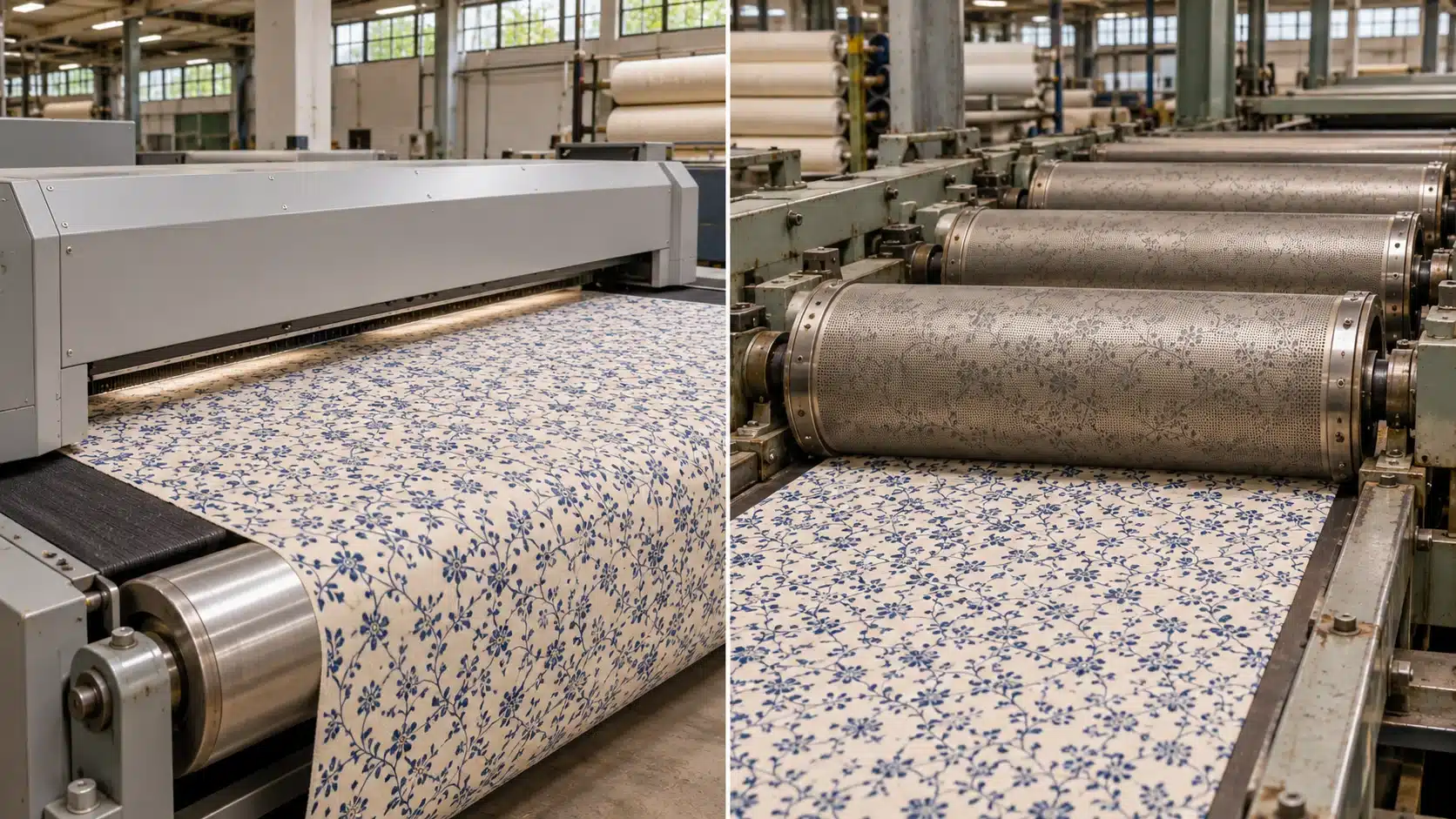
How the Two Printing Methods Affect Cost
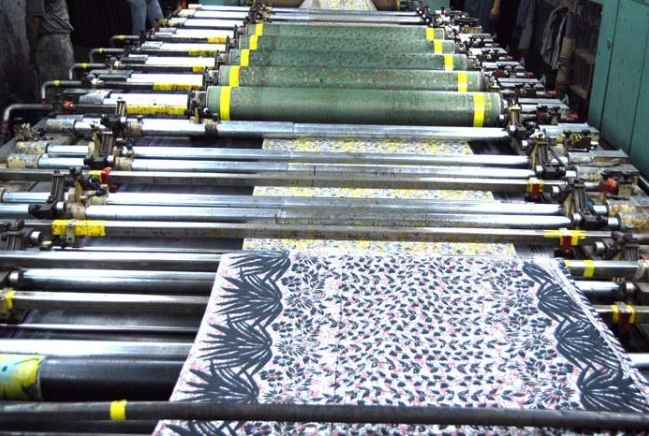
Digital roll-to-roll textile printing uses inkjet heads to print a file directly onto fabric. The mill still has to prepare the file, set up color, and approve a sample. Rotary screen printing uses cylindrical stencils to apply print paste as the fabric moves through the machine. A conventional spot-color design typically requires one engraved screen for each separately printed color. Once the screens are mounted and registered, the line can run the same design continuously. HANZE guide to the rotary screen printing process
| Cost factor | Digital textile printing | Rotary screen printing |
|---|---|---|
| Starting a new design | File preparation, color profiling as needed, and sample approval | Color separation, screens and engraving, paste preparation, mounting, registration, and sample approval |
| Running the order | Ink, labor, line time, cleaning and maintenance consumables, and fabric loss | Print paste, labor, line time, screen and line cleaning, and fabric loss |
| Changing the colorway | Update the file or color settings, then proof as required | Reuse the screens if the separations stay the same, then change pastes, clean as needed, and check the new colors |
| Finishing | Price the steps required by the ink and fabric, such as drying, curing, or steaming and washing | Price the steps required by the paste and fabric, such as drying, curing, or steaming and washing |
What Changes the Cost per Meter?
Print Colors and Colorways Are Different Costs
A print color is a color applied in a design. A colorway is a different palette for the same design. Take a three-color leaf pattern printed first in green, cream, and charcoal, then in blue, white, and navy. If the same parts of the artwork still go to the same three print stations, a rotary line may use the same three screens for both versions. It still needs new pastes and another changeover. If a colorway adds a separate print layer or changes the artwork assigned to a screen, budget for another engraving where required. Digital printing can switch palettes through the file, with color matching and proofing still part of the job. An independent study conducted by Gherzi (www.gherzi.com): Cost comparison study on digital and rotary textile printing
Run Length Matters More at the Design Level
Spread one set of engraved screens across 5,000 meters and the screen cost per meter falls. Split the same 5,000 meters among ten unrelated designs and each design needs its own setup. To estimate rotary screen printing cost per meter, quote meters per design and meters per colorway. For reorders, ask which screens are still usable, who holds them, and which setup charges apply again. A repeat run may save on engraving while still requiring mounting, registration, and startup checks.
Ink Coverage, Finishing, and Fabric Loss Can Change the Result
Compare ink or paste consumption for the actual design at the approved print settings. A pale, open pattern and a dense background can use different amounts of colorant even at the same fabric width. For digital, start with the print software’s ink estimate and check it against production usage. For rotary, account for the paste used on the fabric as well as the paste lost at startup, during color changes, and at wash-up.
Price the full route from prepared fabric to approved roll. For example, a reactive print on cotton typically requires steaming and washing, while a pigment system typically relies on heat curing. Include the labor, utilities, chemicals, and waste handling required by the actual route. If you also compare water or energy use, measure it over the same production stages. One peer-reviewed factory study compared both methods on a 1,000-meter reactive-dye cotton order. Its results apply to that design, setup, and production run.
How to Calculate the Printing Break-Even Point
Separate one-time costs for the job, such as engraving and setup, from the running cost per sellable meter, such as colorant, production labor, and finishing. Assign startup loss to setup if it is roughly fixed per run. Include loss that rises with production in the running rate. Count each cost once. If 1,550 meters go through the line and 1,500 pass inspection, divide the job cost by 1,500.
Cost per sellable meter = (setup cost + total running cost) ÷ sellable meters
For a first estimate, use a constant running rate for each method over the volume you are comparing. When rotary has the higher setup cost and digital has the higher running rate, the crossover is:
Break-even meters = (rotary setup cost − digital setup cost) ÷ (digital running cost per meter − rotary running cost per meter)
If quotes change at quantity tiers or add changeover fees as orders grow, calculate both totals at the actual quantities you expect to order.
Worked Example for One Design and One Colorway
Suppose digital setup costs 300 USD and the running rate is 1.25 USD per sellable meter. Rotary setup costs 1,200 USD and its running rate is 0.65 USD per sellable meter. These are illustrative print conversion costs for the same width and finish. The base cost of the fabric in accepted rolls is held equal and omitted, while fabric lost in production is included in each route’s costs.
| Sellable fabric | Digital job total (USD) | Rotary job total (USD) | Digital cost per meter (USD) | Rotary cost per meter (USD) |
|---|---|---|---|---|
| 500 m | 925 | 1,525 | 1.85 | 3.05 |
| 1,500 m | 2,175 | 2,175 | 1.45 | 1.45 |
| 3,000 m | 4,050 | 3,150 | 1.35 | 1.05 |
The break-even point is 1,500 meters because the extra 900 USD of rotary setup is offset by a savings of 0.60 USD per meter. On a repeat order, say the existing screens save 600 USD in rotary setup and the other assumptions hold. The new break-even point is 500 meters. The same mill and design now have a different answer because the screen costs changed.
How to Compare Quotes From Textile Printing Mills
Ask both mills to quote from the same brief. Include the fabric composition and construction, finished usable width, artwork repeat, meters per design and colorway, approved shade or sample, and required delivery date. Specify any acceptance criteria that affect the process, such as wash and rub fastness, hand feel, or the required appearance on the reverse of the fabric.
| Ask the mill to show | What to check |
|---|---|
| Setup and engraving fees | Which charges apply per design, per screen, or per colorway, and which can be avoided on a repeat order |
| What the quoted unit price includes | Whether fabric, pretreatment, printing, finishing, inspection, and freight are priced on the same basis |
| Minimums and yield | Whether the minimum applies per design or per colorway, how over- or under-delivery is handled, and whether the quote is based on printed or accepted meters |
| Sample and production dates | When the proof is due, when the finished rolls can ship, and what a reorder would take |
Use the line’s finished, accepted output when you compare internal production capacity. A fast press can still face a queue at steaming, washing, or inspection. For an equipment investment, spread annual costs such as depreciation or lease charges, service, and planned maintenance over realistic annual output. If your machine rate already covers any of those costs, use the amount in the rate.
Frequently Asked Questions
What if one mill quotes per square meter and the other per linear meter?
Multiply the price per square meter by the quoted chargeable width in meters. For example, 0.80 USD/m² at a chargeable width of 1.50 m is 1.20 USD per linear meter. Check the finished usable width as well, especially if one quote includes margins that will be trimmed off.
How do I compare quotes with different minimum order quantities?
Compare the total invoices at the quantities each mill can actually supply. If you need 300 meters and one mill has a 500-meter minimum, include the cost of the extra 200 meters in that quote. If you expect to use the surplus on a later order, account for its value separately along with any storage cost.
Does digital printing make sense for a design that will eventually run in bulk?
It can make sense for the first release if demand is uncertain. A small digital run lets you approve the fabric and test demand before committing to a larger order. If you move the design to rotary for bulk production, allow for a fresh approval sample because shade, detail, and hand feel may change between processes.
Specify Rotary Screens for Your Next Production Run
If you are costing the rotary route, confirm the screen specification before you finalize the quote. Mesh count and open area affect paste flow, and the screen repeat and endring dimensions need to fit the press. Use the HANZE nickel mesh selection guide to review the trade-offs for your artwork, paste, and fabric.
For a quote on rotary nickel screens or compatible aluminum endrings, send HANZE your press model, screen repeat, usable print width, current screen specification if available, and order quantity. Include the artwork or a print sample when matching an existing setup. Ask for the applicable MOQ and lead time.