Screen Printing Frames: Aluminum vs Wood vs Retensionable
Screen Printing Frames: Aluminum vs Wood vs Retensionable
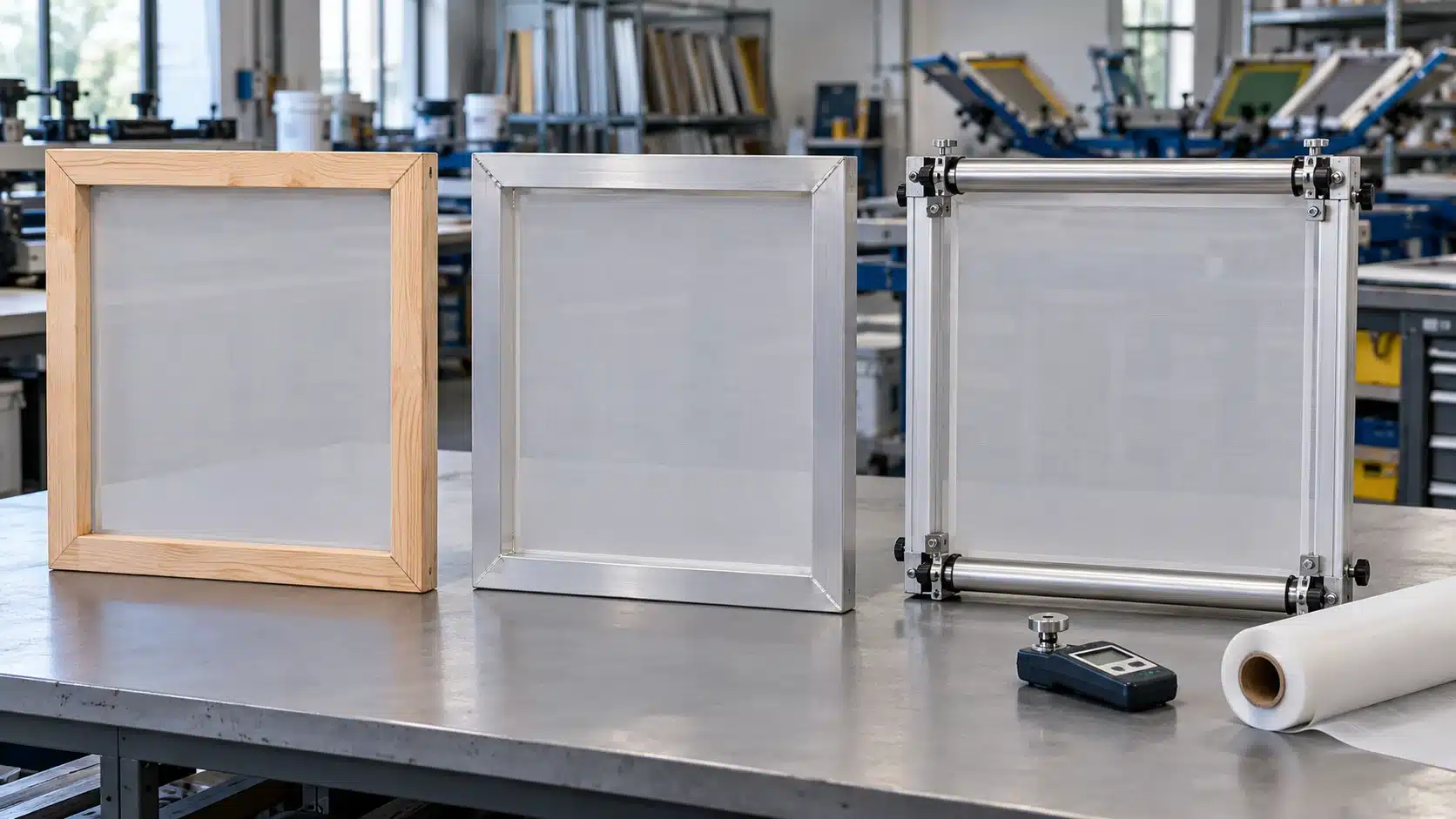
Wood, static aluminum and retensionable screen printing frames can all produce acceptable prints when they are correctly built, stretched and matched to the job. Their real differences appear over repeated production cycles: frame flatness, response to wet processing, control of mesh tension, remeshing time and total operating cost.
For occasional or low-volume work, a well-made wood frame may be sufficient. For most commercial garment production, a pre-stretched static aluminum frame provides a practical balance of stability, handling and price. A retensionable frame becomes more relevant when a shop changes mesh frequently, needs measurable tension control or cannot afford to wait for outsourced remeshing.
The best option is therefore not automatically the cheapest or most technically advanced frame. It is the frame system that fits the required registration tolerance, screen-room workflow and number of reuse cycles.
First, Separate Frame Material from Tensioning Method
“Aluminum vs wood vs retensionable” is a useful buying comparison, but it combines two different classifications:
- Wood and aluminum describe the frame material.
- Static and retensionable describe how the mesh is held and whether tension can be adjusted after installation.
Most wood frames and standard welded aluminum frames are static. Their mesh is normally bonded to the frame and cannot be tightened without removing and replacing it. Retensionable frames are usually metal systems that secure the mesh mechanically and allow tension adjustment. Roller, draw-bar, self-stretching and replaceable-panel systems are not identical, so their tools, operating steps and press compatibility must be checked separately.
For a broader introduction to construction and terminology, see The Ultimate Guide to Screen Printing Frames.
Aluminum vs Wood vs Retensionable Frames: Quick Comparison
| Selection factor | Wood static frame | Aluminum static frame | Retensionable frame |
|---|---|---|---|
| Initial purchase cost | Usually lowest | Moderate | Usually highest |
| Flatness and dimensional stability | Depends heavily on timber, joint quality, sealing and storage | Generally stable when profile, welds and tension are correctly specified | Good potential, but depends on balanced tension, hardware condition and correct setup |
| Wet-process resistance | More sensitive to repeated water and chemical exposure | Frame material does not absorb water; adhesive bond still needs chemical care | Metal body suits repeated processing; locking parts and finishes require maintenance |
| Tension adjustment after stretching | No | No | Yes, within the system and mesh limits |
| Remeshing method | Remove old mesh and reattach, or replace the frame | Strip the mesh and adhesive, prepare the rail and rebond | Release the locking system and install or adjust mesh in-house |
| In-house skill required | Low when purchased pre-stretched | Low when purchased pre-stretched | Higher; operators need a defined tensioning procedure and suitable tools |
| Production turnaround | Simple for ready-made screens, but replacement may be frequent | Predictable with stocked pre-stretched screens | Can reduce outside remeshing delays when the shop is trained and equipped |
| Best fit | Training, occasional jobs, simple low-volume work | Daily textile production and standardized screen inventories | Frequent remeshing, tighter registration or high-value production |
The comparison assumes products of appropriate quality. A poorly welded aluminum frame can perform worse than a carefully made and sealed wood frame, while a retensionable frame operated without balanced tension can create its own problems.
Wood Screen Printing Frames
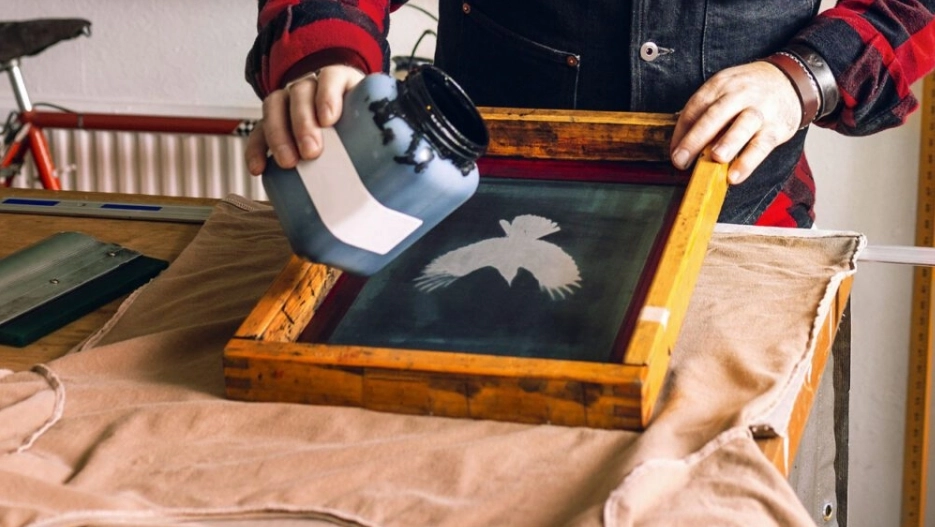
Wood frames remain useful where purchase price and simple handling matter more than maximum service life. Better examples use straight, properly dried timber, secure corner joints and a sealed surface. Mesh is normally glued or otherwise fixed to the frame face.
Where wood frames make sense
Wood can be a reasonable choice for training departments, hobby or sampling work, occasional one-color jobs and designs intended to remain on one screen for an extended period. Ready-stretched wood screens require little in-house preparation and can keep the entry cost low.
What buyers should check
Wood responds to moisture, temperature and cleaning chemistry. Repeated soaking or uncontrolled storage can affect flatness and joint stability. Surface sealing improves resistance but does not make wood identical to aluminum in a wet reclaiming workflow.
Ask the supplier about timber type, corner construction, surface treatment, frame flatness, mesh tension and intended cleaning method. If screens will enter a dip tank or be reclaimed repeatedly, confirm that the wood frame and mesh bond are intended for that process.
Practical conclusion: Wood is not incapable of producing good prints. Its limitation is lower process tolerance when screens are repeatedly washed, stored and reused in commercial production.
Static Aluminum Screen Printing Frames
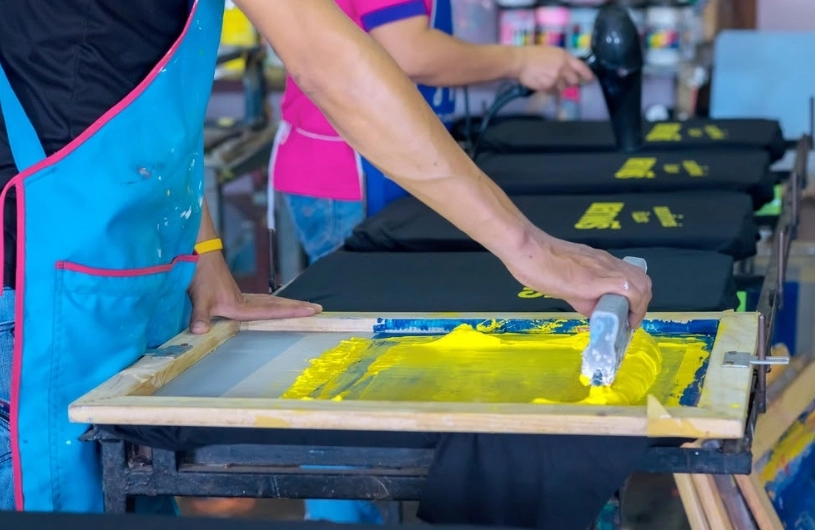
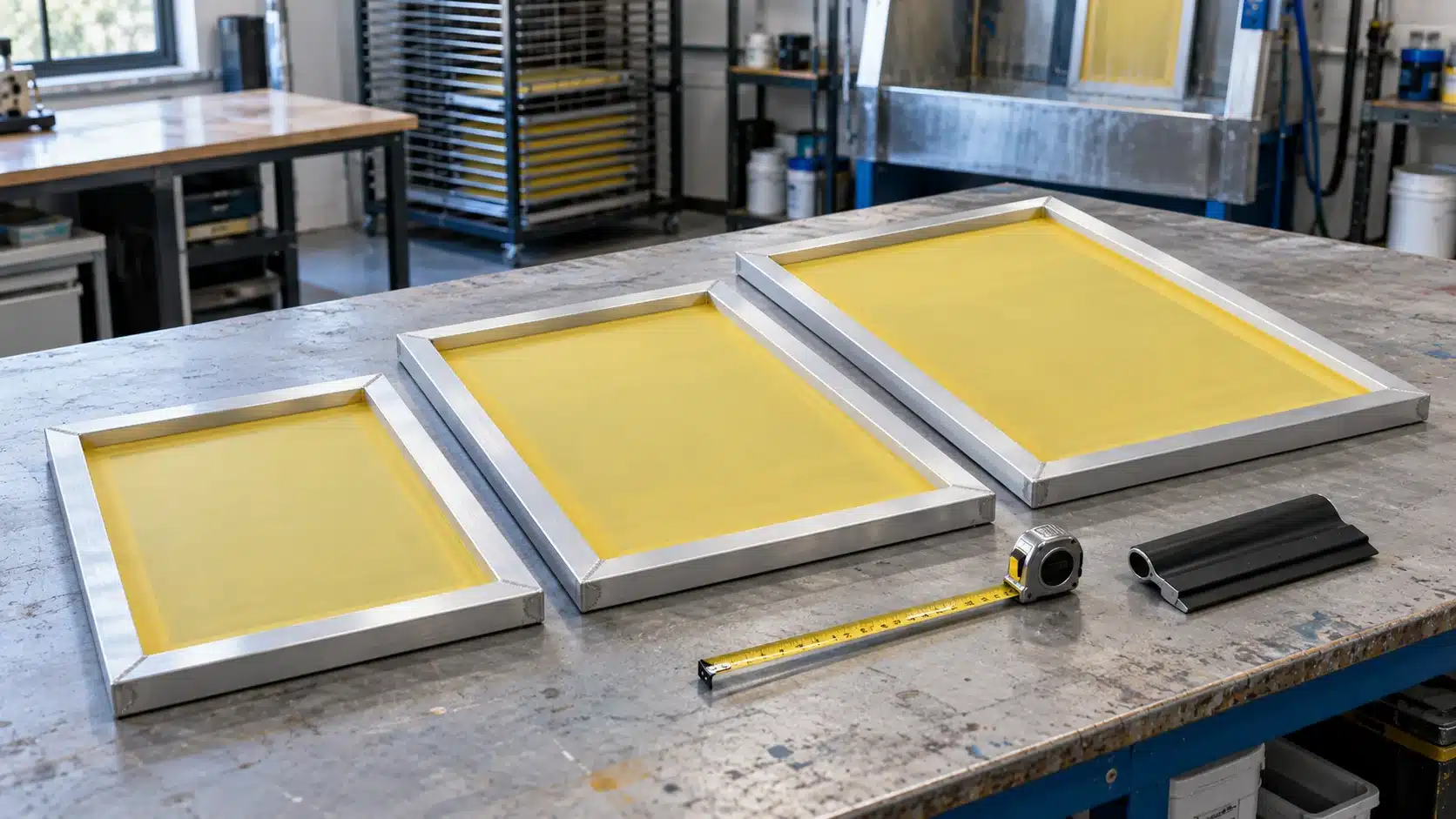
A static aluminum frame is a welded metal frame with mesh bonded to a prepared rail face. It is the standard commercial choice for many textile printers because the frame does not absorb water, is reusable and can be supplied pre-stretched in repeatable sizes.
HANZE’s textile screen printing frames include common garment-production formats. For example, the 20 × 24 inch aluminum screen frame uses a published 6063-T5 aluminum profile and is available with different mesh specifications.
Main operating advantages
- Better resistance to moisture-related dimensional change than wood
- Suitable for repeated screen washing and reclaiming when the frame and bond remain sound
- Lower operator setup requirement when ordered pre-stretched
- Easier standardization across common frame sizes and mesh counts
- Multiple remeshing cycles are possible if the frame remains straight and structurally suitable
Static aluminum still has limits. Once the mesh loses usable tension or tears, it cannot simply be tightened on the frame. The mesh and adhesive must be removed, the bonding face prepared and new mesh stretched and bonded. Cleaning chemicals can also attack the adhesive line even though they do not soak into the aluminum itself.
Frame performance depends on profile dimensions, wall thickness, weld quality, flatness and the target tension—not on the word “aluminum” alone. Larger screens or higher-tension work may require a stronger profile. Use the screen printing frame size guide to check image area, profile and equipment clearance before selecting a format.
Retensionable Screen Printing Frames
A retensionable screen printing frame holds the mesh with a mechanical locking system. Depending on the design, rollers, bars, bolts or replaceable panels are used to install the mesh and adjust tension. The screen can be re-tensioned after initial stretching, within the limits specified for the frame and mesh.
When the additional control is valuable
Retensionable systems are most relevant when registration, snap-off behavior and rapid screen turnaround affect production yield. Typical applications include multicolor textile work, fine graphics, decals, overlays, glass printing, membrane switches and other jobs where screen condition must be measured and maintained.
They can also reduce dependence on an outside stretching service. A trained shop can replace mesh or adjust tension on site instead of shipping a static frame away for remeshing.
Common retensionable systems
| System | How it works | Typical purchasing reason |
|---|---|---|
| Roller frame | Mesh is locked into rotating rails and tensioned by turning the rollers | Adjustable tension and close-registration production |
| Draw-bar frame | Mesh is secured in bars or channels; multiple bolts move the bars outward | Controlled adjustment for industrial or high-value printing |
| Self-stretching frame | Proprietary mechanical components allow mesh installation without conventional adhesive stretching | Faster in-house mesh changes, subject to the exact system design |
| Replaceable-panel frame | Prepared mesh panels lock or snap into a reusable outer frame | Reduced storage and faster mesh-count changes |
Costs and operating limits
Retensionable frames normally require more capital, training and maintenance. They may be heavier or use a different rail shape than static frames. Buyers should check clamp engagement, exposure-unit clearance, storage racks and any special tensioning tools before standardizing the system.
High-tension mesh also needs careful handling. A screen can be damaged by sharp corners, poor storage or uneven adjustment. Retensionability is a control capability, not permission to exceed the mesh or frame manufacturer’s limit.
Which Frame Has the Lowest Long-Term Cost?
Unit price does not answer the question. Compare total cost over the number of usable production cycles:
Total ownership cost = frame purchases + mesh/remeshing + labor + freight + downtime + maintenance + rework
The lowest-cost option changes with the workflow:
- A shop that exposes a small number of screens and rarely remeshes may not recover the added cost of a retensionable system.
- A garment printer using standardized pre-stretched screens may find static aluminum easier to buy, store and replace across several presses.
- A factory that remeshes every week, changes mesh counts frequently or loses production while frames are away may justify in-house retensioning more quickly.
- High-value industrial work may justify the system through process control and reduced registration loss rather than through frame cost alone.
Use actual records where possible: annual screens purchased, remesh frequency, outside-service freight, operator hours, average downtime and scrap linked to screen condition. Do not base the decision on a supplier’s claimed payback period unless the assumptions match your plant.
Which Screen Printing Frame Should You Choose?
| Production situation | Most practical starting point | Why |
|---|---|---|
| Training, occasional printing or simple one-color work | Quality sealed wood frame | Low entry cost and straightforward use |
| Daily garment printing with common sizes | Pre-stretched static aluminum | Balanced cost, handling and repeatability |
| Multiple presses using a standardized screen inventory | Static aluminum or a compatible panel system | Simplifies purchasing, storage and replacement |
| Frequent mesh-count changes or urgent remeshing | Self-stretching or replaceable-panel system | Brings more mesh changes in-house |
| Tight-registration graphics or industrial printing | Draw-bar or roller retensionable frame | Provides measurable tension adjustment |
| Large frames or high target tension | Engineered aluminum or retensionable profile | Profile rigidity must be matched to span and tension |
Before changing an entire screen inventory, test a small group through coating, exposure, washout, press setup, reclaiming and storage. Record tension and registration results across several cycles. A controlled trial is more useful than comparing a single new screen with an old screen from another system.
B2B Frame Purchasing Checklist
Send the following information with an RFQ:
- Printing application and required registration tolerance
- Press brand, model, clamp style and permitted frame depth
- Outside dimensions, inside opening and required image area
- Frame material, profile and wall-thickness requirement
- Bare frame or pre-stretched screen
- Mesh material, count, color and target tension
- Estimated remeshing frequency and preferred in-house or outsourced method
- Cleaning, reclaiming and storage conditions
- Required tensioning tools, spare parts and operator instructions
- Quantity, destination, packaging and inspection requirements
For tension-controlled purchasing, define how readings will be taken and accepted. The mesh specification, frame size and measurement method all affect the result. The screen tension guide provides additional background.
Compliance boundary
Frame type alone does not establish RoHS, REACH or application-specific compliance. International buyers should request documentation for the exact frame alloy or timber treatment, surface finish, adhesive, mesh and mechanical components included in the quotation. An approved drawing and signed specification should control the order.
Frequently Asked Questions
Is an aluminum screen printing frame always better than wood?
No. Aluminum is generally better suited to repeated wet processing and commercial reuse, but a well-made wood frame can be adequate for occasional, low-volume or fixed-design work. The correct choice depends on the production cycle and required consistency.
Are all aluminum screen printing frames retensionable?
No. Most common welded aluminum textile frames are static: the mesh is glued to the frame and cannot be tightened after bonding. Retensionable aluminum frames use rollers, draw bars, panels or another mechanical locking system.
Can a static aluminum frame be remeshed?
Yes. The old mesh and adhesive can be removed, the frame inspected and prepared, and new mesh bonded. Remeshing should stop if the frame is twisted, cracked, damaged at the welds or unsuitable for the required tension.
Do retensionable frames always cost less in the long run?
No. They can reduce outside remeshing and downtime, but only when the shop uses them frequently enough and has trained operators. Low-volume printers may obtain a lower total cost from pre-stretched static frames.
Which frame is best for multicolor screen printing?
Static aluminum and retensionable frames can both support multicolor work when tension, flatness and registration are controlled. Retensionable systems add adjustment capability, which may be valuable for demanding jobs, but they do not replace correct artwork, exposure and press setup.
Can wood, static aluminum and retensionable frames be used in one shop?
Yes, provided each frame fits the press, exposure unit, washout area and racks. Too many frame formats can complicate storage, coating tools and press setup, so commercial shops usually benefit from standardizing a small number of approved systems.
Select the Frame System Around Your Production Cycle
Start with application, tension requirement, remeshing frequency and equipment compatibility—not frame price alone. HANZE supplies screen printing frames, including static aluminum textile frames, draw-bar frames and self-stretching options for different production requirements.
Send your frame size, press model, mesh specification, target tension, quantity and destination to contact HANZE for a frame recommendation and quotation.