
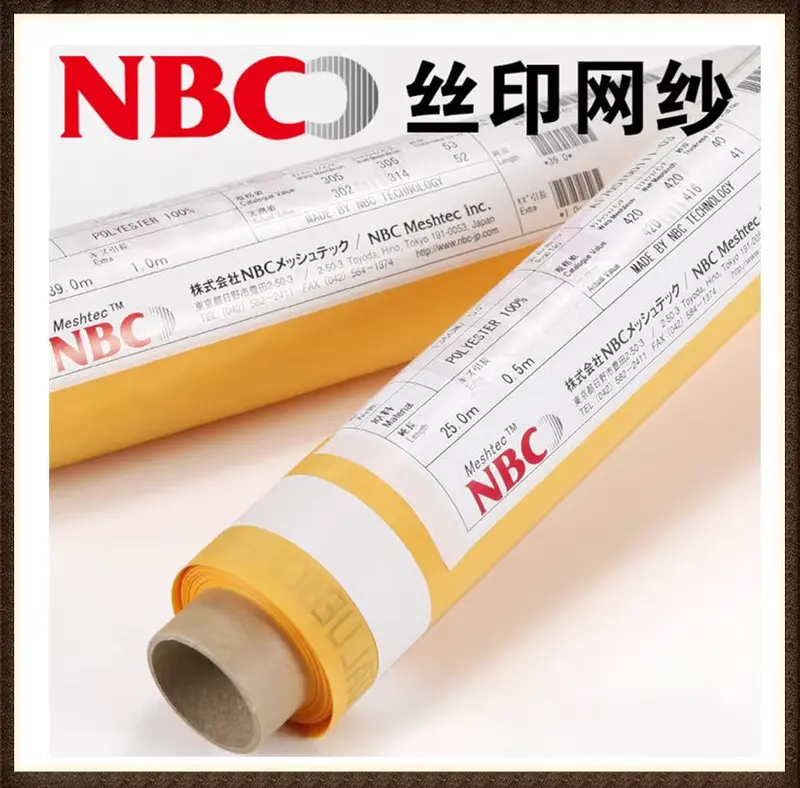
NBC Alpha & Beta Polyester Monofilament Mesh
Model: /
Brand: HANZE LTD
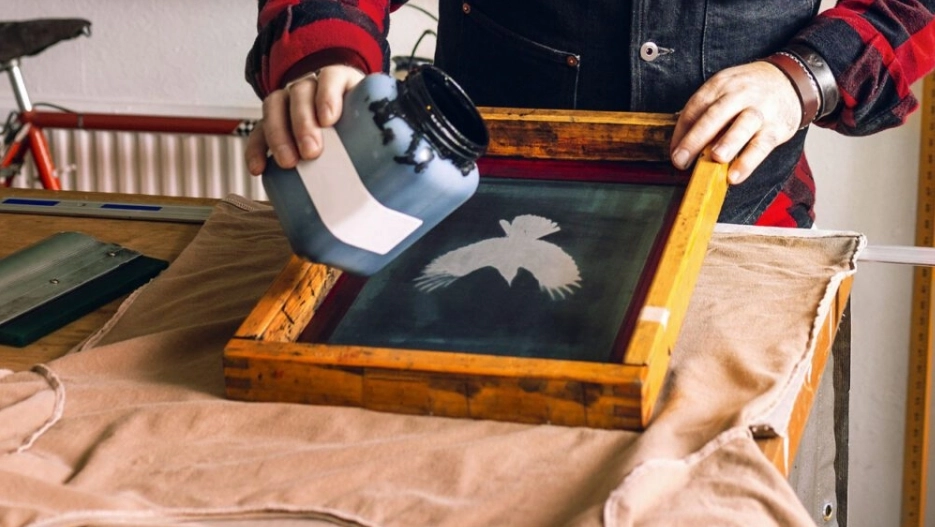
NBC Alpha & Beta polyester monofilament mesh is widely used when printers need stable tension behavior, consistent openings, and predictable ink transfer across production runs.
- Product Name: NBC Alpha & Beta Polyester Monofilament Mesh
- Material: Polyester 100%
- Usage: Screen Prinitng
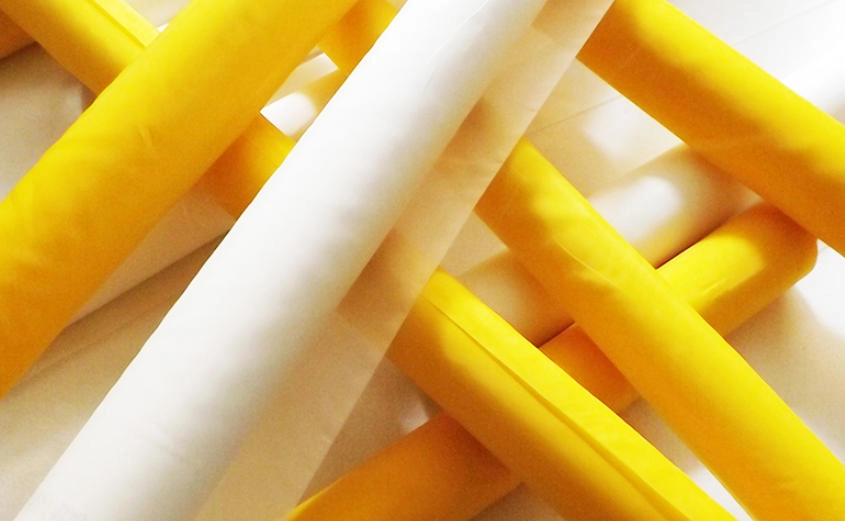
- Color: Yellow and white
- Width: 115CM ,136cm,155cm
- Length: 30m/roll
- Application: Ink Polyester Screen Printing Mesh
- Brand Name: NBC
- Place of Origin: Japan
Product Description
NBC Alpha & Beta Polyester Monofilament Mesh
Quick Selector — Which Series Should You Use?
NBC’s lineup is commonly split into Alpha Series for precision applications (e.g., electronics and fine graphics) and Beta Series for reliable, cost-effective standard printing. Both series are positioned around dimensional accuracy and repeatability, while Alpha adds surface/treatment technology to improve fine-line and halftone performance.
If your priority is tight registration, halftones, and fine-line repeatability, choose Alpha (α) Series. If you need high dimensional accuracy and tension stability at a more economical level for standard production, choose Beta (β) Series.
NBC Alpha (α) Series — Built for Precision Printing
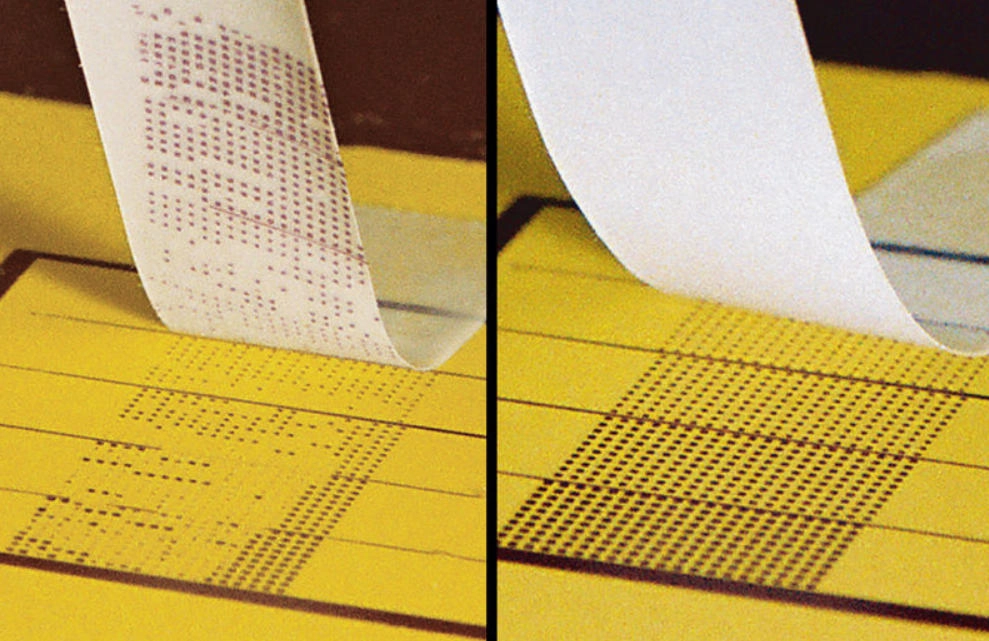
Emulsion Adhesion Test Results (Conventional on left, Alpha mesh on right)
1. Designed for high-precision applications
Alpha Series is positioned for printed circuit boards, nameplates, glass, graphics, and decal printing—where screen stability and fine detail matter most.
2. Thread technology options: L-Screen vs UX-Screen
• L-Screen (conjugated high modulus polyester): hard core + soft sheath approach, intended to balance strength and emulsion adhesion; stated to be ~16% stronger with lower elongation vs solid-thread materials like EX Screen. Typical thread diameters include 27 μm and 30 μm, with 35 μm offered in select cases.
• UX-Screen (super high modulus): “next generation” polyester mesh concept with an ~8% strength increase vs EX Screen; offered in thread diameters roughly 33–45 μm depending on mesh count.
3. NEWSUPER surface treatment
NBC describes NEWSUPER as a proprietary treatment combining chemical + atmospheric plasma/corona approaches, aimed at modifying the thread surface at a very fine scale. Practical benefits highlighted include:
• Smoother ink/paste transition (useful for halftones & fine lines)
• Stronger “cling” between mesh and emulsion/capillary film, supporting longer screen life in long runs or abrasive pastes
• Wider exposure latitude (more forgiving exposure window in practice)
4. Alpha Series feature → buyer outcome
• Smoother ink transfer → cleaner edges / improved dot integrity
• Minimized tension loss → better registration over long runs
• Improved dimensional accuracy → more predictable repeatability
 NBC Beta (β) Series — Reliable Standard Mesh
 NBC Beta (β) Series — Reliable Standard Mesh
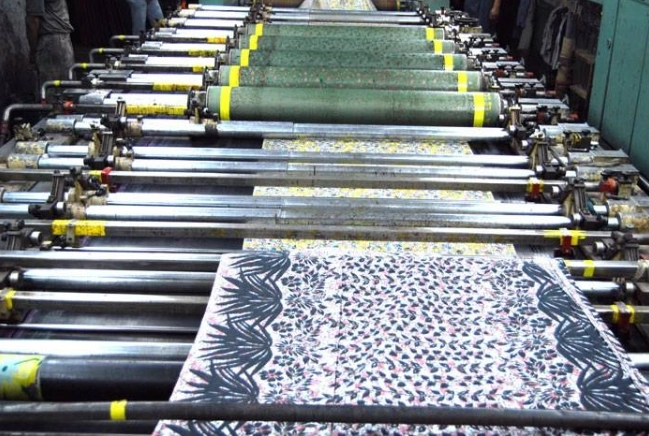
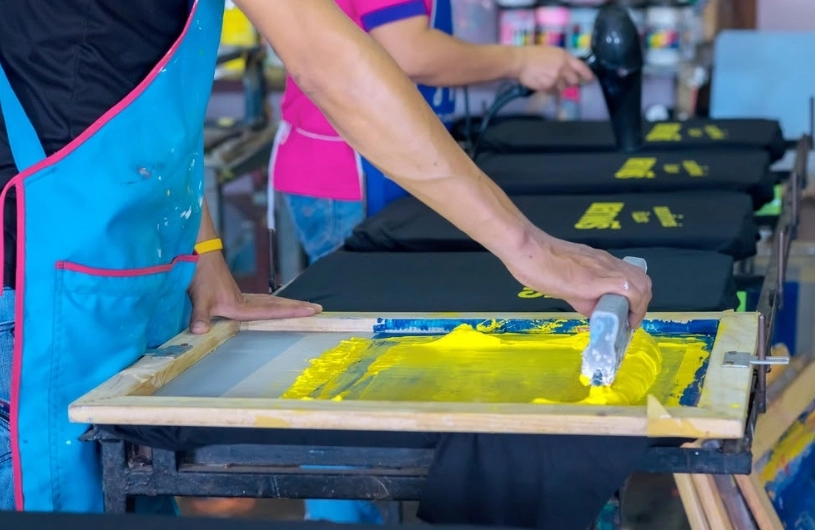
NBC Alpha (β) Series screen printing
1. Designed for standard production printing
Beta Series is positioned for textile, glass, and ceramic tile printing, where consistency and value are key.
2. EX Screen (high modulus polyester monofilament)
Beta Series uses EX Screen, a high modulus polyester monofilament designed to improve productivity and repeatability through physical strength. EX Screen is referenced as standard for thread diameters roughly 35–80 μm (mesh-count dependent).
3. Beta Series feature → buyer outcome
• High dimensional accuracy → stable print geometry for daily production
• Excellent tension stability → fewer surprises on press and during reclaim cycles
Technical Specs at a Glance (Alpha vs Beta)
Recommended Mesh Count Range by Application
Different ink systems, viscosities, and coverage requirements influence the final selection. The table below provides common starting ranges to help procurement teams quickly narrow down specification options.
Quality & Traceability
To reduce procurement risk, NBC highlights roll-level traceability: each roll ships with an inspection tag that supports tracking and verification.
For Beta Series documentation, NBC also describes that flaws are clearly marked and a length compensation policy may apply (useful for distributors managing yield expectations).
Contact us
When requesting a quote, specify:
• Series: Alpha or Beta
• Mesh count: T (tpcm) or mesh (tpi)
• Thread type (Alpha): L-Screen or UX-Screen
• Color preference (if applicable)
• Width & roll length requirement
• End-use: PCB / decals / textile / glass / ceramic, plus ink type (water/solvent/UV)
Send your application + target detail level, and we’ll recommend a workable mesh range for trial and production.
FAQ:
• What’s the difference between NBC Alpha and Beta polyester mesh?
Alpha is positioned for precision printing and uses UX/L-Screen threads plus NEWSUPER treatment; Beta is positioned for standard printing and uses EX Screen high modulus polyester.
• When should I choose L-Screen instead of UX-Screen?
Choose L-Screen when you want the hard-core/soft-sheath construction concept aimed at strength + emulsion adhesion; choose UX-Screen when you want the super high modulus “next generation” positioning and its stated strength uplift.
• Why does NEWSUPER matter for halftones and fine lines?
NBC describes NEWSUPER as a surface modification approach that improves ink/paste transition and helps emulsion/capillary film adhere more tightly, supporting long runs and fine-detail work.
• What mesh count is typical for UV graphics or fine industrial printing?
Many UV screen ink recommendations reference monofilament polyester in the 305–420 mesh (120–165 T) range for most applications, depending on ink and deposit needs.
• What mesh is commonly used for four color process / high-detail graphics?
A common guideline is to use higher mesh counts; 305 mesh is often cited as a strong starting point for very high detail in process-style printing.
• How can I verify what I received matches the spec?
NBC highlights inspection-tag-based traceability at the roll level; ask your supplier to provide the roll tag/lot information with your shipment documents.

October 27, 2026

October 27, 2026

October 27, 2026

October 27, 2026

October 27, 2026

October 27, 2026

October 27, 2026

October 27, 2026
October 27, 2026

October 27, 2026

October 27, 2026
October 27, 2026

October 27, 2026
October 27, 2026
Product Category