Screen Printing Mesh Materials Compared: Polyester vs Nylon vs Stainless Steel
Screen Printing Mesh Materials Compared: Polyester vs Nylon vs Stainless Steel
1. Why Mesh Material Matters More Than Many Printers Realize
Two screens can share the same mesh count and still behave completely differently on press. The reason is the mesh material. Polyester, nylon, and stainless steel each have their own balance of elasticity, tensile strength, surface smoothness, chemical resistance, and cost. Those properties decide whether you get crisp details or blurry edges, consistent color or random variation, and predictable production or constant troubleshooting.
For print shops and industrial manufacturers, mesh material is not just a technical detail. It affects how easily you can stretch and tension screens, how long they stay in registration, how aggressively you can clean and reclaim, and how often you need to replace them. A garment printer running plastisol on cotton T-shirts will not need the same mesh material as a PCB manufacturer printing conductive pastes, even if the “mesh count number” looks similar.
A clear understanding of the differences between polyester mesh, nylon mesh, and stainless steel mesh helps you select the right material for 80–90% of your daily jobs. That is where profitability lies: fewer remakes, less downtime, and a more stable and repeatable printing process across your entire shop.
2. Core Properties of Screen Printing Mesh Materials
2.1 How Mesh Material Influences Print Results
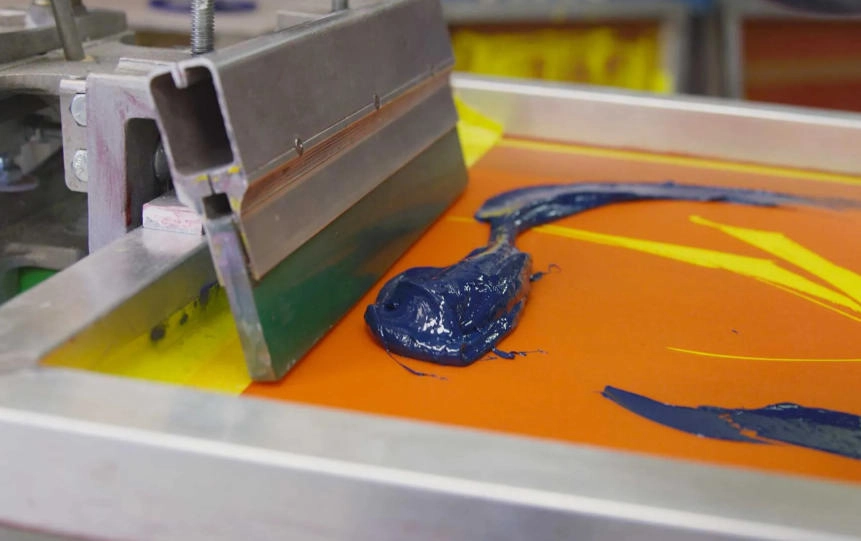
Mesh material influences three big areas: tension stability, ink behavior, and durability. A more elastic mesh stretches and recovers differently compared to a stiffer one. This shows up as changes in squeegee “feel,” off-contact behavior, and registration stability on multi-color jobs. A mesh with a smoother surface and controlled thread diameter usually releases ink more cleanly, which improves edge definition on fine details and halftones.
Chemical resistance is another key factor. Cleaning agents, screen openers, reclaiming chemicals, and even drying temperatures will attack some materials more than others. Over time this can lead to swelling, shrinkage, or loss of mechanical strength. If the mesh starts to creep or deform under normal working tension, you will see inconsistent print results even while your artwork, ink, and squeegee settings stay the same.
When evaluating mesh materials, it helps to think beyond the single print. Ask how the material behaves over many cycles of coating, exposure, printing, cleaning, and reclaiming. That long-term behavior is where the real difference between mesh types shows up in your daily operation.
2.2 Key Technical Concepts You Need to Understand
To make informed choices, you only need a few core technical terms:
• Tensile strength – how much force the mesh can withstand before breaking. Higher tensile strength supports higher working tensions and sharper prints.
• Elongation – how much the mesh stretches under load. High elongation can help the mesh wrap uneven surfaces, but too much makes registration unstable.
• Mesh opening & thread diameter – mesh opening is the space between threads; thread diameter is the thickness of each filament. Together they define how much ink can pass and how thick the ink deposit will be.
• Recommended tension range – a practical window where the mesh delivers stable, predictable results without risk of damage.
Once you understand these parameters, “polyester vs nylon vs stainless steel” becomes less abstract. You can look at a datasheet and immediately see how a particular mesh material might behave in your pressroom or production line.
3. Polyester Screen Printing Mesh
3.1 Polyester Mesh Characteristics
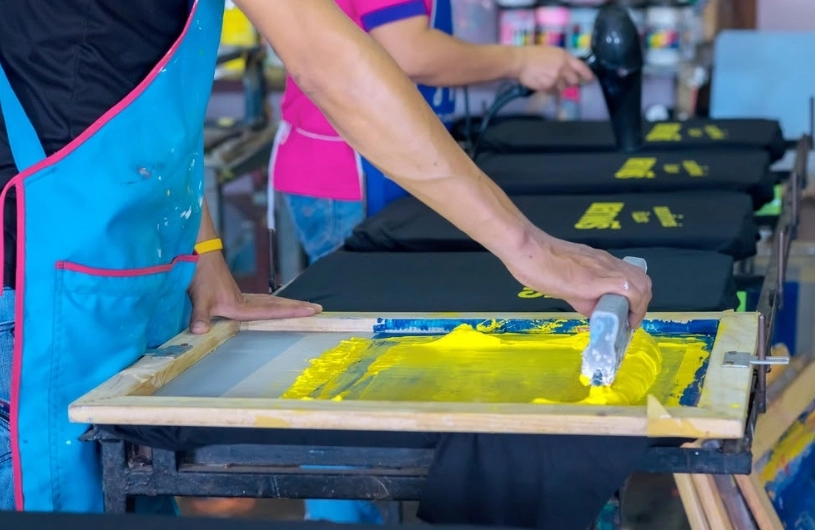
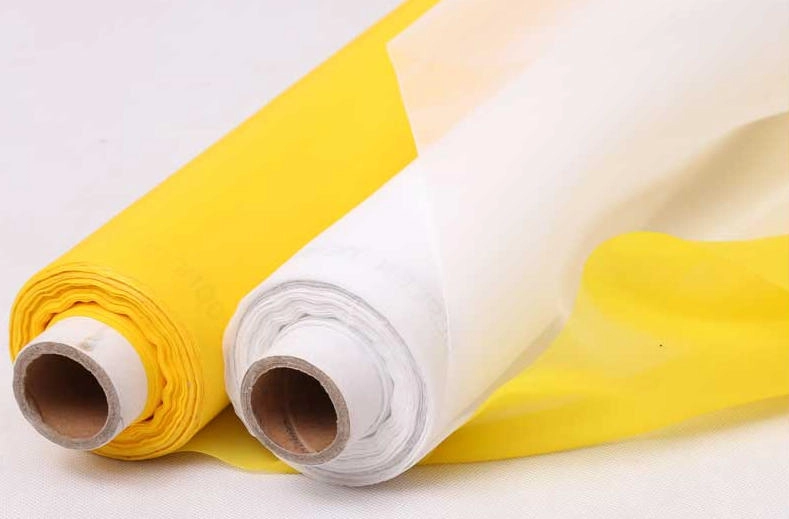
Polyester screen printing mesh is the default choice for most garment, textile, and graphic printing shops. It offers a balanced combination of moderate elasticity, high tensile strength, and good tension stability. That balance makes it relatively easy to stretch onto frames, bring up to working tension, and keep screens within a consistent tension range over many print runs.
With polyester mesh, manufacturers can offer a wide range of mesh counts and thread diameters, from coarse meshes that deposit heavy ink films to very fine meshes for halftones and detailed line work. The structure is typically monofilament, meaning each thread is a single, smooth filament. This smooth surface supports predictable emulsion coating, clean stencil edges, and reliable ink release.
From a practical point of view, polyester mesh is forgiving. It tolerates normal handling errors better than stainless steel and provides more stability than nylon. For a shop that needs to handle a variety of everyday orders—logos, text, spot colors, and simple halftones—polyester mesh is usually the most efficient and versatile option.
3.2 Advantages of Polyester for Everyday Screen Printing
The main advantage of polyester mesh is its broad suitability. It works well with plastisol inks, water-based inks, many solvent-based systems, and even UV inks when properly paired with emulsion and exposure settings. A single polyester mesh range can cover most T-shirt, hoodie, sportswear, poster, and banner applications.
Because of its good tension retention, polyester supports stable registration across long print runs. Shops can run multi-color designs, flash and overprint, and still maintain alignment as long as screens are properly stretched and stored. Polyester also responds well to modern automatic presses and high-speed production lines, where consistent tension is critical to keeping prints sharp and dimensions accurate.
From a cost perspective, polyester mesh is affordable and widely available. Replacement screens, re-mesh services, and pre-stretched frames are easy to source. This combination of performance, flexibility, and availability is why polyester screen printing mesh has become the standard in the industry.
3.3 Limitations and When Polyester Is Not Enough
Despite its strengths, polyester mesh is not ideal for every scenario. In extreme high-tension or ultra-precision applications—such as some high-end electronics printing—polyester can reach its limits. At very high tensions, the risk of creep or gradual tension loss increases, which may not be acceptable for ultra-fine lines or very tight registration tolerances.
Polyester also has finite chemical and thermal resistance. Harsh solvents, aggressive reclaiming cycles, and high drying temperatures can shorten the useful life of the mesh. In most textile and graphics shops this is manageable, but in industrial environments with strong chemicals or repeated high-temperature curing, polyester may degrade faster than desired.
If your process demands extremely thin, uniform ink deposits, very fine feature sizes, or exposure to harsher cleaning cycles, polyester alone might not deliver the stability and lifespan you need. That is where stainless steel and, in some special cases, nylon mesh enter the picture.
4. Nylon Screen Printing Mesh
4.1 Physical and Mechanical Properties of Nylon Mesh
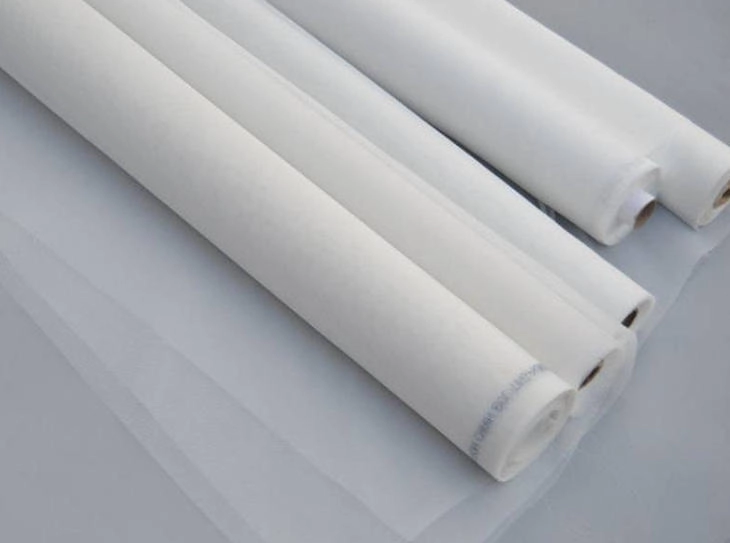
Nylon screen printing mesh is known for higher elongation and flexibility compared to polyester. It stretches more under load and can conform more easily to irregular or curved surfaces. This makes nylon attractive when printing on 3D objects, bottles, or surfaces with pronounced texture where conformability matters.
However, the same property that helps nylon wrap around complex shapes becomes a drawback when you need stable, long-term tension. Nylon tends to show more creep: the tension gradually drops over time under constant load. This can lead to changes in off-contact distance, squeegee feel, and print registration as you move through a production run or across multiple reuses of the same screen.
In terms of chemical resistance and temperature tolerance, nylon is generally adequate for many printing environments but not superior to polyester. It handles typical cleaning agents and drying conditions, but heavy industrial chemistry or high temperatures can accelerate wear and deformation.
4.2 Advantages of Nylon Mesh in Specific Applications
Where nylon mesh shines is in its ability to follow uneven surfaces and maintain contact in areas where a stiffer mesh might bridge and leave inconsistent prints. If you print on complex shapes, embossed products, or specialty items like molded plastic parts, nylon’s extra flexibility can improve ink transfer and reduce skipping.
Nylon mesh can also offer good wetting characteristics with certain inks, which helps the ink flow through the mesh and lay down evenly on challenging substrates. For small, specialized runs where conformability is more important than maximum registration stability, nylon mesh sometimes delivers better practical results than polyester.
For craft and specialty applications, nylon’s softer feel and flexibility can make the setup process more forgiving, especially when dealing with non-flat surfaces that would be difficult to manage with a stiffer mesh material.
4.3 Drawbacks and Risks of Using Nylon Mesh
The main drawback of nylon mesh is shorter tension stability. Tension drop means that screen behavior will change over time. Multicolor registration may drift, off-contact distance may vary, and print thickness can become less predictable during long runs. This is especially problematic on automatic presses, where tight control over mechanics is essential.
Nylon screens often require more frequent tension checks and adjustments, which adds maintenance work. If you rely heavily on reclaiming and reusing screens, nylon’s tendency to stretch and creep can reduce the number of stable life cycles you get from each frame.
Because of these risks, nylon is not usually recommended as a primary mesh material for high-volume garment printing or for precision graphics where consistency and repeatability are critical. It is better viewed as a specialized option for specific types of jobs rather than a general replacement for polyester.
5. Stainless Steel Screen Printing Mesh
5.1 What Makes Stainless Steel Mesh Different
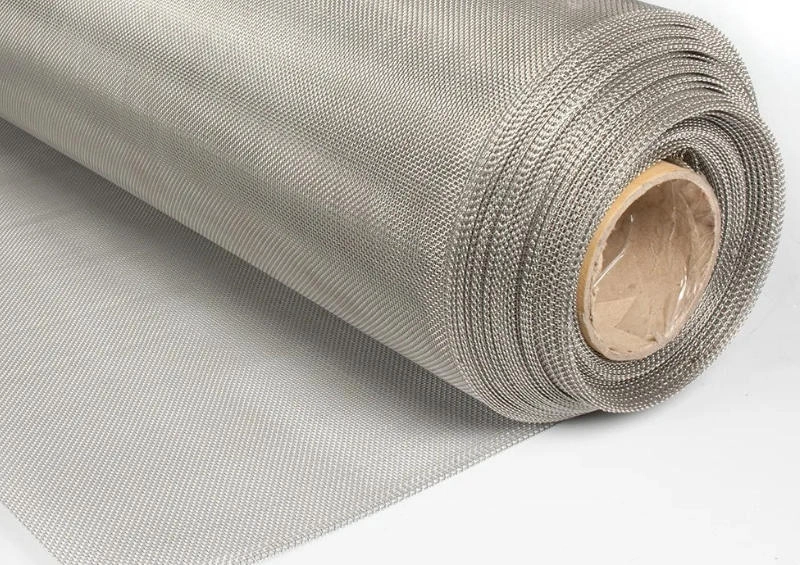
Stainless steel screen printing mesh behaves very differently from synthetic meshes. It has extremely high tensile strength and very low elongation, which means it stretches very little under load and holds tension exceptionally well over time. Once a stainless steel screen is properly tensioned, it tends to stay stable over many print cycles.
Because metal threads can be produced with small diameters and tight tolerances, stainless steel mesh can offer larger open areas for ink passage even at high mesh counts. This allows you to print very fine details and thin lines while still achieving controlled, consistent ink deposits. The mesh geometry is highly uniform, which improves registration and sharpness for demanding applications.
Stainless steel also brings excellent chemical and thermal resistance. It can tolerate aggressive cleaning chemicals and high curing temperatures better than most synthetic meshes, which is a major advantage in harsh industrial processes or automated cleaning lines.
5.2 Key Advantages in High-End and Industrial Printing
In high-end and industrial screen printing, the stability and precision of stainless steel mesh are extremely valuable. Applications such as printed circuit boards, electronic components, solar cells, and automotive parts often require fine features, tight tolerances, and consistent film thickness across large batches. Stainless steel mesh can deliver those requirements more reliably than most synthetic alternatives.
Stainless steel’s high tension capability supports sharper edges and less dot gain, especially for fine line and halftone printing. For functional inks—conductive, resistive, dielectric, or thick-film pastes—precise and repeatable deposit thickness is critical. Stainless steel’s consistent mesh geometry and low deformation directly support that level of control.
In addition, the long service life and resistance to damage from harsh chemicals can justify the higher upfront cost. When you factor in fewer rejected parts and more stable production, stainless steel mesh often becomes an economical choice for demanding industrial work.
5.3 Limitations: Not for Every Shop
Despite its advantages, stainless steel mesh is not a universal solution. The initial cost of the mesh and the frames is significantly higher than polyester or nylon. Tensioning and handling stainless steel screens require more experience and careful technique to avoid damaging the mesh or frames.
For typical garment printing, the level of precision and stability available from stainless steel mesh is simply not necessary. Most T-shirt and textile jobs can be handled perfectly well by polyester for a fraction of the cost. Using stainless steel for everyday spot color prints or simple designs would often be overkill.
Because of this, stainless steel mesh is mainly recommended for shops and factories where high precision, long-term stability, and process control are critical—and where the cost of rework or scrap is much higher than the cost of the mesh itself.
6. Side-by-Side Comparison: Polyester vs Nylon vs Stainless Steel
6.1 Performance Comparison Overview
When you compare polyester, nylon, and stainless steel screen printing mesh side by side, a clear pattern emerges:
• Tension stability – Polyester offers good stability; stainless steel offers excellent stability; nylon is weaker in this area.
• Elongation – Nylon has the highest elongation (most stretch), polyester is moderate, stainless steel is very low.
• Durability – Stainless steel typically lasts longest under harsh conditions; polyester holds up well in normal print shops; nylon is more vulnerable to deformation.
• Precision – Stainless steel leads for ultra-fine detail; high-tension polyester can handle most textile and graphic work; nylon is more for special conformable jobs.
• Ease of use – Polyester is easiest for most shops; nylon is acceptable but needs more tension attention; stainless steel requires more skill and care.
Thinking in these terms helps you match the mesh material to your actual needs rather than simply choosing based on habit or price.
6.2 Ink and Substrate Compatibility
All three mesh materials can work with common ink systems, but their strengths differ:
• Garment inks (plastisol, water-based, discharge) – Polyester mesh is the standard. Nylon and stainless steel rarely bring extra benefits for typical T-shirt printing.
• Solvent and UV inks for graphics – Polyester covers most poster, label, and signage applications, while stainless steel is reserved for very fine detail or functional prints.
• Special thick inks (metallic, glitter, high density) – Coarser polyester meshes are usually preferred; nylon’s flexibility is not always needed here.
• Functional and industrial inks (conductive, dielectric, thick-film pastes) – Stainless steel or high-end polyester meshes are common choices due to their precision and stability.
Substrate matters as well. Flat fabrics, paper, and boards usually favor polyester or stainless steel, while complex 3D objects might benefit from nylon’s flexibility during certain specialist jobs.
7. Cost, Durability, and Total Cost of Ownership
7.1 Upfront Price vs Lifetime Value
On paper, polyester mesh is the least expensive per unit, nylon is similar or slightly higher depending on the region, and stainless steel is significantly more expensive. However, upfront price tells only part of the story. The real cost is “cost per usable print” or “cost per finished piece.”
If stainless steel mesh lasts several times longer than a polyester mesh under harsh conditions and maintains tighter tolerances, the total cost per printed component can actually be lower—especially when the cost of scrap, rework, and downtime is included. In garment printing, where margins are tighter and tolerance requirements are more forgiving, polyester often delivers the best balance between price and performance.
When you evaluate mesh materials, it helps to estimate how many reclaim cycles, how many print runs, and how many finished pieces you can realistically expect from each material. Only then can you see the true economic difference between polyester, nylon, and stainless steel.
7.2 Mesh Damage, Reclaiming, and Replacement Cycles
Each material responds differently to reclaiming and cleaning. Polyester tolerates normal reclaim chemicals and handling well, but harsh brushing or strong solvents can eventually roughen the surface or weaken threads. Nylon tends to deform more easily during aggressive cleaning and may lose tension faster after repeated cycles.
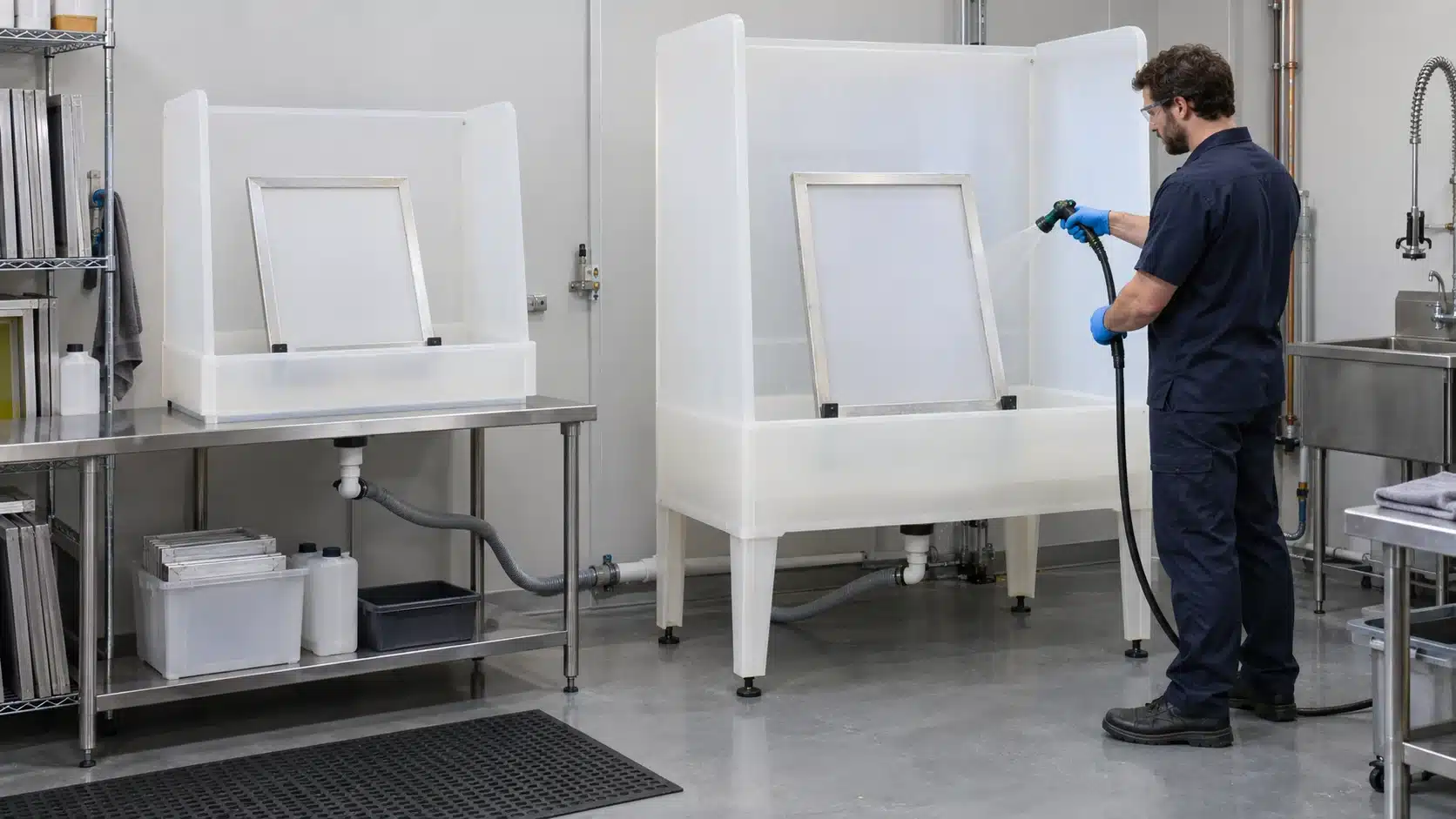
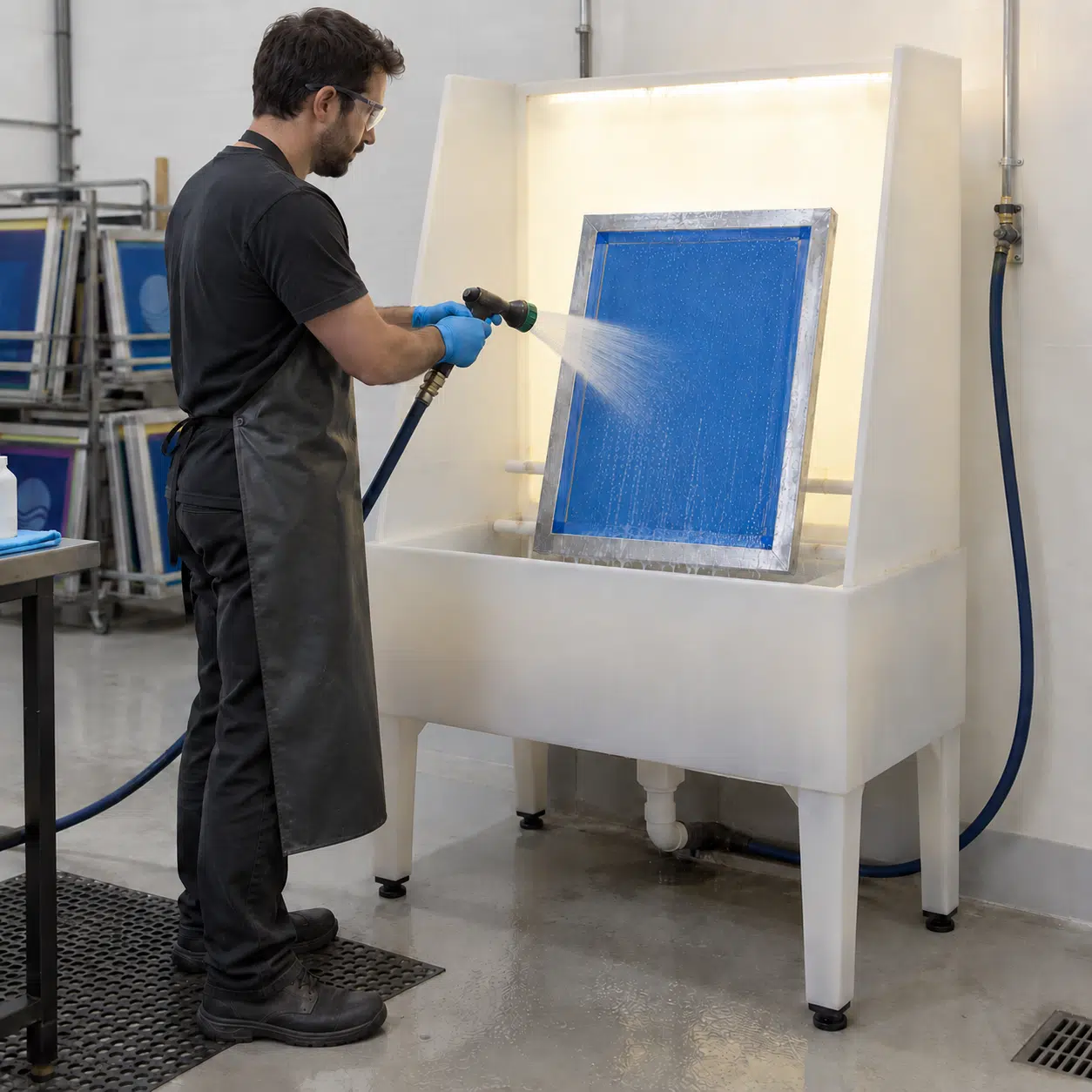
Stainless steel resists chemicals better, but it can be vulnerable to mechanical damage if handled roughly. Once bent or kinked, metal threads are difficult or impossible to restore. For all three materials, good reclaiming practices—proper chemical dwell times, controlled pressure, and appropriate tools—extend usable life and stabilize print quality across cycles.
Planning replacement cycles and tracking screen performance help you avoid working with mesh that is still technically intact but no longer delivering stable results. This planning is part of managing the total cost of ownership for each mesh material.
8. How to Choose the Right Mesh Material for Your Shop
8.1 Start from Your Main Business and Substrates
The most practical way to choose mesh material is to start with your main products. If 80–90% of your work is printing on cotton T-shirts, hoodies, and sportswear, polyester screen printing mesh will cover nearly everything you need. You can use different mesh counts and thread diameters to tune ink deposit and detail without changing material.
If your core business involves industrial or electronic printing with fine lines, precise film thickness, and harsh cleaning cycles, stainless steel becomes a serious candidate. For highly specialized work on 3D parts, bottles, or textured surfaces, nylon may be worth considering for a portion of your screens.
Once you are clear about your primary substrates, you can narrow down mesh material choices according to ink systems, detail requirements, and production speeds.
8.2 Simple Decision Guide: Polyester, Nylon, or Stainless Steel?
A simple way to frame the decision is:
• Choose polyester if you are a garment or graphics printer and need versatility, ease of use, and solid performance across many jobs.
• Consider nylon if you regularly print on complex shapes or need a mesh that conforms closely to uneven surfaces in specialty applications.
• Choose stainless steel if you work in precision or industrial printing where fine details, tight tolerances, and process stability justify the higher upfront cost.
In many shops, the best solution is not to select one material exclusively, but to let each material play to its strengths—polyester for everyday work, stainless steel for critical precision jobs, and nylon for specific conformable applications.
8.3 Common Buyer Mistakes to Avoid
Several recurring mistakes show up when buyers choose mesh materials:
• Focusing only on upfront price and ignoring long-term stability and scrap rates.
• Choosing mesh material based only on mesh count, without considering tension behavior and durability.
• Trying to force a single material (usually polyester) to cover very specialized jobs where stainless steel or nylon would be more appropriate.
Avoiding these mistakes is easier once you understand the practical differences between polyester, nylon, and stainless steel. A short internal checklist for each new application can prevent costly trial-and-error.
9. Quick FAQ: Mesh Materials in Everyday Decisions
• Is polyester mesh enough for most T-shirt printing?
For the vast majority of textile jobs, high-quality polyester mesh is more than sufficient and offers the best balance of performance and cost.
• When does nylon mesh really make sense?
Nylon mesh is useful when you need the mesh to conform to complex or uneven surfaces, such as certain 3D parts or specialty items.
• Is stainless steel mesh only for electronics?
It is widely used in electronics and industrial printing, but it can be used anywhere that ultra-fine detail, tight tolerances, and long-term stability are critical.
• Can one shop mix different mesh materials?
Yes. Many manufacturers use polyester for general work and stainless steel for high-precision lines, and sometimes keep a few nylon screens for special applications.
• How do I start testing a new mesh material?
Begin with a small trial: one or two frames, a representative ink and substrate, and a clear plan to compare print quality, stability, and durability against your current material.