How to Reduce Fastener Waste in High-Volume Tagging Operations
How to Reduce Fastener Waste in High-Volume Tagging Operations
Fastener waste is easy to overlook in daily tagging work. A few broken plastic fasteners, a few jammed strips or a few wrongly tagged garments may not seem serious at first. However, in high-volume tagging operations, small mistakes can quickly become a real cost problem.
For garment factories, retail packaging teams, wholesalers, distributors and warehouse tagging stations, fastener waste is not only about the price of plastic tag fasteners. It also includes lost labor time, damaged products, broken needles, tool downtime, repacking work, incorrect inventory use and customer complaints.
Reducing fastener waste requires more than buying cheaper consumables. A better approach is to build a complete tagging process: correct tool, correct fastener, correct needle, correct tag placement, clear inventory separation and trained operators.
This guide explains the most common causes of tagging fastener waste and provides practical steps to reduce garment tagging cost in high-volume operations.
What Counts as Fastener Waste?
Fastener waste includes any tagging consumable that is used, damaged, discarded or replaced without adding value to the final product.
In a tagging operation, waste may include:
• Broken fasteners
• Jammed fastener strips
• Fasteners loaded into the wrong gun
• Fasteners cut off after wrong tag placement
• Fasteners wasted during repeated testing
• Fine fasteners used on products that require standard fasteners
• Standard fasteners used on delicate fabrics and removed after damage
• Loop fasteners selected in the wrong length
• Fasteners damaged during storage
• Fasteners discarded because of mixed inventory
• Extra fasteners used during rework
Fastener waste is often connected with other hidden costs. When a tag is attached in the wrong place, the team may need to cut it off, retag the garment, inspect the product again and repack it. If the wrong fastener damages the garment, the loss becomes much higher than the cost of one plastic attachment.
Why Fastener Waste Matters in High-Volume Tagging
High-volume tagging operations depend on speed, consistency and repeatability. When the process is stable, operators can tag products quickly with low defect rates. When the process is unstable, small issues multiply.
For example, if a team tags thousands of garments per day, even a small percentage of jamming, breakage or wrong placement can create significant waste. The cost includes materials, labor, tool wear and production delay.
Fastener waste also affects customer experience. A loose tag, damaged fabric, broken fastener or inconsistent tag position can make the product look unprofessional. In retail packaging, presentation matters. A clean and secure hang tag supports the product image, while poor tagging can reduce perceived quality.
In factory and warehouse environments, fastener waste can also slow the line. Operators may stop to clear jams, replace needles, search for the correct fasteners or fix wrongly tagged items. These interruptions reduce efficiency and increase total tagging cost.
Main Causes of Fastener Waste
Most fastener waste comes from process problems rather than from the fastener itself. The following causes are common in high-volume tagging operations.
Tool and Fastener Mismatch
One of the most common causes of waste is using the wrong fastener with the wrong tagging gun.
Standard tagging guns should use standard needles and standard fasteners. Fine fabric tagging guns should use fine needles and fine fasteners. Loop tag tools should use compatible loop fasteners. If the system does not match, the tool may jam, misfeed or damage the fastener.
Mismatched systems can create repeated waste because operators may continue trying to use the wrong consumable before the problem is identified.
Wrong Fastener Length
Fastener length affects both presentation and performance. A fastener that is too short may break, pull tightly against the fabric or make the tag difficult to attach. A fastener that is too long may look messy, catch on other products or require removal and retagging.
The goal is not to use the longest or cheapest fastener. The goal is to use the shortest suitable length that holds the tag securely without damaging the product or reducing retail appearance.
Wrong Fastener Type for the Product
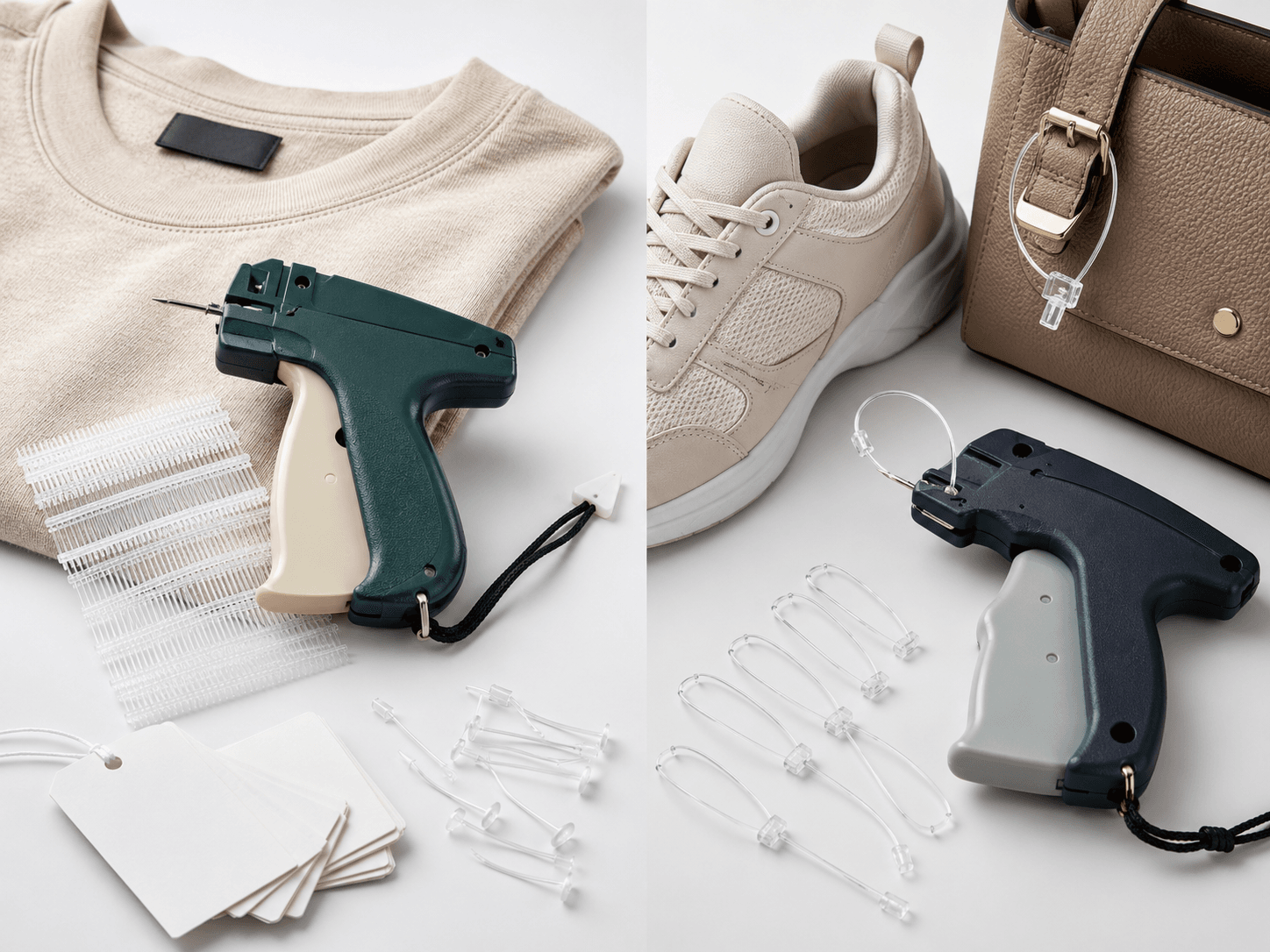
Different products need different attachment methods. Standard fasteners may work well for cotton T-shirts, denim, towels and general garments. Fine fabric fasteners are better for delicate garments such as silk, lace, lingerie, babywear and thin knits. Loop lock fasteners are better for shoes, handbags, belts, wallets and accessories that should not be pierced.
Using one fastener type for every product can create waste, damage and rework.
Bent, Dull or Damaged Needles
A damaged needle can cause fasteners to jam, break or feed poorly. It can also enlarge holes, snag fabric or require more operator force.
In high-volume operations, needles are wear parts. They should be inspected and replaced regularly. Continuing to use a bent or dull needle often costs more than replacing it early.
Poor Loading Technique
Incorrect loading can cause fastener strips to misfeed, bend or jam inside the tagging gun. New operators may insert fasteners from the wrong direction, force the strip into the tool or continue using a partially damaged strip.
A simple loading standard can reduce waste and tool damage.
Unapproved Tagging Points
Wrong tag placement often leads to rework. If tags are attached to the wrong area, the product may look poor or become damaged. The fastener must then be cut off and replaced.
Common examples include tagging through the visible front panel of a delicate garment, piercing a shoe upper, attaching a tag too tightly to thick fabric, or placing a tag where it blocks product features.
Mixed Inventory
Fastener waste increases when standard, fine, long and loop fasteners are mixed in the same bin or workstation. Operators may take the wrong fastener by mistake, especially when products look similar at a glance.
Clear storage and labeling are essential for high-volume tagging.
Lack of Operator Training
Even good tools and fasteners can perform poorly if operators are not trained. Training should cover compatibility, loading, needle replacement, tag placement, safe handling and how to stop when the tool jams.
Without training, operators may force the trigger, stretch the fabric, use the wrong angle or continue working with damaged needles.
How to Calculate the Real Cost of Fastener Waste
Fastener waste is not only the cost of discarded plastic fasteners. The real cost includes several parts.
Consumable Cost
This includes wasted standard fasteners, fine fasteners, loop fasteners, replacement needles and damaged tag cards.
Labor Cost
When a fastener breaks or a tag is placed incorrectly, workers spend extra time cutting, removing, retagging, checking and repacking.
Product Damage Cost
If the wrong needle or fastener damages fabric, leather, PU, lace, hosiery or other product surfaces, the cost can become much higher than the fastener itself.
Tool Downtime Cost
Jammed tools stop the workflow. If operators wait for a replacement tool or supervisor support, production slows down.
Rework Cost
Rework includes removing incorrect tags, replacing damaged fasteners, checking tag position and repacking items. In busy seasons, rework can delay shipment.
Customer Complaint Cost
Poor tagging may lead to customer complaints, returns, negative feedback or extra communication with buyers. This is especially important for wholesalers, retailers and export packing teams.
Reducing waste means looking at the full tagging process, not only the price per fastener.
Build a Fastener Compatibility System
A compatibility system helps operators choose the correct tool, needle and fastener quickly. It also reduces errors when several product types are handled in the same workspace.
Separate Standard, Fine and Loop Systems
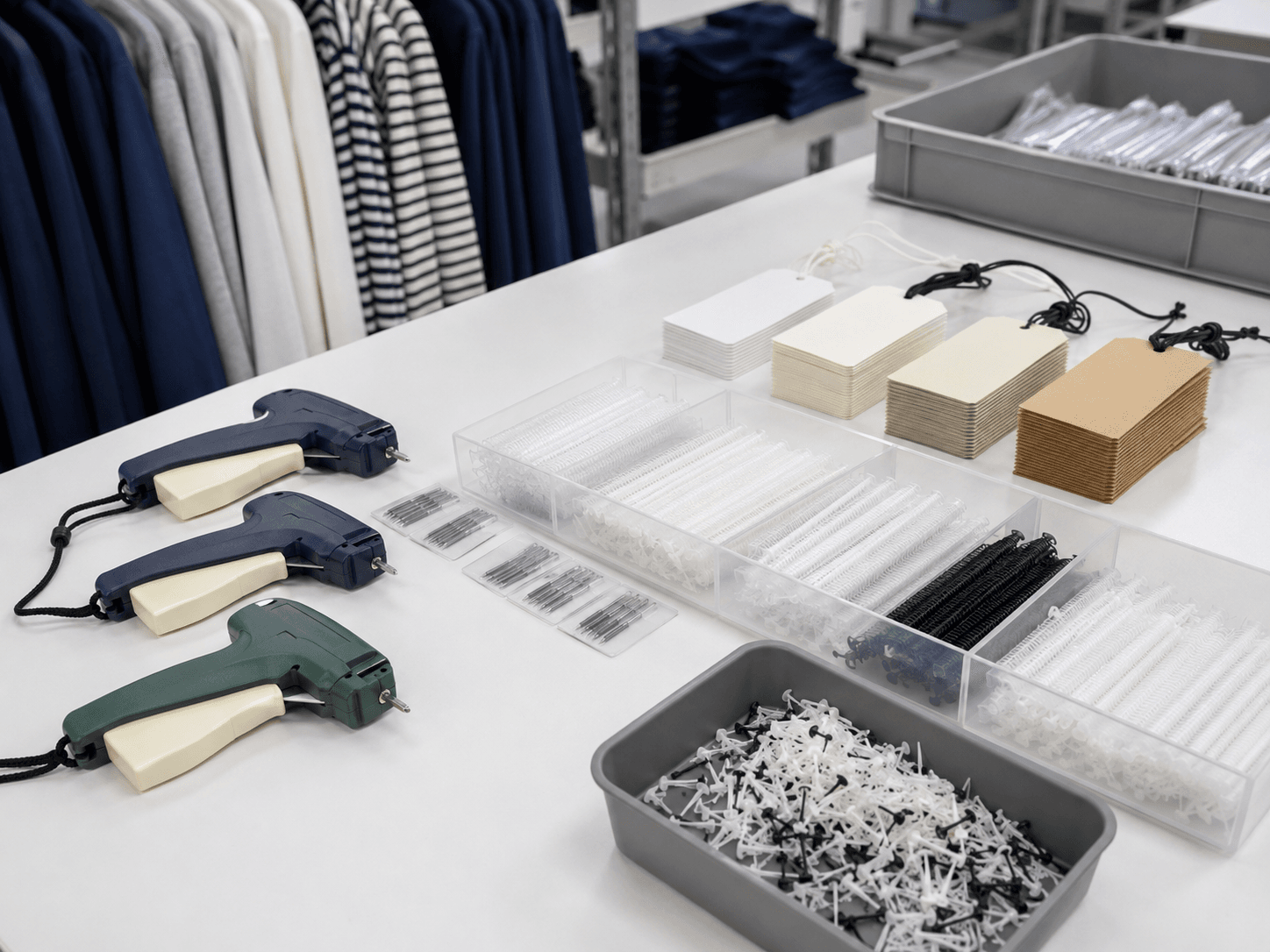
Standard tagging supplies should be stored separately from fine fabric supplies and loop lock supplies. Each system should include the correct gun, needles and fasteners.
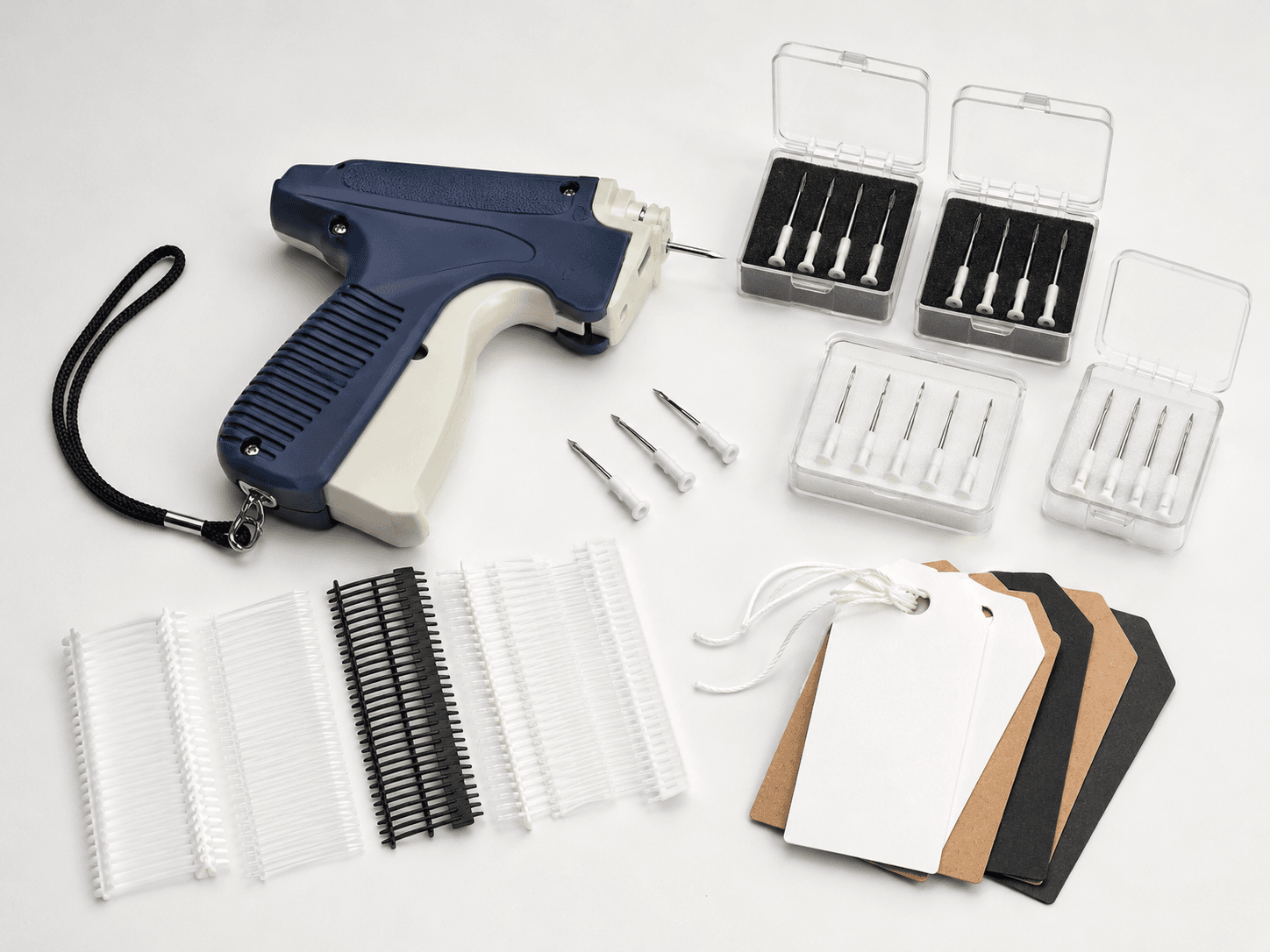
A practical setup may include:
• Standard tagging gun + standard needles + standard fasteners
• Fine fabric tagging gun + fine needles + fine fasteners
• Long needle tagging gun + long needles + compatible fasteners
• Loop tag tool + loop lock fasteners
Use Clear Visual Labels
Use clear labels, color-coded boxes or separate trays for each fastener category. Even if the fasteners look similar, the packaging should make the difference obvious.
Suggested labels include:
• Standard fasteners
• Fine fasteners
• Long fasteners
• Loop lock fasteners
• Replacement standard needles
• Replacement fine needles
• Long needles
Keep Sample Reference Sets
A sample reference board can help operators and supervisors check compatibility quickly. It may include one gun, one needle and one fastener sample for each system.
This is especially useful for warehouses, garment factories and packing teams that handle many product categories.
Avoid Mixed Open Boxes
Open fastener boxes should not be poured into the same container. Once fasteners are mixed, it becomes harder to identify the correct type. Mixed inventory often leads to tool jamming and wasted consumables.
Standardize Tag Placement by Product Type
Fastener waste often happens because operators decide tag placement by themselves. A standard tag placement guide reduces variation and improves quality.
Regular Garments
For cotton T-shirts, shirts, uniforms and workwear, approved tag points may include the side seam, care label, collar label or a less visible reinforced area.
Delicate Garments
For silk, lace, lingerie, babywear and thin knits, use the care label, sewn label, seam, strap or packaging card whenever possible. Fine fabric fasteners should be used only with compatible fine fabric tools.
Thick Fabrics
For denim, towels, wool items, blankets and folded garments, choose a strong but accessible point. Common options include waistband, belt loop, hem edge, sewn label, folded edge or packaging card.
Shoes and Accessories
Shoes, handbags, wallets, belts and accessories should not be pierced through the main product surface. Use loop lock fasteners around shoelaces, eyelets, straps, handles, zipper pulls, buckles or packaging holes.
Create Product-Specific Instructions
A simple instruction sheet can show approved tag positions for each product category. This helps new operators learn faster and reduces rework.
Reduce Needle-Related Waste
Needle problems are a major cause of fastener waste. A damaged needle can create repeated jamming and broken fasteners.
Inspect Needles Before Each Shift
Operators should check whether the needle is straight, sharp, clean and fully locked. A quick inspection can prevent many problems before work begins.
Replace Damaged Needles Early
Do not wait until a needle breaks. Replace it when it is bent, dull, rough, misaligned or causing poor fastener feeding.
Use the Right Needle for the Material
Standard needles are suitable for regular garments. Fine needles are better for delicate fabrics. Long needles help with thicker or folded products. Heavy-duty options may be needed for dense textiles or demanding materials.
Avoid Forcing the Tool
When the needle does not pass through smoothly, operators should stop and check the material, needle and tag point. Forcing the tool can bend the needle and waste more fasteners.
Keep Spare Needles Available
High-volume tagging stations should keep replacement needles near the work area. If spare needles are not available, operators may continue using damaged needles, causing more waste.
Improve Operator Training
Training is one of the most effective ways to reduce fastener waste. Operators should understand not only how to use the tagging gun, but also why correct matching and placement matter.
Train Operators on Compatibility
Operators should know which fasteners match each tool. They should understand the difference between standard fasteners, fine fasteners, long fasteners and loop lock fasteners.
Train Operators on Loading
Incorrect loading causes jams and fastener strip damage. Training should include how to insert fastener clips, how to remove clips, and how to stop when feeding is not smooth.
Train Operators on Tag Placement
Each product type should have approved tag positions. Operators should not guess where to tag, especially on delicate garments, shoes, handbags or thick products.
Train Operators on Jam Response
When a tool jams, operators should stop immediately. They should not force the trigger. Forcing the tool can break fasteners, damage the needle or make the jam worse.
Train Operators on Safe Needle Handling
Needles are sharp and should be handled carefully. Operators should use needle guards when available, keep fingers away from the needle path and store replacement needles safely.
Control Inventory to Reduce Waste
Inventory control is important because fasteners are small, similar-looking and consumed quickly.
Separate Fastener Categories
Standard, fine, long and loop fasteners should be stored in separate bins. Replacement needles should also be separated by category.
Use FIFO Where Possible
Use older stock first to prevent fasteners from being forgotten, damaged or mixed with newer batches. This is especially useful in large warehouses.
Keep Workstation Stock Limited
Do not place too many fastener types at one station. Each station should only carry the supplies needed for the product being tagged. This reduces accidental mixing.
Track Consumption by Product Line
Track how many fasteners are used for each product category. Sudden increases may indicate jamming, rework, operator error or incorrect fastener length.
Keep Safety Stock for Common Consumables
Running out of the correct fastener can lead operators to use the wrong substitute. Keep enough standard fasteners, fine fasteners, loop fasteners and replacement needles based on daily demand.
Reduce Rework in Tagging Operations
Rework is one of the most expensive forms of fastener waste because it consumes materials and labor twice.
Approve Samples Before Mass Tagging
Before tagging a full order, approve a sample product with the final tag position, fastener type and fastener length. This prevents large-scale rework.
Use First-Piece Inspection
At the beginning of a batch, inspect the first few tagged products. Check whether the tag is secure, straight, correctly placed and free from product damage.
Check During Production
Do not wait until the end of the batch to find tagging problems. Periodic checks help catch mistakes early.
Separate Defective Items Immediately
If products are incorrectly tagged, separate them from good products. This prevents defective pieces from moving into final packing.
Record the Cause of Rework
A simple rework log can identify repeated problems. Common causes may include wrong fastener length, incorrect operator method, mixed fasteners, damaged needles or unclear tag placement instructions.
Choose the Right Fastener Quality
Fastener quality affects both waste and productivity. Low-quality fasteners may break, bend, jam or look inconsistent.
Check Fastener Strength
Fasteners should hold the tag securely without breaking during normal application and handling. For thicker products or retail display, strength is especially important.
Check Strip Consistency
Fastener strips should feed smoothly through the tagging gun. Poor strip consistency can cause jamming and misfeeding.
Check Material Flexibility
Fasteners should have enough flexibility for the product application. A brittle fastener may break easily, while a fastener that is too soft may not feed well.
Check Color and Appearance
Clear, white, black or colored fasteners should match the product and packaging style. Poor appearance can affect retail presentation.
Test Before Large Orders
Before purchasing large quantities, test fasteners on real products with the actual tagging guns and needles. This is the most reliable way to confirm performance.
Set Up a High-Volume Tagging Workstation
A well-organized workstation helps reduce wasted motion, wrong consumable use and tool downtime.
Keep Tools and Consumables Close
The correct tagging gun, fasteners, replacement needles, hang tags and cutting tools should be within easy reach.
Remove Unneeded Supplies
Extra supplies increase confusion. A station handling fine garments should not have standard fasteners mixed into the same area. A station handling shoes should not have regular garment tag pins if loop fasteners are required.
Use Trays or Dividers
Small trays help separate hang tags, fasteners, needles and completed products. Dividers reduce mixing and improve workflow.
Keep a Waste Container
A small waste container helps collect broken fasteners, cut-off tags and used packaging. This makes it easier to monitor waste.
Display a Tagging Standard
A printed standard or sample board helps operators follow the approved process. It can include tool type, fastener type, tag position and quality check points.
Key Metrics to Track
Tracking basic numbers helps identify waste and improve performance.
Useful metrics include:
• Fasteners used per batch
• Broken fasteners per shift
• Jam frequency
• Needle replacement frequency
• Rework quantity
• Incorrect tag placement rate
• Damaged product quantity
• Tool downtime
• Operator training issues
• Consumable reorder frequency
These metrics do not need to be complicated. Even a simple daily record can reveal patterns and help reduce waste over time.
Practical Checklist to Reduce Fastener Waste
Use this checklist before starting high-volume tagging work:
• Confirm product type and material
• Confirm approved tag placement
• Select the correct tagging gun
• Select the correct needle
• Select the correct fastener category
• Confirm fastener length
• Check needle condition
• Load fasteners correctly
• Test the first few pieces
• Inspect tag security and appearance
• Keep standard and fine systems separate
• Keep loop fasteners separate from regular tag pins
• Replace damaged needles early
• Record waste and rework causes
• Train operators before mass production
This checklist can be used by garment factories, packaging teams, warehouse operators, wholesalers and retail supply teams.
Common Mistakes to Avoid
Buying Only the Cheapest Fasteners
Cheap fasteners may break, jam or look poor. The lowest unit price does not always reduce total cost.
Using One Fastener for Every Product
Different products need different fastening methods. A standard tag pin may work on a cotton T-shirt but may damage silk, shoes or handbag surfaces.
Mixing Standard and Fine Systems
Standard and fine systems should be kept separate. Mixing them is a common cause of jamming and waste.
Ignoring Needle Condition
A dull or bent needle can waste many fasteners before the operator notices the problem.
Skipping Sample Approval
Starting mass tagging without sample approval can create large-scale rework.
Failing to Train New Operators
New operators should not learn only by trial and error. Training reduces waste, tool damage and product defects.
Related Reading
For complete tool and consumable selection, read our guide on how to choose the right tagging gun and fasteners.
For choosing attachment length, refer to our tagging gun fastener sizes guide.
For needle selection and replacement, read our tagging gun needle guide.
For delicate garments, see how to tag delicate clothing without leaving holes.
For thick fabrics, review our guide to tagging guns for denim, towels and thick fabrics.
For shoes, handbags and accessories, read our guide to non-piercing tagging solutions.
For troubleshooting, see our guide to common tagging gun problems.
FAQ
What causes tagging fastener waste?
Common causes include wrong fastener type, tool mismatch, damaged needles, incorrect loading, poor tag placement, mixed inventory, untrained operators and rework.
How can I reduce garment tagging cost?
Reduce tagging cost by using compatible tools and fasteners, standardizing tag placement, training operators, replacing damaged needles early and tracking waste by product line.
Do cheaper fasteners reduce total cost?
Not always. If cheaper fasteners break, jam or cause rework, the total cost may be higher. Fastener quality, compatibility and consistency are more important than unit price alone.
Why do fasteners break during tagging?
Fasteners may break because they are too short, incompatible with the tool, low quality, used on thick materials, or applied with excessive force.
Why does my tagging gun waste fasteners?
The gun may be loaded incorrectly, the needle may be damaged, the fasteners may be incompatible, or the operator may be forcing the trigger during a jam.
How often should tagging gun needles be replaced?
Needles should be replaced when they are bent, dull, damaged, causing jams or scratching fabric. High-volume operations should inspect needles regularly.
Should standard and fine fasteners be stored separately?
Yes. Standard and fine fasteners should be stored separately because they are designed for different tagging systems. Mixing them can cause jamming and waste.
How can factories reduce rework from incorrect tagging?
Factories can reduce rework by approving samples before mass tagging, using first-piece inspection, standardizing tag placement and training operators.
What is the best way to manage fastener inventory?
Separate fastener categories, label storage bins, track consumption, keep safety stock and avoid mixing opened boxes at the same workstation.
Should loop lock fasteners be managed separately?
Yes. Loop lock fasteners are a different attachment method from regular tagging gun fasteners. They should be stored and used separately, especially for shoes, handbags, wallets and accessories.
Conclusion
Fastener waste in high-volume tagging operations is not just a consumable problem. It is a process problem. Broken fasteners, wrong tools, mixed inventory, damaged needles, poor tag placement and rework all increase the true cost of garment tagging.
The most effective way to reduce waste is to build a complete tagging system. Match the correct gun, needle and fastener. Standardize tag placement. Separate inventory. Train operators. Replace damaged needles early. Approve samples before mass tagging. Track waste and rework causes.
A stable tagging process reduces material waste, lowers labor cost, protects product quality and improves retail presentation.
Looking for reliable tag fasteners, replacement needles and tagging tools for high-volume operations? HANZE supplies standard tag fasteners, fine fabric fasteners, loop lock fasteners, replacement needles, tagging guns and garment tagging accessories for retailers, garment factories, wholesalers and distributors. Contact us for samples, bulk pricing and suitable product recommendations.