

Standard Screen
Model: /
Brand: HANZE LTD
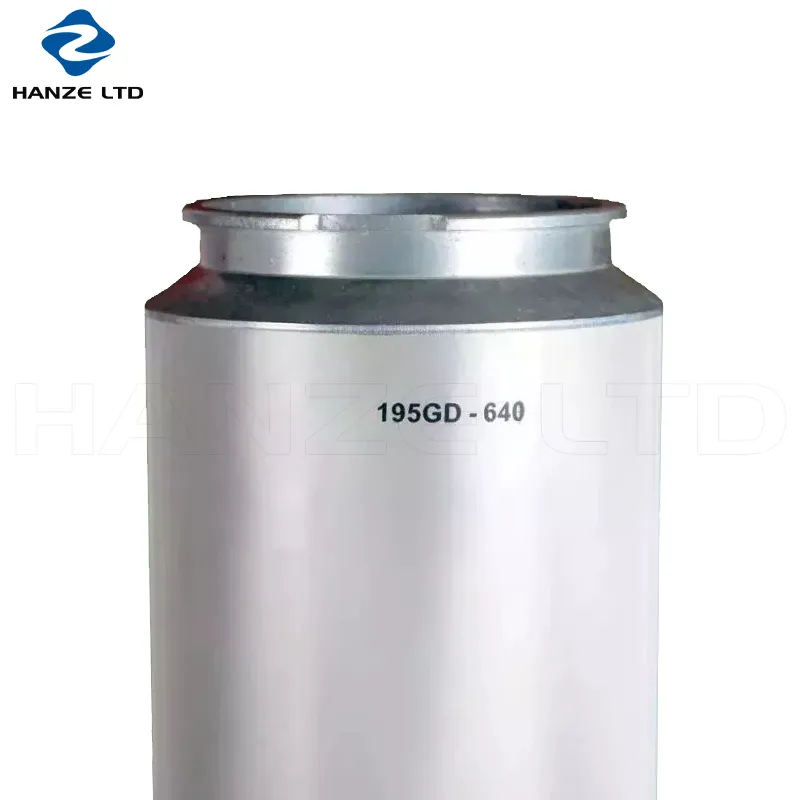
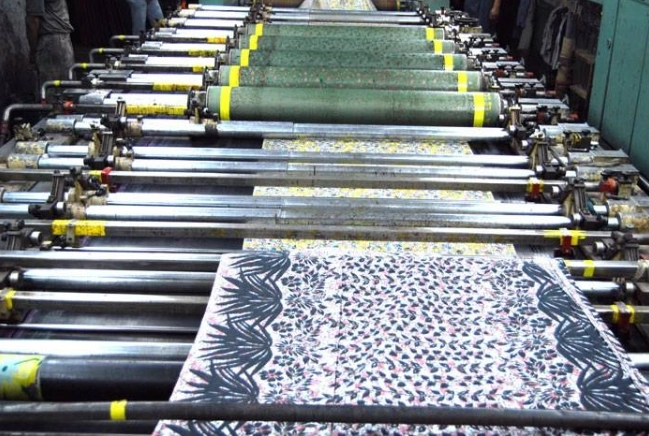
The standard screen for rotary screen printing is a nickel cylinder screen designed for everyday textile and wallpaper printing on rotary printing machines. It offers a balanced combination of mesh count, film thickness and open area, making it suitable for a wide range of color ways—from fine outlines and halftones to medium-coverage pigment prints and disperse/reactive dyes.
With common repeats from 530 to 1018 mm and lengths up to 3500 mm, standard rotary screens integrate easily with most Stork-type and similar rotary systems used in textile mills and printing houses worldwide.
Product Description
Screen Specifications
Standard Screen Dimensions
• Repeat (circumference): 530 / 640 / 688 / 725 / 819 / 914 / 1018 mm
• Length range: 1410 – 3500 mm
• Material: Electroformed nickel
• Typical mesh counts: 25, 40, 60, 70, 80, 100, 105, 125, 135, 155, 165 mesh
Typical Mesh Data (Reference Values)
Note: Values are typical ranges for standard rotary nickel screens and can be adjusted according to specific production requirements.
Key Characteristics
• Nickel rotary screen construction
Electroformed pure nickel cylinder with uniform wall thickness and consistent hole geometry for stable printing performance.
• Standard repeat sizes
Available in the most commonly used repeats (530 / 640 / 688 / 725 / 819 / 914 / 1018 mm) for compatibility with mainstream rotary printing machines.
• Wide mesh range
Mesh counts typically from 25 to 165 mesh to cover coarse coating prints, medium coverage designs, and finer detail work.
• Optimized open area & thickness
Carefully balanced open area and nickel thickness help control paste flow, color yield and screen durability in continuous production.
• Multiple re-use cycles
Suitable for stripping and re-engravings; under proper handling, standard screens can be used repeatedly across several print runs.
Recommended Applications
Standard rotary screens are intended for general-purpose printing tasks, including:
• Woven and knitted fabrics (cotton, polyester, blends)
• Home textiles such as bedsheets, curtains, upholstery fabrics
• Fashion prints requiring repeatable registration and color control
• Lightweight coating and binder prints
• Wallpaper and decorative paper printing (with appropriate repeat and mesh selection)
Lower mesh counts (25–60) are suitable for heavier paste, coatings and background colors, while higher mesh counts (80–165) are better for fine details, halftones and sharper outlines.
Performance Features in Production
• Uniform paste flow
Evenly distributed open area ensures consistent ink or paste laydown across the full width of the design, reducing banding and shade variation.
• Dimensional stability
Electroformed nickel maintains cylindrical accuracy during engraving, mounting and high-speed printing, supporting accurate registration over long runs.
• Durability under polymerisation
Screen thickness and nickel structure are designed to withstand typical polymerisation conditions used in rotary screen making and curing processes.
• Multiple stripping cycles
With correct stripping chemistry and mechanical handling, standard screens can be stripped and re-engraved several times, improving cost efficiency per design.
Handling & Mounting Guidelines
To maintain screen life and print quality, the following practices are recommended (general guidance – always follow your machine and chemical suppliers’ instructions):
• Mounting
Ensure the end rings and gear rings are clean, aligned and free from damage before fitting the screen.
Avoid twisting or forcing the screen during mounting; use proper support along the full length.
Check concentricity and run-out on the machine before starting the print run.
• Engraving & coating
Use compatible photo-emulsions or direct laser engraving systems recommended for nickel rotary screens.
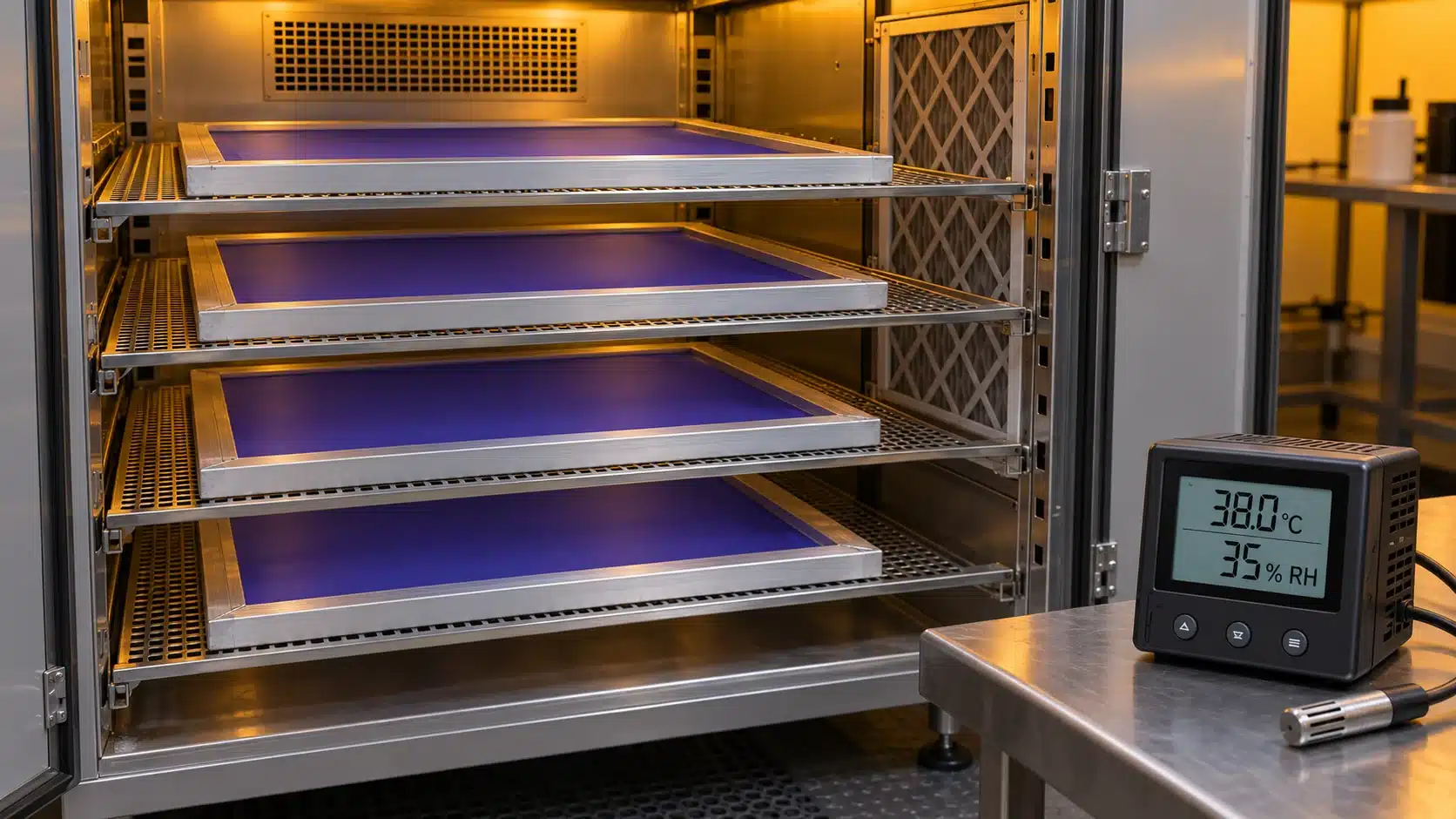
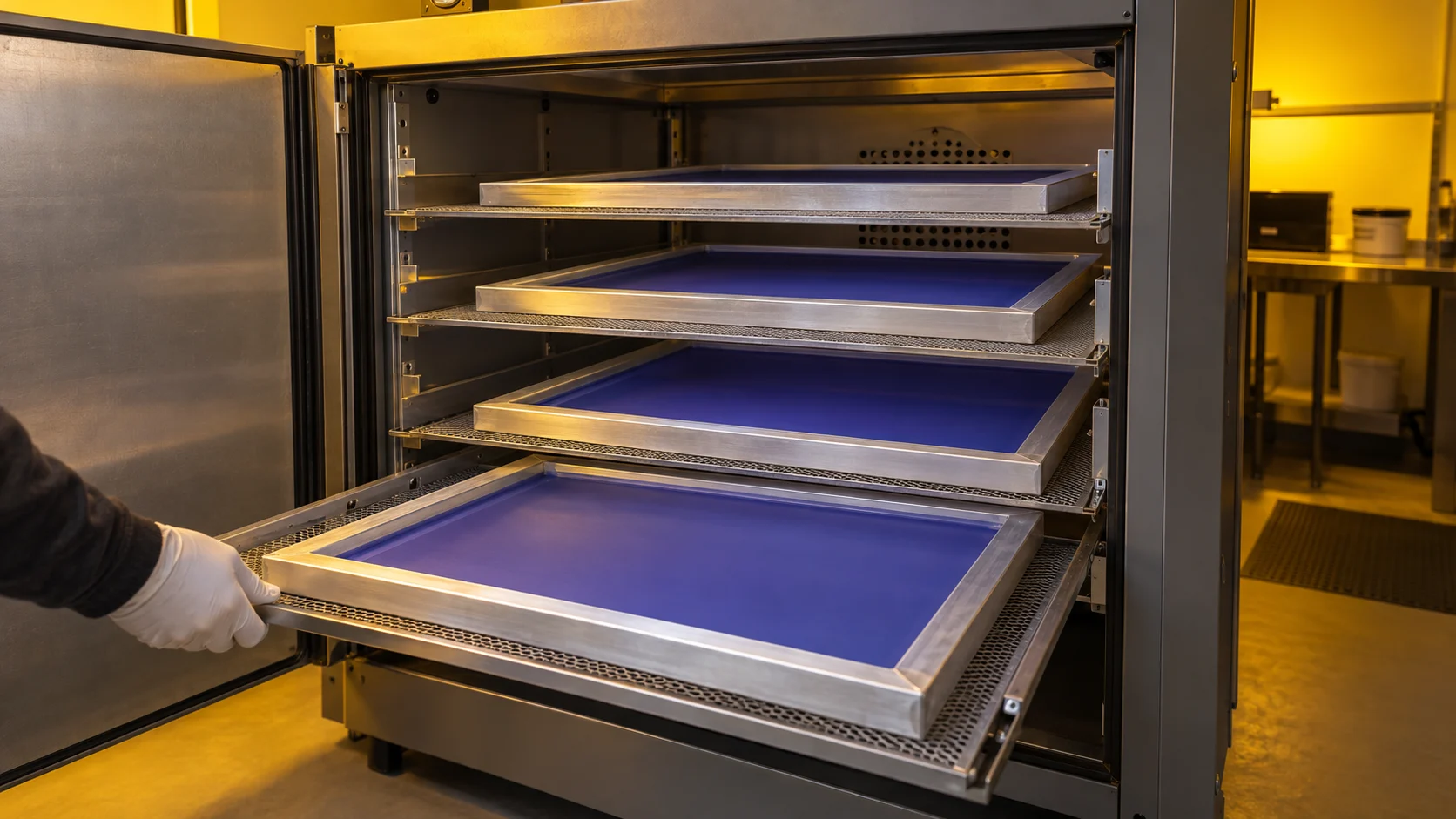
Maintain controlled drying and polymerising conditions to avoid overheating or localised thermal stress.
• Cleaning & stripping
Remove residual paste promptly after production using suitable rotary screen cleaning agents.
When stripping designs, follow a controlled chemical process and avoid excessive mechanical impact on the nickel surface.
• Storage
Store screens on dedicated racks or in protective cartons to avoid dents and deformation.
Keep away from corrosive atmospheres and strong acids/alkalis to preserve nickel integrity.
Packaging & Supply
• Standard packing
Single screen packed with inner protective sleeve or wrapping
Multiple pieces consolidated in export cartons or wooden cases suitable for long-distance transport
• Supply options
Standard repeats and mesh counts as listed above
Special mesh or repeat sizes may be produced on request, depending on tooling and minimum order quantities.
Typical Associated Components (for Rotary Screen Printing Lines)
For a complete rotary screen printing setup, standard screens are typically used together with:
• Rotary screen end rings matching each repeat size
• Rotary squeegees / squeegee blades
• Color pumps and feed lines
• Dryers and polymerisation units compatible with the screen dimensions

October 9, 2026
-
October 9, 2026
-
October 9, 2026
-
October 9, 2026

October 9, 2026

October 9, 2026

October 9, 2026

October 9, 2026

October 9, 2026

October 9, 2026

October 9, 2026

October 9, 2026
October 9, 2026

October 9, 2026

October 9, 2026
October 9, 2026

October 9, 2026
October 9, 2026




Product Category