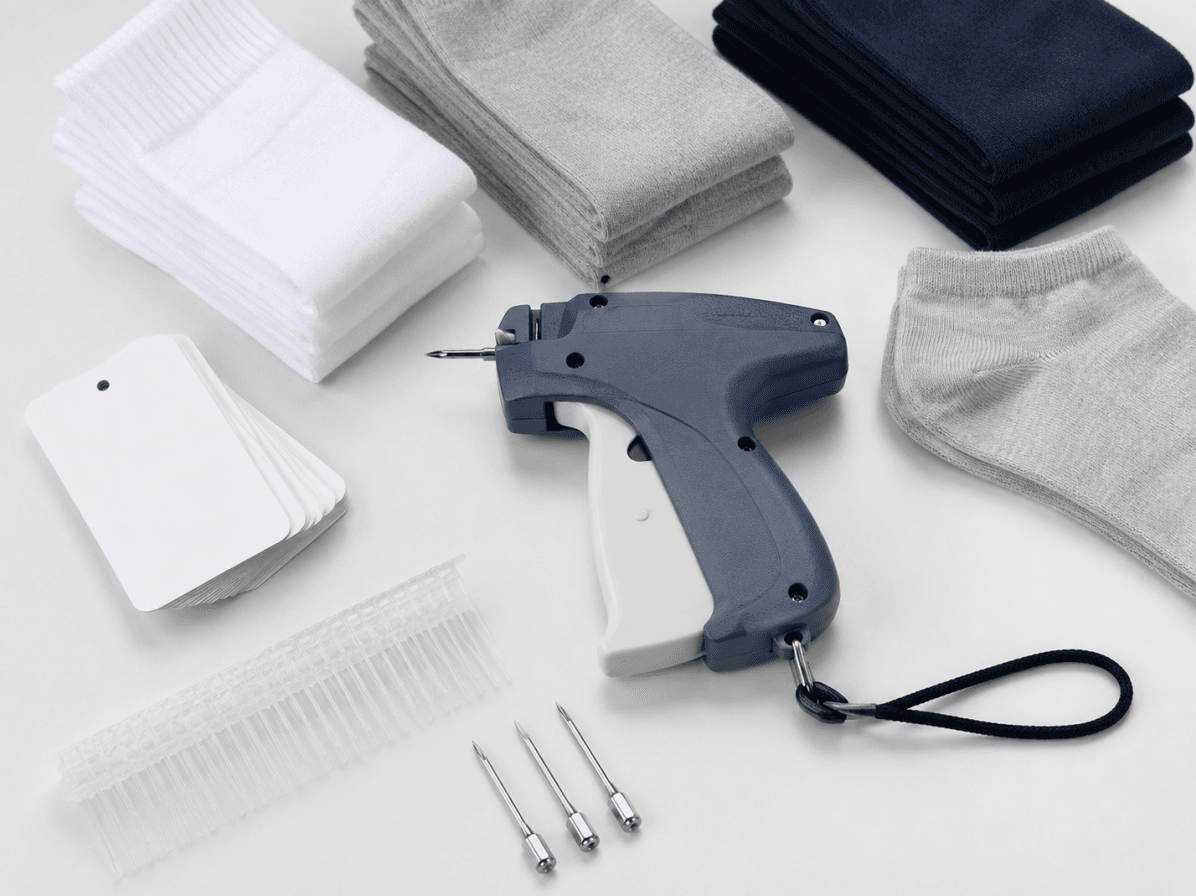
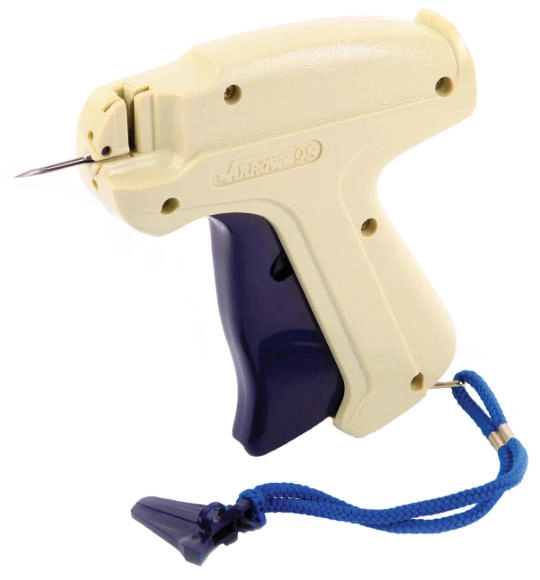
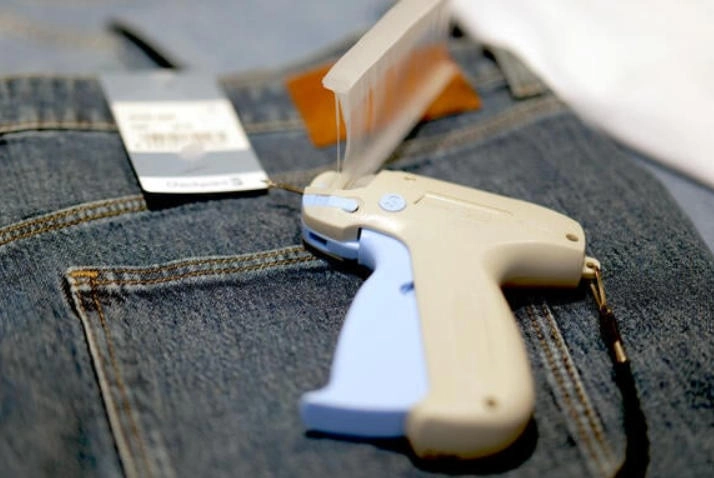
Best Tagging Gun for Socks and Hosiery: Needle, Fastener and Placement Guide
Socks and hosiery may seem easy to tag, but they can be more challenging than regular garments. A sock is elastic, soft, tightly knitted and often sold in pairs or multi-packs. If the wrong tagging gun, needle or fastener is used, the result may be visible holes, broken fasteners, loose hang tags, distorted packaging or slower production.
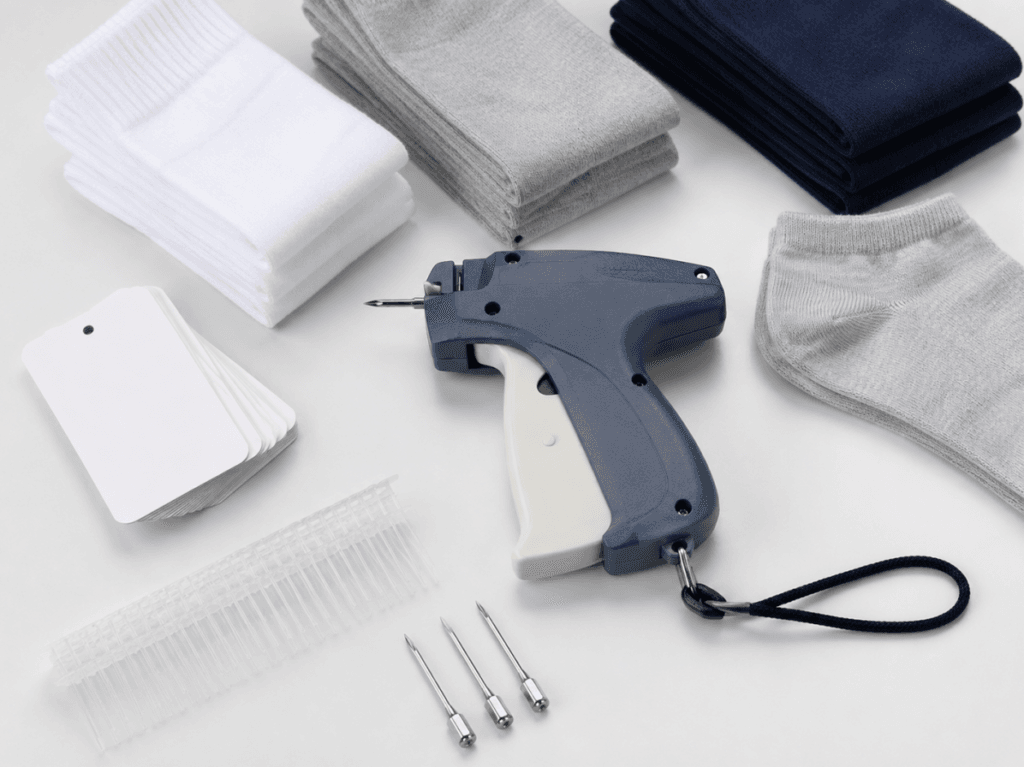
For retailers, garment factories and sock wholesalers, the best tagging solution depends on the sock material, thickness, packaging style and daily tagging volume. A thin dress sock, a cotton sports sock, a wool thermal sock and a bundled multi-pack do not always require the same tagging method.
This guide explains how to choose the right tagging gun, needle type, fastener length and tag placement for socks and hosiery. It is written for buyers who need practical, repeatable and cost-efficient tagging solutions for retail display, export packaging and bulk garment production.
Why Socks Need a Specific Tagging Solution
Socks are different from many other garments because they are small, elastic and often made with knitted structures. When a tagging needle passes through the wrong position, the fabric may stretch, snag or show a visible mark. This is especially important for hosiery, baby socks, compression socks and premium fashion socks.
Another challenge is packaging format. Socks are often sold as single pairs, two-pair packs, three-pair packs or large bundle packs. Some are attached to header cards, some are folded around a paperboard insert, and others are packed directly with hang tags. The tagging gun must match the thickness and structure of the product.
Retail presentation also matters. A loose fastener can make the product look untidy, while a fastener that is too short can compress the socks and damage the packaging appearance. For sock factories and wholesalers, small tagging mistakes can multiply quickly across thousands of pairs. Choosing the right tool from the beginning helps reduce waste, improve speed and protect product quality.
What Type of Tagging Gun Is Best for Socks?
There is no single tagging gun that works best for every sock product. The right choice depends on fabric thickness, fabric delicacy and packaging depth.
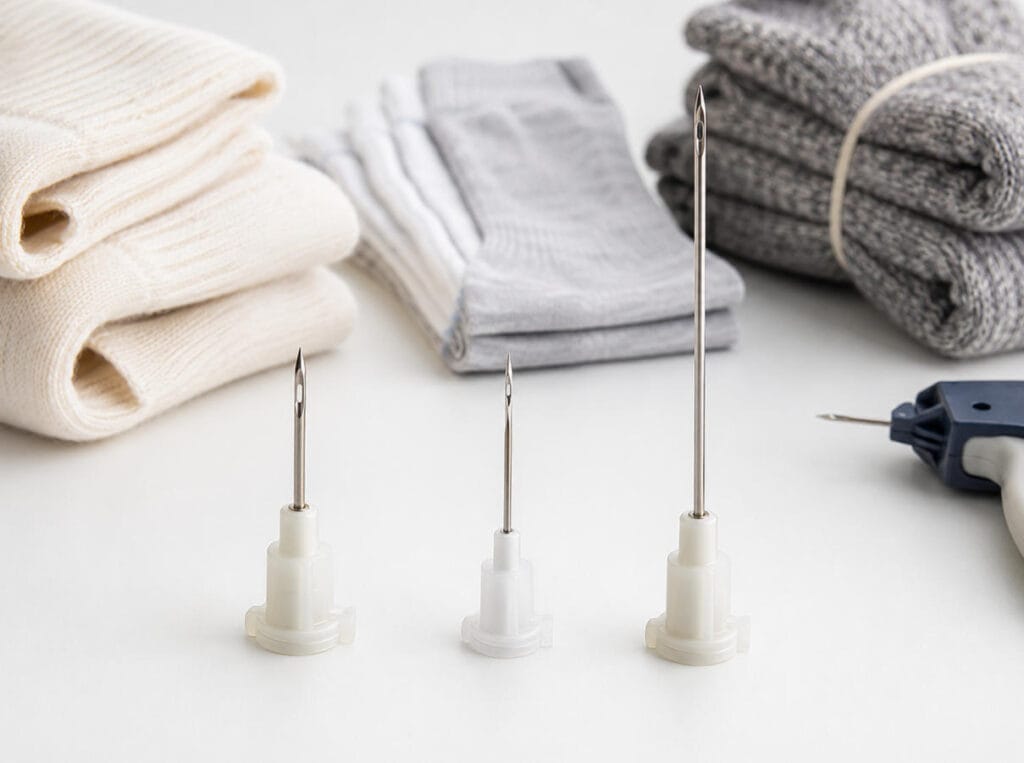
Standard Tagging Gun for Regular Cotton Socks
A standard tagging gun is suitable for most regular cotton socks, sports socks, work socks and medium-thickness retail socks. It is cost-effective, easy to operate and widely used in garment packaging. For many retail stores and small wholesalers, a standard tagging gun is enough for everyday sock tagging.
Standard tagging guns usually work with standard needles and standard tag fasteners. They are practical when the sock fabric is not too delicate and when the main goal is quick attachment of hang tags or price tags. For cotton socks, athletic socks and everyday socks, this is often the most economical choice.
However, standard needles are usually thicker than fine needles. They should be used carefully on thin hosiery or premium socks where visible holes may affect product appearance.
Fine Tagging Gun for Thin Hosiery and Delicate Socks
A fine tagging gun is better for thin dress socks, baby socks, lightweight knitted socks, women’s hosiery and premium fashion socks. Fine tagging guns use thinner needles and fine fasteners, helping reduce visible holes on delicate materials.
This option is especially useful when the socks are made from fine yarn, have a smooth surface or are sold as higher-value retail products. The smaller needle helps protect the fabric structure and gives the finished package a cleaner look.
For delicate hosiery, it is still better to tag through a packaging card, sewn label or reinforced area whenever possible. Even a fine needle can leave a mark if inserted through the most visible or high-stretch part of the sock.
Long Needle Tagging Gun for Sock Bundles and Multi-Packs
A long needle tagging gun is useful for thick socks, winter socks, sock bundles and multi-pack packaging. The longer needle provides deeper reach, making it easier to pass through folded layers or reach a hidden attachment point.
This type is helpful for wool socks, towel socks, thermal socks or socks folded around a card insert. It can also improve efficiency when workers need to tag multiple layers at once.
However, a long needle does not change fastener compatibility. A long standard tagging gun still requires standard fasteners. A long fine tagging gun still requires fine fasteners. Buyers should not mix standard and fine systems, because wrong fasteners may cause jamming, poor feeding or unstable attachment.
Pneumatic Tagging Machine for High-Volume Sock Factories
For small and medium operations, manual tagging guns are usually enough. For factories handling thousands of sock pairs per day, a pneumatic tagging machine may be a better solution.
Pneumatic tagging tools can reduce hand fatigue, improve production consistency and support repetitive tagging work. They are suitable for export sock factories, high-volume packaging workshops and multi-shift production lines.
The decision should not be based only on the tool price. Buyers should also consider daily output, labor cost, defect rate, operator fatigue and fastener consumption. When production volume is high, a more efficient system can reduce long-term operating costs.
Standard vs Fine vs Long Needle Tagging Gun for Socks
| Tagging Gun Type | Best For | Advantages | Limitations |
|---|---|---|---|
| Standard Tagging Gun | Regular cotton socks, sports socks, work socks | Cost-effective, fast and widely available | May leave larger holes on delicate hosiery |
| Fine Tagging Gun | Thin hosiery, baby socks, premium socks | Smaller needle hole and cleaner appearance | Not ideal for very thick bundles |
| Long Needle Tagging Gun | Sock pairs, thick socks, bundled socks | Easier to reach through multiple layers | Must still match the correct fastener type |
| Pneumatic Tagging Machine | Factory production lines | Faster and more consistent for bulk work | Higher initial investment |
For most regular sock retailers, a standard tagging gun or long standard tagging gun is enough. For delicate hosiery or premium socks, a fine tagging gun is safer. For sock manufacturers and wholesalers with large daily output, a pneumatic system can improve speed and consistency.
For a broader comparison of tagging gun types, you can also refer to our guide on how to choose the right tagging gun and fasteners.
How to Choose the Right Fastener Length for Socks
Fastener length affects both product appearance and tagging efficiency. A fastener that is too short may squeeze the sock or break during application. A fastener that is too long may make the tag hang loosely and look unprofessional.
Short Fasteners for Neat Attachment
Short fasteners are suitable for single socks, thin socks and close hang tag attachment near the cuff. They help keep the tag close to the product and create a clean retail presentation.
This option is commonly used when the tag is attached to one layer of fabric, a thin sock cuff or a packaging card. For premium socks, short fasteners can make the finished package look more compact and refined.
Medium Fasteners for Regular Sock Pairs
Medium fasteners are suitable for most sock pairs, sports socks and standard retail packaging. They provide enough flexibility without looking too loose.
For cotton socks, athletic socks and common retail socks, medium fasteners are often the safest starting point. They are easier for operators to handle and can accommodate slightly thicker fabric or folded packaging.
Longer Fasteners for Thick Socks and Bundles
Longer fasteners are useful for wool socks, thermal socks, work socks, multi-pack socks and folded sock bundles. They provide more space between the product and the tag, reducing pressure on thick fabric.
When tagging thick or folded socks, a longer fastener can also reduce the need to force the needle through the fabric. This helps protect the socks and improves operator efficiency.
Problems Caused by the Wrong Fastener Length
Using fasteners that are too short may cause several issues. The fastener may break, the sock may be pulled too tightly, the tag may not sit naturally, and the operator may need to use too much force. This can slow down production and increase defective packaging.
Using fasteners that are too long can also create problems. The tag may hang loosely, the retail display may look messy, and the fastener may catch on nearby products during packing or display. For B2B buyers, the goal is not simply to choose the longest fastener, but to choose the most suitable length for the packaging style.
For more detailed size options, refer to our tagging gun fastener sizes guide.
Best Tag Placement for Socks and Hosiery
Tag placement is just as important as tool selection. Even the right tagging gun can damage socks if the needle is inserted in the wrong position.
Tag Near the Sock Cuff
The cuff is usually one of the stronger areas of a sock. For many regular socks, attaching the tag near the cuff can reduce the risk of visible damage on the main wearing area. The cuff also provides a practical position for retail display and hang tag visibility.
Use Packaging Cards When Possible
For delicate hosiery, premium socks or baby socks, attaching the tag through a packaging card is often better than piercing the sock itself. A header card, insert card or folded paperboard backing can hold the tag while protecting the fabric.
This method is especially useful for brands that want a clean retail look and lower risk of customer complaints about fabric holes.
Avoid the Toe, Heel and High-Stretch Areas
The toe and heel are highly visible and functional areas. Needle marks in these positions may be more noticeable and may affect customer perception. High-stretch areas should also be avoided because the fabric can expand around the needle hole.
Use Seams, Labels or Reinforced Points
If the sock has a sewn label, seam, folded cuff or reinforced packaging area, these points are usually safer for tag attachment. For delicate socks, choosing the right insertion point can make a major difference in finished product quality.
Test Before Bulk Tagging
Before tagging thousands of pairs, always test the needle, fastener and placement on real sock samples. Check for visible holes, loose tags, broken fasteners, distorted fabric and overall packaging appearance.
A small test batch can prevent large-scale packaging defects.
Sock Tagging Recommendations by Product Type
| Sock Type | Recommended Gun | Recommended Needle | Fastener Suggestion | Best Tagging Point |
|---|---|---|---|---|
| Regular cotton socks | Standard tagging gun | Standard needle | Short to medium fastener | Cuff or packaging card |
| Sports socks | Standard or long needle gun | Standard needle | Medium fastener | Cuff or folded area |
| Thin dress socks | Fine tagging gun | Fine needle | Short fine fastener | Label, seam or card |
| Baby socks | Fine tagging gun | Fine needle | Short fine fastener | Packaging card or cuff |
| Wool socks | Long needle tagging gun | Standard or long needle | Medium to long fastener | Cuff or folded bundle |
| Multi-pack socks | Long needle gun or pneumatic system | Long needle | Medium to long fastener | Bundle edge or card insert |
| Sheer hosiery | Fine tagging gun or non-piercing method | Fine needle if needed | Short fine fastener | Packaging card preferred |
These recommendations should be adjusted according to your real product samples. Sock thickness, yarn structure, elasticity and packaging format can all affect the final choice.
Manual Tagging Gun or Pneumatic Tagging Machine?
For small retailers, online sellers and low-volume wholesalers, a manual tagging gun is usually the most practical solution. It is affordable, easy to store and simple to train. A manual tool is also flexible when a business handles many different sock styles.
For larger sock factories, manual tagging may become less efficient over time. If workers tag thousands of pairs every day, hand fatigue and inconsistent operation can affect both speed and quality. In that case, a pneumatic tagging machine may offer better long-term value.
Before upgrading, buyers should compare daily tagging volume, labor cost, number of operators, rejected packaging rate, production schedule and maintenance requirements. If production is occasional or seasonal, manual tools may still be enough. If tagging is a continuous part of the production line, pneumatic tools may improve workflow.
Common Mistakes When Tagging Socks
One common mistake is using a standard needle on delicate hosiery. This may leave visible holes or damage the knitted structure. When working with thin socks, baby socks or premium socks, a fine tagging gun or packaging-card method is usually safer.
Another mistake is mixing fasteners and guns from different systems. Standard fasteners should be used with standard tagging guns, and fine fasteners should be used with fine tagging guns. Mixing them can lead to jamming, misfeeding and poor attachment.
Fastener length is another frequent issue. If the fastener is too short, it may squeeze the sock or break. If it is too long, the tag may look loose and untidy. Buyers should choose fastener length according to sock thickness and packaging style.
Operators may also tag through the most visible part of the sock. This can make needle marks more noticeable to the customer. It is better to use the cuff, label, seam, packaging card or other less visible attachment points.
A dull or bent needle can also cause problems. It may snag yarn, enlarge holes or make the gun harder to use. Regular inspection and timely needle replacement are important for stable production.
How to Reduce Fabric Damage During Sock Tagging
The best way to reduce fabric damage is to use the smallest suitable needle system for the product. Fine needles are better for delicate socks, while standard needles are better for regular cotton socks and thicker products.
Operators should insert the needle smoothly without twisting. Twisting or forcing the needle can enlarge the hole and damage the yarn. The sock should be held flat and stable instead of being stretched aggressively.
For delicate socks, the tag should be attached to a packaging card whenever possible. If the needle must pass through the sock, choose a reinforced or less visible area. The cuff, seam and sewn label are usually safer than the toe, heel or main body.
Production teams should also create a sample approval process. Before mass tagging, test several combinations of gun type, needle type, fastener length and placement. Once the best method is confirmed, train operators to follow the same standard.
Buying Checklist for Sock Manufacturers and Wholesalers
Before placing a bulk order for tagging guns and fasteners, buyers should confirm several details.
First, identify the sock material and thickness. Cotton socks, wool socks, sports socks, baby socks and hosiery may require different needle systems.
Second, confirm the packaging style. Socks may be sold as single pairs, multi-packs, folded card packs, hook display packs or bagged products. Packaging style affects both needle reach and fastener length.
Third, estimate the tagging volume. A small retailer may only need one or two manual tagging guns. A factory may need multiple tools, spare needles, bulk fasteners and a more standardized inventory plan.
Fourth, confirm compatibility. The gun, needle and fastener must match the same system. Do not assume that all tagging supplies are universal.
Fifth, prepare spare needles. A broken or dull needle can stop a packaging line. Keeping spare needles in stock helps reduce downtime.
Finally, request samples before bulk ordering. Testing on real socks is the most reliable way to confirm whether the tool and fastener are suitable.
Recommended Tagging Solutions for Different Buyers
For Small Retail Stores
A small retail store usually needs a simple and affordable solution. A standard tagging gun, standard needles and short or medium fasteners are often enough for regular socks. Clear or black fasteners can be selected according to packaging color and display preference.
For Premium Hosiery Brands
A premium hosiery brand should focus on fabric protection and appearance. A fine tagging gun, fine needles and short fine fasteners are recommended. When possible, tags should be attached to packaging cards instead of directly through the hosiery.
For Sock Wholesalers
Sock wholesalers often handle different materials and packaging formats. A practical setup may include standard tagging guns, long needle options, medium and long fasteners, spare needles and bulk fastener cartons. This allows the team to handle regular socks, thick socks and multi-packs more flexibly.
For Sock Factories
Sock factories should focus on consistency, speed and inventory control. Manual guns can be used for flexible workstations, while pneumatic tools can support high-volume lines. Factories should also create a QC process for tagged products and train operators on correct needle use, fastener compatibility and safety procedures.
Safety and Operator Training
Tagging guns use sharp needles, so operator training is important in both retail and factory environments. Workers should keep fingers away from the needle path, use needle guards when the tool is not in use and store tagging guns safely.
When replacing needles or clearing jams, operators should avoid forcing the trigger. Forcing a jammed tool may damage the mechanism and increase the risk of injury. Protective gloves are recommended for frequent tagging work, especially in factory production.
Training should include how to load fasteners correctly, how to identify a dull or bent needle, how to choose the right tagging point and how to stop work when the gun jams. A short training process can reduce accidents, product damage and tool failure.
Conclusion
The best tagging gun for socks and hosiery depends on the product material, thickness, packaging style and production volume. Regular cotton socks can usually be tagged with a standard tagging gun. Delicate hosiery, baby socks and premium socks are better handled with a fine tagging gun or packaging-card attachment. Thick socks, wool socks and bundled multi-packs may require a long needle tagging gun for deeper reach.
For B2B buyers, compatibility is one of the most important points. The tagging gun, needle and fastener must belong to the same system. Standard guns should use standard needles and standard fasteners. Fine guns should use fine needles and fine fasteners.
Before placing a bulk order, test the needle type, fastener length and tag placement on real sock samples. A small test can help prevent fabric damage, packaging defects and production delays.
FAQ
What tagging gun is best for socks?
For regular cotton socks and sports socks, a standard tagging gun is usually suitable. For thin hosiery, baby socks or premium socks, a fine tagging gun is better because it uses a thinner needle. For thick socks or sock bundles, a long needle tagging gun may be more practical.
Can I use a standard tagging gun for hosiery?
It is not recommended for very thin or delicate hosiery because a standard needle may leave visible holes. A fine tagging gun or packaging-card attachment method is usually safer.
What fastener length should I use for socks?
Short fasteners are suitable for single thin socks and neat close attachment. Medium fasteners work well for regular sock pairs. Longer fasteners are better for thick socks, wool socks and multi-pack bundles.
Is a long needle tagging gun necessary for socks?
Not always. A long needle is useful when tagging bundled socks, thick socks or multi-layer packaging. For single thin socks, a standard or fine tagging gun may be enough.
Where should I attach a tag on socks?
The cuff, sewn label, seam area or packaging card is usually better than the toe, heel or main visible body of the sock.
Will a tagging gun damage socks?
A tagging gun can damage socks if the wrong needle, fastener or placement is used. To reduce damage, choose the right needle type, avoid high-stretch areas and test before bulk tagging.
Can I use fine fasteners in a standard tagging gun?
No. Standard guns should use standard needles and standard fasteners. Fine guns should use fine needles and fine fasteners. Mixing systems may cause jamming or poor attachment.
Should sock factories use manual or pneumatic tagging tools?
Manual tagging guns are suitable for smaller volume and flexible packaging work. Pneumatic tagging tools are better for factories that need higher speed, consistent output and reduced operator fatigue.
Final
Looking for tagging guns and fasteners for socks, hosiery or garment packaging? HANZE supplies standard tagging guns, fine tagging guns, long needle options, replacement needles and plastic fasteners for retail stores, garment factories and wholesalers. Contact us for bulk pricing, sample testing and suitable product recommendations.