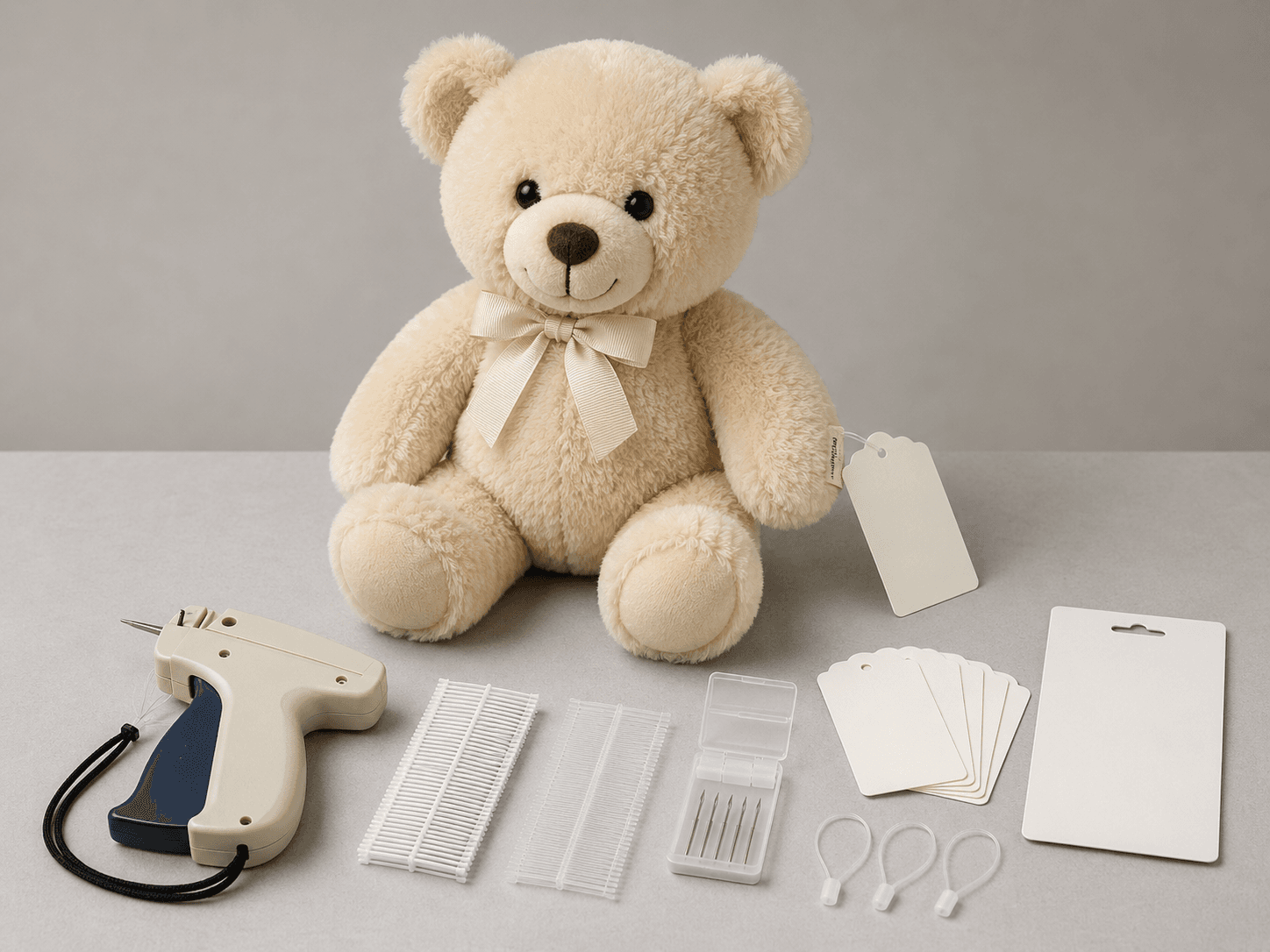
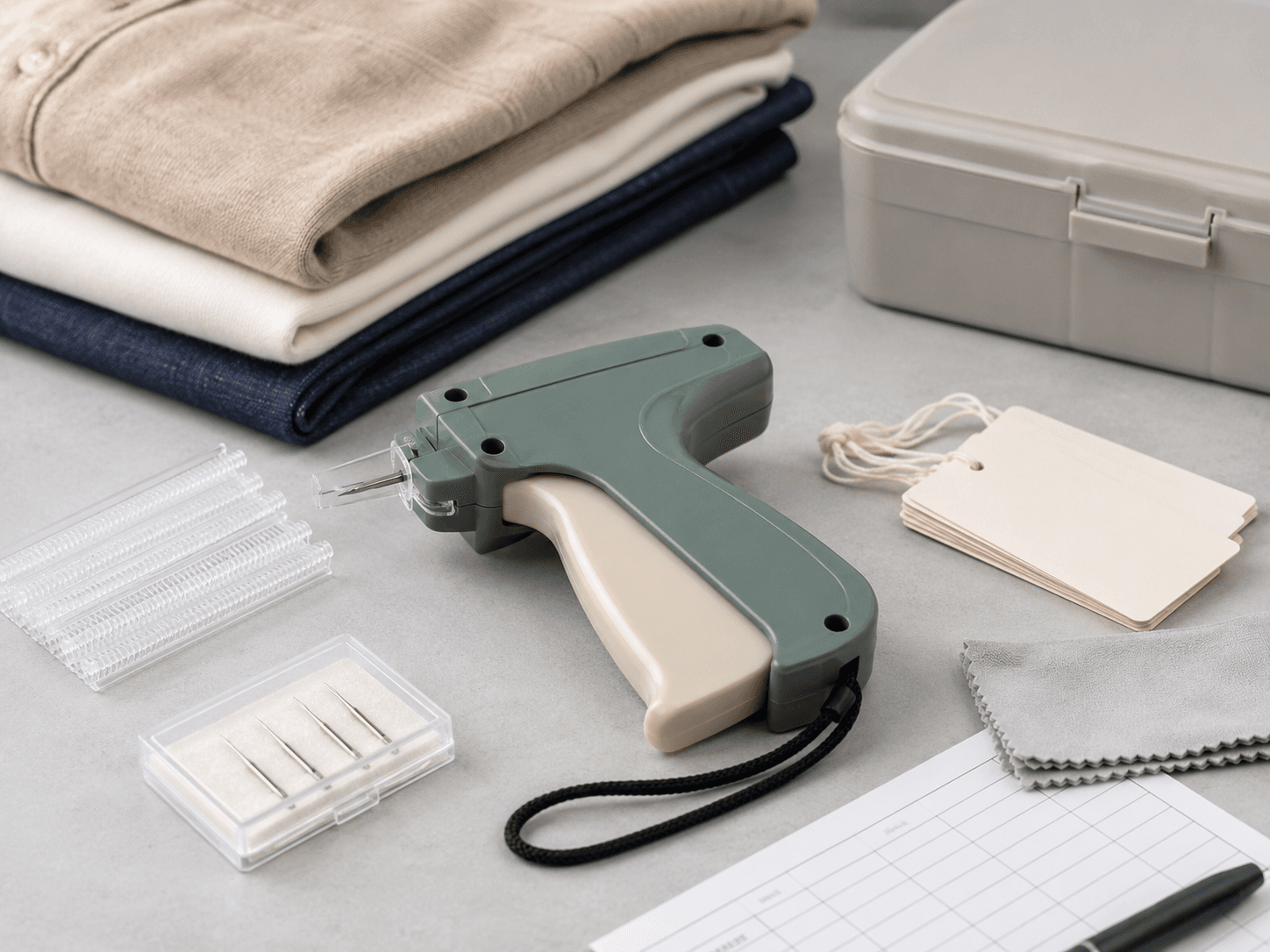
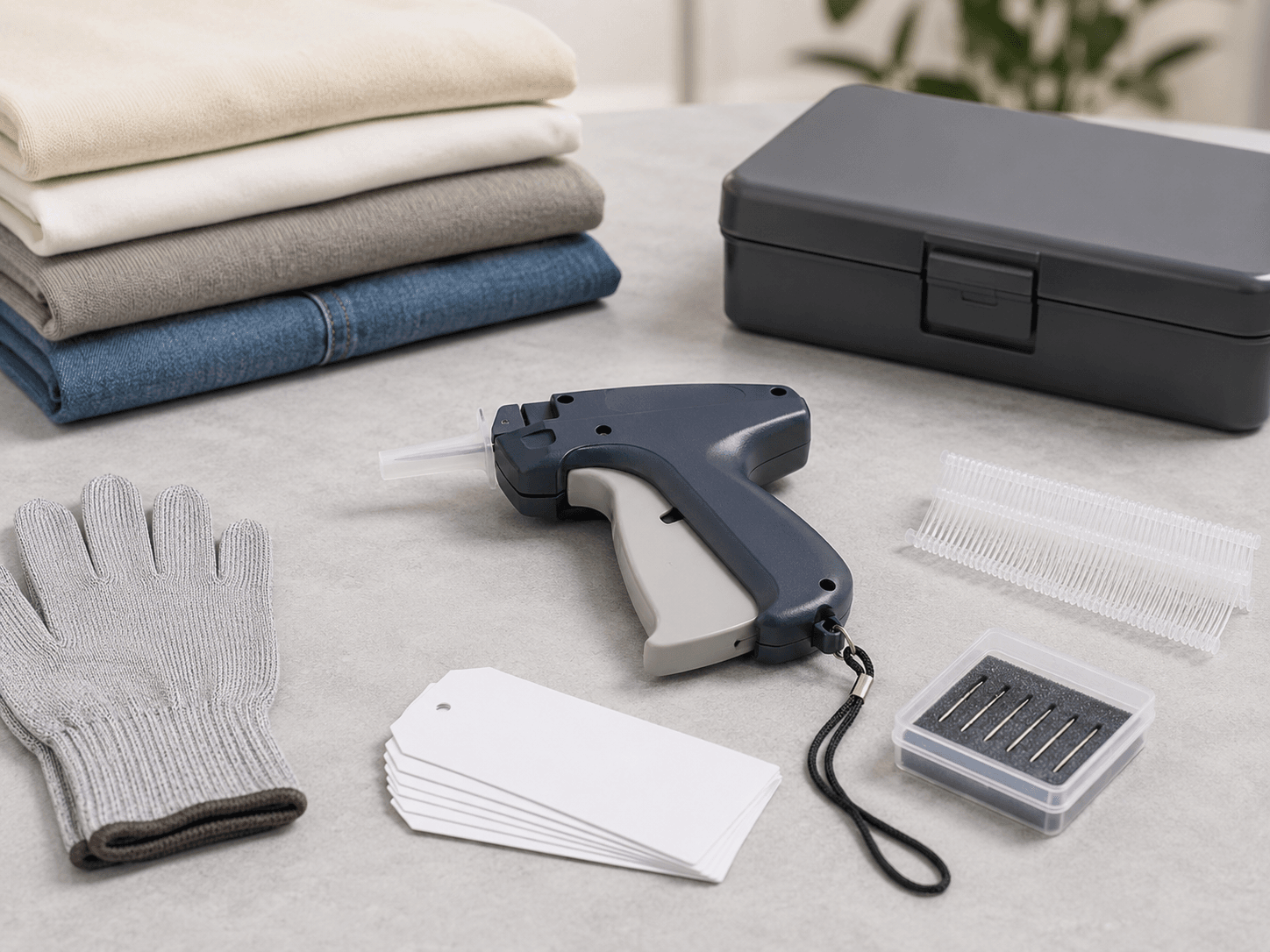
Лучшие решения для маркировки плюшевых игрушек и мягких изделий.
Лучшие решения для маркировки плюшевых игрушек и мягких изделий.
Plush toys and soft goods require more careful tag attachment than ordinary clothing. A hang tag must remain secure during storage, transport and retail display, but the fastening method should not pull the pile, distort the product or leave an obvious hole in a visible area.
There is no single tagging solution that works for every stuffed toy, cushion, blanket or fabric accessory. The right choice depends on the outer material, pile length, seam construction, product thickness, tag location and packaging design.
A standard tagging gun may work well on a reinforced label or seam. Fine-fabric and micro fastening systems may be more appropriate for certain lightweight or sensitive textile products. Loop fasteners and strings offer non-piercing alternatives when the product has a suitable label, strap or packaging hole.
This guide explains how manufacturers, wholesalers and retail packaging teams can select a practical tagging solution for plush toys and other soft goods.
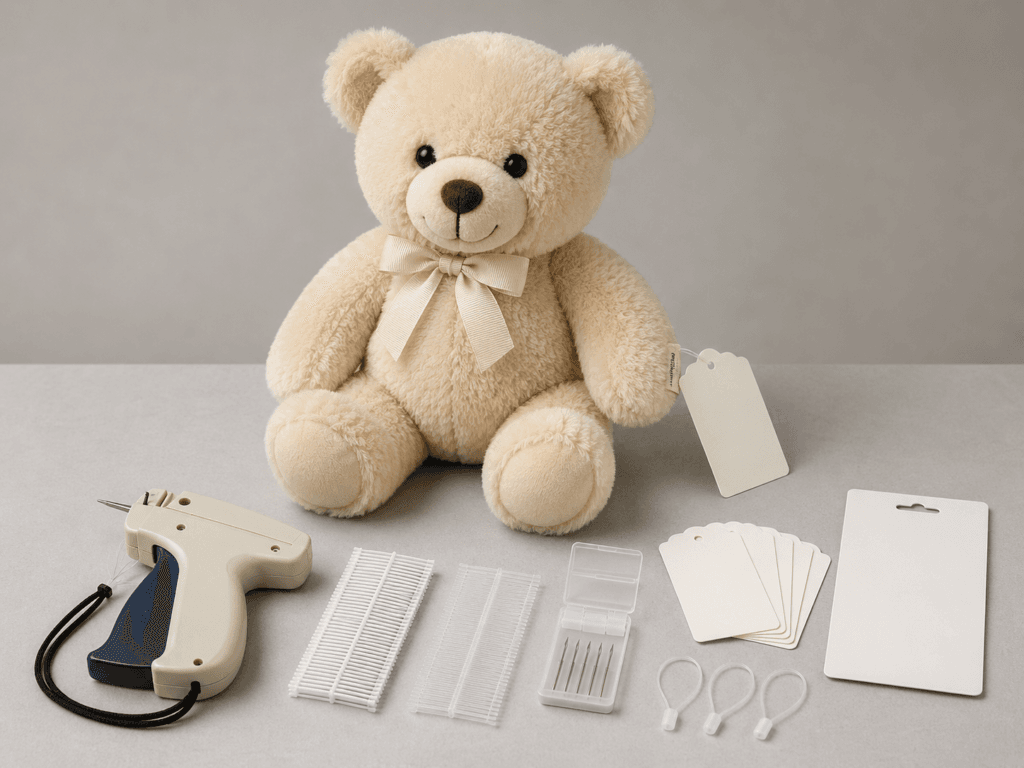
Why Plush Toys Need a Product-Specific Tagging Method
Plush toys differ widely in construction. Some use short polyester plush over firm seams, while others use long synthetic fur, fleece, velour, knitted fabric or loosely structured textiles. The same needle and fastener can produce very different results on each material.
Plush products may also contain filling directly behind the outer fabric. Inserting a needle through an unsuitable area can catch fibers, compress the filling or pull the surface material. A mark hidden in a seam may be acceptable, while the same mark on the face or body panel may reduce the product’s retail value.
The objective is therefore not simply to insert a fastener. A good tagging method should:
- Hold the hang tag securely
- Avoid visible surface damage
- Use a controlled attachment point
- Match the product’s construction
- Support efficient packing
- Allow clean tag removal
For children’s toys, the tagging method does not replace the manufacturer’s wider product-safety obligations. In the United States, toys may be subject to requirements concerning accessible points, edges, small parts, testing and certification. The finished toy and its retail presentation must be assessed under the regulations that apply to its intended age group and market.
Common Tagging Solutions for Plush Toys and Soft Goods
| Способ доставки | Удовлетворяющий требованиям Теплообменник | Основное преимущество | Главное ограничение |
|---|---|---|---|
| Стандартный пистолет для маркировки | General plush products with reinforced seams or labels | Быстро и экономично | May leave a larger puncture on delicate material |
| Fine-fabric tagging system | Lightweight, tightly knitted or sensitive fabrics | Helps reduce the risk of visible holes and snags | Requires compatible fine needles and fasteners |
| Micro fastening system | Selected small or delicate soft-goods applications | Uses a very small fastening format | Requires its own compatible tool and consumables |
| Loop fastener | Products with sewn loops, straps, labels or packaging holes | Does not pierce the main product surface | Needs a secure attachment point |
| Hang-tag string | Premium, handmade or gift products | Soft presentation with no needle puncture | Slower to apply manually |
| Packaging-card attachment | Products sold in sleeves, boxes or header cards | Keeps the toy surface untouched | Depends on packaging design |
The tool, needle and fastener should be treated as one system. Fine fasteners should be used with compatible fine-fabric tools, and micro fasteners require their corresponding equipment. Products that look similar are not necessarily interchangeable.
Standard Tagging Guns for General Plush Products
A standard tagging gun can be suitable for many everyday stuffed toys, promotional plush products, fabric gifts and basic soft goods when a strong attachment point is available.
The best location is usually a sewn-in care label, brand label or reinforced seam rather than the main plush surface. These areas are already part of the product’s construction and are normally less visually sensitive than the face, chest or central body panel.
Standard systems are also practical when production volume is high because the fasteners can be applied quickly. However, speed should not replace testing. Long-pile fur, loosely knitted coverings and thin decorative fabrics may snag or show damage even when a standard system works well on another plush product.
A standard tagging gun should not automatically be used simply because the toy feels thick. Product thickness, fabric density and tagging-point construction are separate factors.
Fine-Fabric Tagging Systems for Sensitive Soft Goods
Fine-fabric tools use thinner needles and compatible fine fasteners. Avery Dennison describes its Fine Fabric systems as solutions for delicate garment tagging that reduce the risk of product damage. Its System 500 materials specifically refer to reducing holes and snags on delicate or soft fabrics.
Fine-fabric fastening may be considered for:
- Lightweight textile toys
- Thin plush coverings
- Soft baby-product textiles
- Delicate knitted accessories
- Premium fabric gifts
- Products with a thin sewn label
A fine needle can reduce the puncture size, but it does not make direct tagging completely damage-free. It is still better to use a care label, seam or less visible reinforced area whenever possible.
Fine needles are also not designed for every thick product. Forcing a fine needle through dense seams, heavy fabric or several bulky layers can bend the needle or create feeding problems.
Micro Fastening Systems for Selected Soft Goods
Micro fastening systems use smaller fasteners than conventional garment-tagging systems. Avery Dennison describes MicroTach as its smallest and most versatile fastening format and positions micro fastening for soft goods and delicate retail applications.
A micro system may be useful when:
- The product or textile component is small
- A conventional fastener would appear too large
- The material is lightweight
- A discreet attachment is important
- The packaging operation already uses a compatible micro system
Micro fastening should not be described as the default choice for all plush toys. A very thick toy, dense seam or long-pile covering may not be suitable. The manufacturer should test the complete tool, needle, fastener and product combination before production.
Loop Fasteners and Strings for Non-Piercing Attachment
Some plush products include a sewn fabric loop, ribbon, care-label opening, accessory strap or packaging hole. In these cases, a loop fastener or hang-tag string can attach the tag without inserting a needle through the main toy surface.
Non-piercing options are useful for:
- Premium plush toys
- Handmade fabric products
- Подарочные наборы
- Декоративные подушки
- Сумки из ткани
- Products with delicate outer surfaces
- Boxed or carded soft goods
The selected attachment point must be strong enough to support the tag. A decorative ribbon or loosely stitched accessory should not be used if the tag could pull it out of shape.
A loop that is too short can compress the material, while one that is too long can tangle during packing or display. Test the finished appearance as well as attachment strength.
Where Should You Attach a Tag on a Plush Toy?
Tag placement often has a greater effect on product appearance than the tool itself.
Sewn-In Label
A care label or brand label is often the preferred attachment point because it is already sewn into the product. The tagging needle can pass through the label material rather than the plush body.
Check that the label is securely stitched and wide enough for the selected fastener.
Reinforced Seam
A strong side, back or lower seam can provide a stable point. Insert the needle through the seam allowance or an approved seam area rather than the open surface fabric.
Avoid forcing the needle through an unusually thick junction where several seams and layers meet.
Ear, Paw or Accessory Area
An ear, paw, ribbon or accessory may provide a visually discreet location, but only when its construction is strong enough. Do not assume every ear or decorative component is reinforced.
Test for pulling, distortion and stitching damage before approving this position.
Packaging Card or Outer Packaging
For premium toys, baby products or highly delicate fabrics, attaching the hang tag to a packaging card, box, sleeve or display band may be the cleanest option.
This keeps the main product untouched and makes the tagging method part of the packaging design.
Сферы, которых следует избегать
Avoid placing a tagging needle through:
- Лицо
- Embroidered eyes or nose
- Printed decorative areas
- Thin front panels
- Loose long-pile fur
- Areas with internal mechanisms
- Sound modules or battery compartments
- Weak decorative stitching
- Highly visible presentation surfaces
Before tagging, operators should also check for hidden hard parts behind the fabric. Plush products may contain plastic eyes, joints, sound units or internal supports that are not visible from the outside.
How to Tag Plush Toys Without Damaging the Fabric
1. Identify the Outer Material
Determine whether the product uses short plush, long synthetic fur, fleece, velour, knitted fabric or another textile. Check how easily the surface pulls or snags.
2. Inspect the Product Construction
Locate sewn labels, seams, accessory loops and reinforced areas. Check whether filling or hard components sit directly behind the proposed tagging point.
3. Decide Whether Piercing Is Necessary
Use a needle-based fastener only when a safe attachment point exists. If the outer material is highly sensitive or the product has a suitable loop or packaging hole, consider a non-piercing method.
4. Match the Complete System
Confirm that the tagging gun, needle and fastener are compatible. Do not mix standard, fine or micro components without confirmation from the tool or consumable supplier.
5. Test Actual Samples
Test the selected method on real production samples. The operating instructions recommend testing a fastening system on a small sample of each material before use.
Проверьте:
- Puncture visibility
- Surface snagging
- Деформация шва
- Fastener security
- Позиция метки
- Метод удаления
- Appearance after tag removal
6. Approve One Standard Method
Once the tool, fastener and location have passed inspection, document the approved method for production operators. This reduces random placement and inconsistent results.
Tagging Different Types of Soft Goods
Stuffed Animals and Character Toys
Use a sewn label, back seam or lower seam when possible. Avoid the face, central body panel and decorative embroidery.
A standard system may work on durable products, while fine or non-piercing methods may be better for lighter coverings.
Детские плюшевые игрушки
Baby products require careful product assessment. Choose the least damaging tag location and make sure the finished product and packaging comply with all regulations for the intended age group and market.
Do not assume that a small or fine fastener is automatically suitable for a baby product. Tag attachment, packaging removal, small components and the toy’s overall construction must be reviewed as part of the complete safety process.
Cushions and Decorative Pillows
A sewn care label, zipper pull, piping seam or packaging band may provide a suitable point. Avoid the central decorative panel and embroidered surface.
Одеяла и пледы
Blankets may require longer fasteners when folded, but attaching the tag through a care label, binding edge or packaging band often creates a cleaner result than piercing several fabric layers.
Socks and Textile Accessories
The right system depends on fabric thickness and packaging style. Fine or micro fastening may work for certain lightweight soft goods, while packaging cards and loop attachments can eliminate direct fabric puncture.
Fabric Bags and Handmade Products
Hang-tag strings and loop fasteners are often suitable when handles, drawstrings or sewn loops are available. Fine fasteners may also work through a care label or inner seam.
Standard vs Fine Fasteners for Soft Products
| Характеристика | Стандартные крепежи | Высококачественные крепежные изделия |
|---|---|---|
| Игольная система | Стандарт | Тонкая ткань |
| Типичное использование | текстильные изделия общего назначения | Delicate or tightly knitted textiles |
| Размер прокола | больше | Меньшие |
| Силы | Suitable for many regular materials | Better suited to lighter fabrics |
| Plush application | Durable seam or sewn label | Thin covering or delicate label |
| Совместимость | Standard tools and needles | Fine tools and needles |
Fine fasteners can reduce visible damage, but they are not automatically better for every toy. A fine system used on material that is too dense may perform worse than a properly selected standard or non-piercing solution.
Common Plush-Toy Tagging Mistakes
Один крепежный элемент для каждого изделия.
Plush fabrics vary widely. A system approved for short-pile promotional toys may not work on long fur, lightweight baby textiles or knitted character dolls.
Tagging Through the Most Visible Surface
A secure fastener in the wrong location can still make the product unacceptable. Prioritize labels, seams and packaging points.
Ignoring Hidden Components
Never insert a needle without checking what is behind the fabric. Internal plastic parts and electronic modules can damage the needle or product.
Choosing Only by Fastener Price
A cheaper fastener may not reduce total cost if it causes breakage, snagging, rework or poor presentation.
Пропуск тестирования образцов
Pile height, knit density, seam structure and filling pressure can change the result. Sample testing is essential before a large order.
Mixing Tool Systems
Standard, fine and micro fasteners should not be mixed unless the equipment is specifically designed for them.
Production Tips for Plush-Toy Manufacturers
Create a Product-Specific Tagging Standard
Each product should have an approved:
- Tag location
- Модель инструмента
- Тип иглы
- Тип застежки
- Длина застежки
- Проверка качества
Separate Consumables
Store standard, fine, micro and loop fasteners separately. Clearly identify which tool each consumable fits.
Train Operators on Placement
Operators should know which area is approved and which areas must not be pierced. A sample toy with the correct tag position can be more effective than written instructions alone.
Inspect the First Pieces
Check the first tagged items from each production batch. Look for pulled fibers, visible holes, distorted seams and loose tags.
Remove Broken Plastic Pieces
Broken fasteners and clip remnants should not remain on the product, in the packaging or around the workstation.
Tagging-Solution Checklist
| Вопрос | Рекомендуемое действие |
|---|---|
| Is the outer fabric delicate? | Test a fine, micro or non-piercing method |
| Is there a sewn care label? | Consider attaching through the label |
| Is a strong seam available? | Use the approved seam area after testing |
| Is the product surface highly visible? | Avoid direct surface puncture |
| Does the product have a loop or strap? | Consider a loop fastener or string |
| Is the toy sold in a box or sleeve? | Consider attaching the tag to the packaging |
| Is the product intended for children? | Verify the complete product and packaging against applicable safety requirements |
| Is the order volume high? | Standardize tools, consumables and tag placement |
Часто задаваемые вопросы
Can I use a regular tagging gun for plush toys?
Yes, a standard tagging gun can work for many plush products when it is used through a suitable sewn label or reinforced seam. Test the actual fabric and construction before production.
Will a tagging gun damage plush fabric?
It can if the needle, fastener or tag position is unsuitable. Long pile, loose knits and thin fabrics may snag or show puncture marks more easily.
What is the best fastener for teddy bears?
There is no universal fastener for every teddy bear. Standard, fine, micro, loop and string attachments may all be suitable depending on the fabric, seam construction and tag location.
Where should I attach a tag to a stuffed animal?
Common options include the care label, back seam, lower seam, reinforced ear area or external packaging. Avoid the face and decorative front panels.
Are fine fasteners better for all plush toys?
No. Fine fasteners can reduce puncture size on delicate materials, but they may not be suitable for dense seams or thick fabrics.
Are micro fasteners suitable for soft goods?
Micro fastening systems can be used for selected small or delicate soft-goods applications, provided that the material, tool and fastener system are compatible.
Can loop fasteners be used on plush toys?
Yes, when the toy has a strong sewn loop, label opening, strap or packaging hole. The attachment point should be tested for pulling and distortion.
How should baby plush toys be tagged?
Use the least damaging attachment point and assess the complete toy and packaging under the safety requirements for the intended market and age group. Do not rely on the fastener type alone as evidence of compliance.
Заключение
The best tagging solution for plush toys and soft goods depends on the product’s material, construction, tag location and packaging design.
Standard tagging guns can be efficient for durable products with suitable labels or reinforced seams. Fine-fabric and micro systems may help with selected delicate or lightweight textiles. Loop fasteners, strings and packaging cards provide alternatives when the main product surface should not be pierced.
Before mass production, test the full tagging system on real samples and approve one product-specific method. Correct placement and system compatibility are just as important as the fastener itself.
Looking for tagging guns, replacement needles and fasteners for plush toys and soft goods? ХАНЗЕ supplies standard, fine-fabric, micro-style and non-piercing tagging solutions for toy manufacturers, wholesalers, retailers and packaging teams. Свяжитесь с нами Образцы, рекомендации по совместимости и цены при оптовых закупках.